
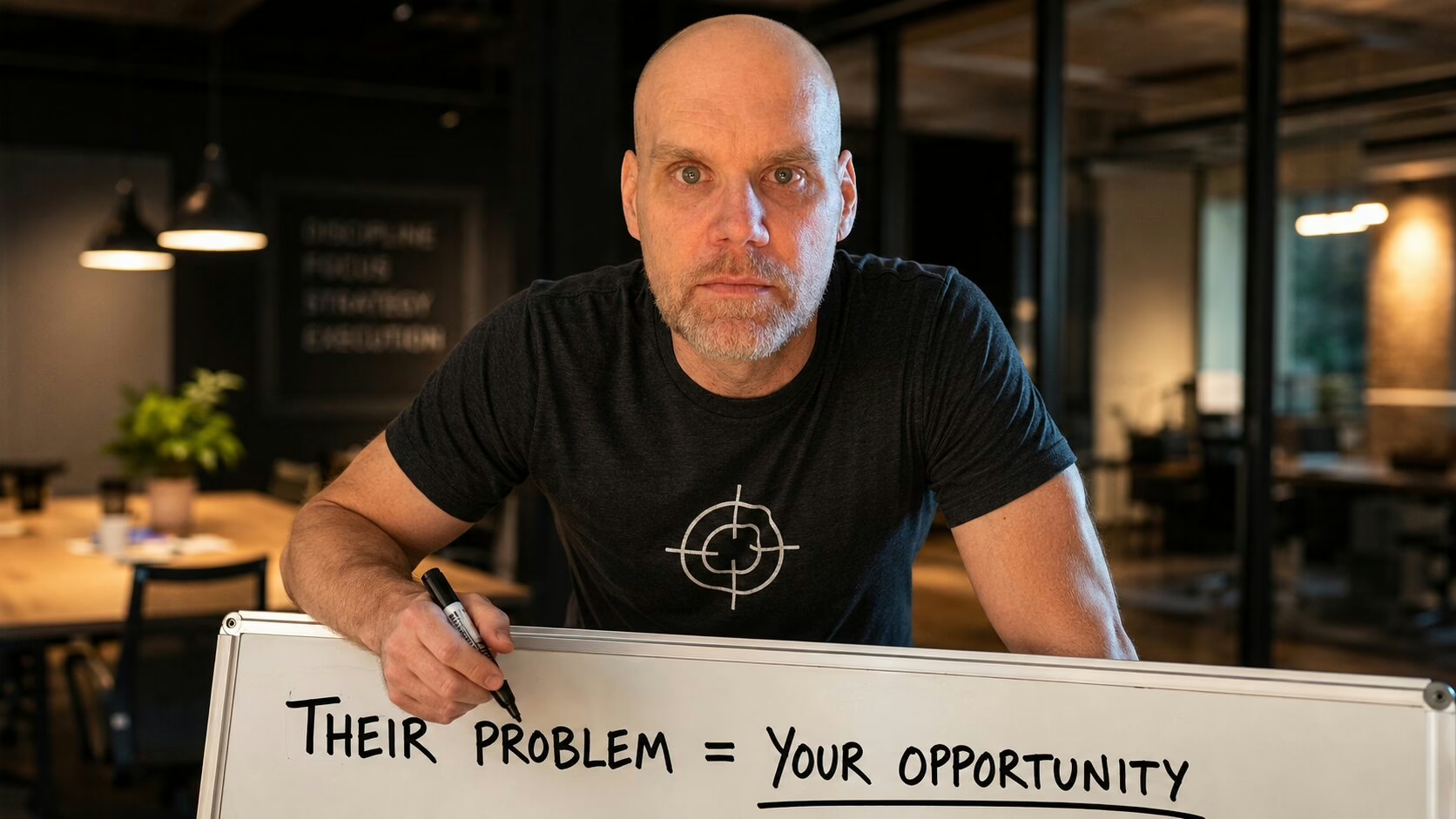
**TL;DR:** Your customers don’t care about your product. Not even a little. They care about one thing — the problem that keeps them up at night. Sell the problem and not the product. When you flip the script and lead with their pain instead of your pitch, everything changes. This post breaks down the problem-first approach that helped me build Corran Force Designs from scratch.
Nobody Cares About Your Product (And That’s a Good Thing)
I’m going to say something that might sting a little.
Nobody cares about your product.
Not your course. Not your service. Not the thing you spent months building, tweaking, and perfecting. Your potential customer scrolls right past it. Every. Single. Time.
And honestly? That’s a good thing. Because once you accept this, you unlock the real secret to making sales without feeling like a used-car salesman.
Here’s the truth: people don’t buy products. They buy relief. They buy a way out of the pain they’re feeling right now. Your job isn’t to shove your offer in their face. Your job is to understand their problem better than they do — and show them you’ve got the solution.
What “Sell the Problem” Actually Means
When I say “sell the problem,” I don’t mean make people feel bad. I mean meet them where they are. Get inside the conversation that’s already happening in their head.
Think about it. Right now, someone is sitting at their kitchen table wondering how they’re going to pay next month’s bills. Someone else is lying awake at 2 AM thinking, “There has to be a better way.” A veteran just left the service and has zero clue how to translate their skills into a paycheck.
Those are problems. Real ones. And if your product solves one of them, your job is to say so — clearly and loudly.
Step 1 — Listen Before You Pitch
In the Army, we didn’t storm a position without gathering intel first. Same thing here. Before you post a single thing about your product, listen. Read the comments. Watch what people ask in Facebook groups. Pay attention to the DMs.
What words do they use? What frustrates them? What have they already tried that didn’t work?
That’s your intel. Use it.
Step 2 — Name the Pain Out Loud
Once you know the problem, say it out loud. In your posts. In your emails. In your content.
“You’ve tried five different side hustles and none of them stuck.”
“You left the military and nobody told you how hard the transition would be.”
“You want to build something online but you don’t know where to start.”
When someone reads that and thinks, “That’s me” — you’ve already won half the battle. They feel seen. They feel understood. And now they’re listening.
Step 3 — Position Your Offer as the Relief
Now — and only now — you introduce your solution. Not as a product. As relief. As the next step they’ve been looking for.
“That’s exactly why I built Freedom Ascension. It’s a free, step-by-step system that walks you through building your first online income stream — no tech skills needed, no credit card required.”
See the difference? You’re not screaming “buy this!” You’re saying, “I see your problem, and here’s the way out.”
The Army Taught Me This First
Back in the Army, I was a 25U — Communications Specialist. My job was to make sure the right message got to the right people at the right time. If the message didn’t land, the mission failed. Period.
Marketing works the same way. If your message doesn’t connect with what your audience actually cares about, it doesn’t matter how good your product is. The mission fails.
In basic training, they didn’t sell us on how cool the uniforms were. They sold us on purpose. On belonging. On becoming something greater. That’s problem-first communication at its finest.
Your audience doesn’t need a prettier sales page. They need to feel like you get it. Like you’ve been where they are. And for a lot of us veterans — we have been there. We sat in that transition office wondering what comes next. We stared at a laptop screen thinking, “Can I really do this?”
Use that. That shared experience is your superpower.
How I Use This at Corran Force Designs
At Corran Force Designs, I don’t lead with “hire me for web design.” I lead with the problem.
“You know your business needs to be online, but every time you sit down to build something, you get stuck.”
“You’ve been posting on social media for months and nothing’s happening.”
“You want a website, but the quotes you’re getting are insane and you don’t know who to trust.”
That’s where the conversation starts. The product — my services, my course, my content — comes after. Because once someone knows I understand their struggle, they trust me to help them fix it.
This approach works whether you sell digital courses, coaching, freelance services, or physical products. Lead with pain. Follow with proof. Close with the solution.
Your Mission Today
Here’s what I want you to do right now. Grab a piece of paper — or open a note on your phone — and write down the top three problems your ideal customer faces.
Not features of your product. Problems. Pain points. The stuff that makes them frustrated, anxious, or stuck.
Now take one of those problems and write a social media post about it. No pitch. No link. Just name the problem and say, “I get it. I’ve been there too.”
Watch what happens. The comments. The DMs. The people saying, “How did you know?”
That’s the magic of selling the problem.
And if you want a step-by-step system to build this into a full online business — one that works even if you’re starting from zero — check out Freedom Ascension. It’s free. No credit card. No catch. Just a proven path built by a veteran, for people who are ready to stop guessing and start building.
FAQ
**Q: What does “sell the problem” mean?**
A: It means leading your marketing with the pain or frustration your customer feels — instead of just talking about your product. You connect with them first, then offer your solution.
**Q: Isn’t this manipulative?**
A: Not at all. You’re not creating a problem that doesn’t exist. You’re acknowledging a real pain and showing people there’s a way forward. That’s empathy, not manipulation.
**Q: How do I find out what my customers’ problems are?**
A: Listen. Read comments in Facebook groups. Look at the questions people ask on Reddit and Quora. Pay attention to the DMs you get. Your audience is telling you their problems every day.
**Q: Does this work for physical products too?**
A: Absolutely. Whether you sell coaching, courses, t-shirts, or handmade candles — every product solves a problem. Find it and lead with it.
**Q: What if I don’t know what problem my product solves?**
A: Start by asking your past customers why they bought from you. Their answers will tell you exactly what problem you solved.
**Q: How does Freedom Ascension help with this?**
A: Freedom Ascension walks you through building a problem-first online business from scratch. You’ll learn how to identify your audience, craft your message, and build income streams — step by step, for free.
What problem are you solving for your customers? Drop it in the comments — I’d love to hear your take. 🔥
*Built for Warriors. Powered by AI.*
Leave a Reply
You must be logged in to post a comment.