You do not need to be everywhere. You need to be in the right place.
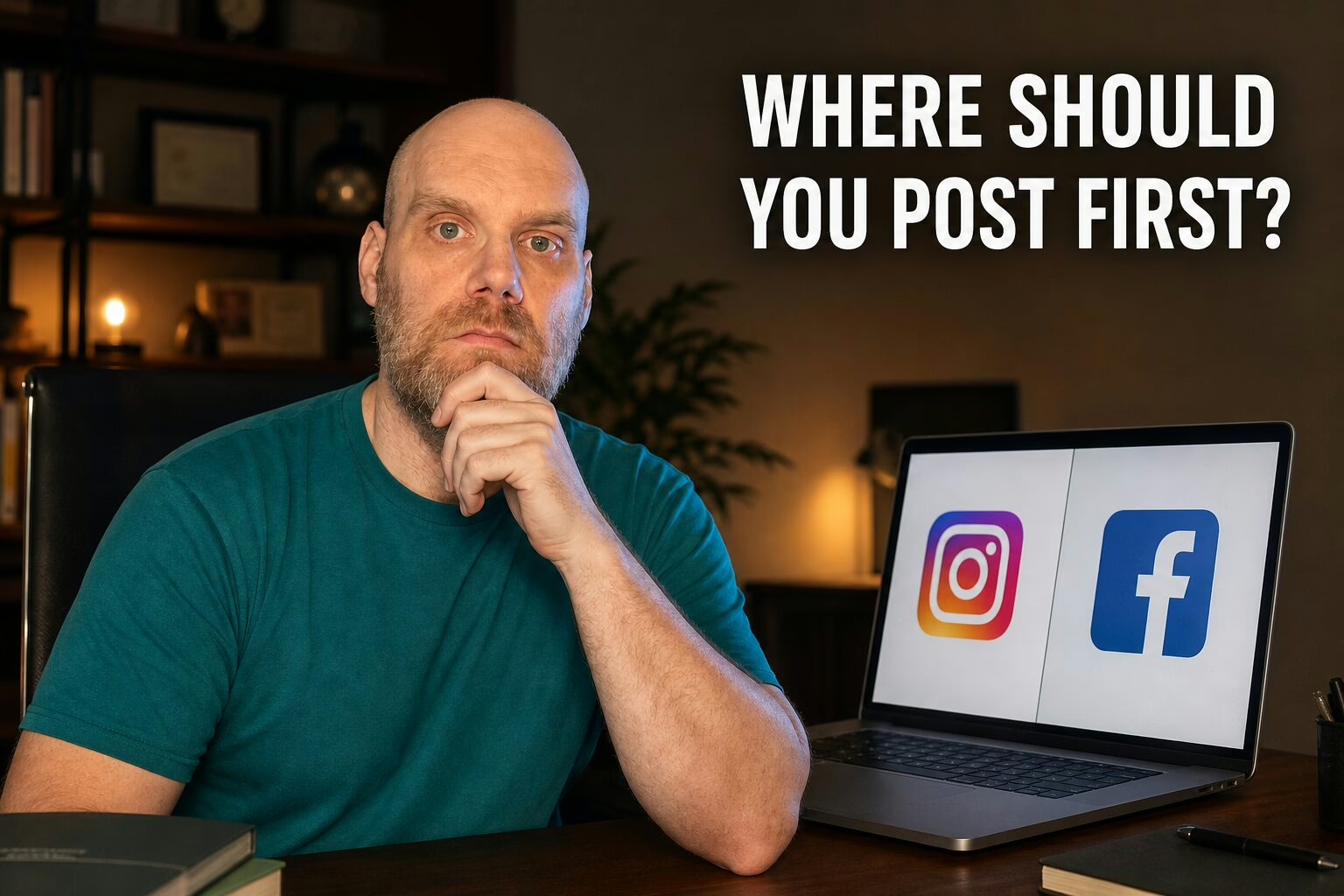
TL;DR: Facebook is better if you like writing, want to use Groups, and your audience is 30+. Instagram is better if you prefer short video, want the algorithm to find new people for you, and your audience is 18–40. Pick one. Go all in for 90 days. Then expand. This post breaks down the honest pros and cons of each platform so you can stop guessing and start growing.
The Question That Stalls Everyone
“Should I be on Instagram or Facebook?”
I hear this every single week. And I get it. When you are just starting out, it feels like you need to be on every platform at once. Instagram, Facebook, TikTok, Pinterest, YouTube, X, Threads, LinkedIn.
That is a fast track to burnout.
I learned this the hard way. When I left the U.S. Army after years as a 25U Communications Specialist, I thought I needed to attack every channel like a military offensive — full force, all fronts. That is not how online business works.
The truth is simple: you only need **one** platform to start. The right one. And once you build momentum there, you can expand.
So let me break down Instagram and Facebook honestly — no guru fluff, no “it depends” cop-outs — so you can pick one today and start moving.
Facebook — The Breakdown
Best for: Building community, longer conversations, reaching people 30+
The Pros
– **Facebook Groups are goldmines.** Join groups full of your exact target audience and build relationships for free. No followers needed. No content calendar. Just show up, answer questions, and provide value. I have personally gotten more warm leads from Facebook Groups than from any paid ad.
– **Longer posts perform well.** You can write 200–500 word posts and people will actually read them. Facebook rewards depth. If you are someone who likes to write and explain things, this is your platform.
– **Sharing links is easy.** You can post a blog link and Facebook will not bury it the way Instagram does. This matters when your goal is driving traffic back to your website.
– **Events and Pages are built in.** If you run webinars, workshops, or live Q&A sessions, Facebook has native tools for all of it.
– **The audience has money.** The 30–65 age group is the highest-spending demographic online. If your product or service targets working professionals, business owners, or veterans, they are on Facebook.
The Cons
– **Organic reach on Pages is brutal.** Your Facebook Page will show your posts to maybe 2–5% of your followers unless you pay to boost. Groups are the workaround, but you need to know that going in.
– **It is not built for discovery.** Facebook does not push your content to strangers the way Instagram Reels does. Growth is slower and more relationship-driven.
– **The algorithm favors engagement bait.** “Comment YES if you agree” posts get rewarded. Thoughtful, nuanced content sometimes gets buried.
– **It feels older.** If your audience is 18–25, most of them are not scrolling Facebook. They are on Instagram, TikTok, or YouTube.
Instagram — The Breakdown
Best for: Visual content, short-form video, reaching people 18–40
The Pros
– **Reels get massive organic reach.** The Instagram algorithm actively pushes Reels to people who do not follow you. One solid 30-second Reel can get thousands of views with zero followers. This is the single biggest advantage Instagram has right now.
– **Stories build personal connection.** Daily Stories make people feel like they know you. That trust translates directly into sales. Stories are where followers become buyers.
– **Visual-first is beginner-friendly.** You do not need to be a great writer. A quick video of you talking to the camera, a carousel with tips, or even a simple quote graphic can perform well.
– **The hashtag system still works.** Use 5–15 targeted hashtags and your content gets pushed into topic feeds. Free discovery without paying a cent.
– **Cross-posting to Facebook is one click.** Instagram lets you auto-share Reels, Stories, and posts directly to your connected Facebook Page. Two platforms for one piece of content.
The Cons
– **You cannot post clickable links in captions.** The only clickable link is in your bio. If your strategy depends on driving traffic to a blog or landing page, this is a real limitation.
– **The algorithm is unpredictable.** One Reel gets 10,000 views. The next one — same format, same quality — gets 47. It can be frustrating, especially early on.
– **Content creation takes more effort.** You need visuals. Video. Graphics. Carousels. Text-only posts do not exist on Instagram. If you hate being on camera and do not have design skills, the learning curve is steeper.
– **DMs are where sales happen, but they are hard to scale.** Instagram sales often come through DM conversations. That is great at first, but it does not scale the way a funnel with email does.
The Instagram vs Facebook: Side-by-Side Comparison
| Feature | ||
| Best audience age | 30–65 | 18–40 |
| Content style | Text + links | Visual + video |
| Discovery | Groups (manual) | Reels (algorithmic) |
| Link sharing | Easy, clickable | Bio link only |
| Organic reach | Low (Pages), High (Groups) | High (Reels), Medium (Feed) |
| Sales path | Groups → DM/link | Content → DM/bio |
| Best for | Writers, community builders | Video creators, visual brands |
| Learning curve | Lower | Medium |
So, Which One Should You Pick?
Here is my honest recommendation based on running Corran Force Designs and helping veteran entrepreneurs get started:
Pick **Facebook** if:
– You prefer writing over making videos
– Your target audience is 30+
– You want to leverage Groups to build relationships
– You need to share links to your blog, course, or landing page
– You like community-driven engagement
Pick **Instagram** if:
– You are comfortable on camera (even a little)
– Your audience is 18–40
– You want the algorithm to put your content in front of strangers
– You prefer creating short videos and visual content
– You like the idea of one piece of content reaching thousands organically
**My personal take?** If you are a veteran entrepreneur selling a course, coaching, or affiliate products to other professionals and veterans, **start with Facebook Groups**. The audience is there, the buying intent is higher, and you can build trust faster through written conversations than through 15-second clips.
But if you have even a little comfort with video, start building Instagram Reels alongside your Facebook activity. Reels are the closest thing to free advertising that exists in 2026.
How I Apply It
At Corran Force Designs, I use Facebook Groups for deep engagement — answering questions, sharing blog posts, and building relationships with veterans who are exploring entrepreneurship. I use Instagram for reach — Reels that introduce new people to the brand and Stories that keep existing followers connected.
One feeds the other. But I did not start both at the same time. I started with Facebook because I am a writer at heart. And that made all the difference.
The 90-Day Rule
Whichever platform you pick, commit to it for 90 days before you judge the results.
Not 2 weeks. Not 30 days. 90 days.
Here is why: the first 30 days you are learning the platform. The next 30 days you are finding your voice. The final 30 days is when the algorithm starts recognizing your consistency and pushing your content.
Most people quit in month one because they posted 8 times and got 12 likes. That is not failure. That is the warmup.
Treat it like basic training. You do not get strong in week one. You get strong because you showed up every day for 90 days.
Your Next Step
Stop researching platforms. Pick one. Post your first piece of content today.
If you want a complete system that shows you exactly what to post, how to monetize it, and how to build a real online income — Freedom Ascension is free. No credit card. No upsell. Just a step-by-step plan built for people who are starting from zero.
👉 [LINK]
Now I want to hear from you: Instagram or Facebook? Which one are you going with? Drop your answer in the comments. 👇
FAQ
**Q: Can I use both Instagram and Facebook at the same time? **
A: You can, but I do not recommend it when you are starting out. Spreading your effort across two platforms usually means you do neither well. Pick one, build momentum for 90 days, then add the second.
**Q: Which platform is better for affiliate marketing? **
A: Facebook, because you can share clickable links directly in posts and Groups. Instagram limits you to one bio link, which adds friction between your content and your affiliate offers.
**Q: Do I need to spend money on ads to grow on Facebook? **
A: No. Facebook Groups are free and the highest-converting organic strategy on the platform. Focus on Groups before you ever touch Facebook Ads.
**Q: How often should I post? **
A: On Facebook, 3–5 times per week in Groups plus 1–2 Page posts. On Instagram, 3–4 Reels per week plus daily Stories. Consistency matters more than volume.
**Q: I hate being on camera. Can I still use Instagram? **
A: Yes, but it will be harder. Carousels and quote graphics work, but Reels with your face get significantly more reach. If you truly cannot do video, Facebook is the better choice.
**Q: What about TikTok? **
A: TikTok is powerful for discovery, but the audience skews younger and the monetization path for affiliate marketing and courses is less mature than Facebook or Instagram. Master one of these two first.