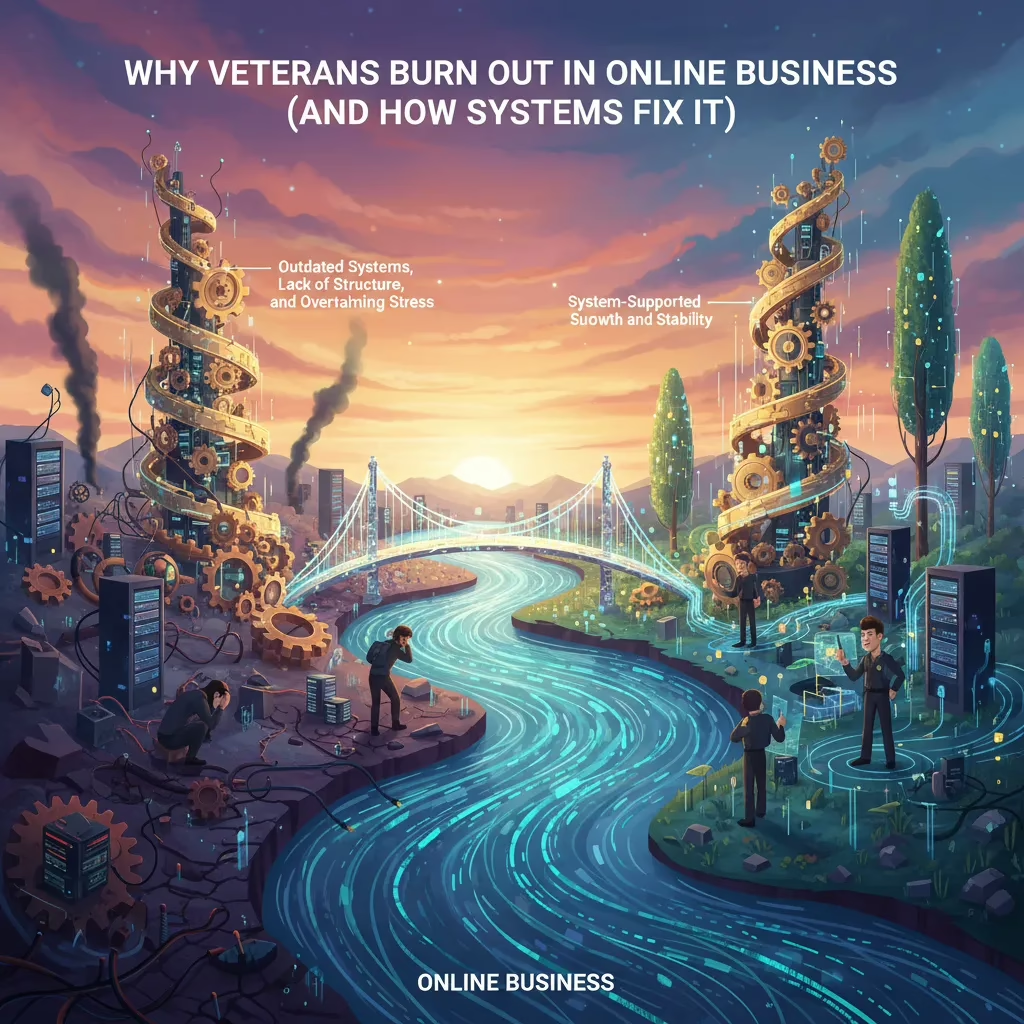
When I first swapped my uniform for a laptop, I thought I was escaping one chaos for another. But instead of structured disorder, I landed in a swirling storm of unstructured stress. Sound familiar? Many veterans launch online businesses expecting freedom, only to find themselves trapped in hustle culture — working harder, not smarter. In this post, I’ll walk you through the unexpected trap of hustle, why your military skills are your secret weapon, and how a few game-changing systems can flip burnout into freedom.
Hustle Is a Trap: Why More Effort Doesn’t Mean More Income
When I first jumped into online business after leaving the military, I thought I knew the secret: outwork everyone. That’s what hustle culture teaches us, right? If you just push harder, grind longer, and never stop, you’ll win. But here’s the truth I learned the hard way—hustle culture burnout is real, and it hits veterans especially hard.
In the military, “all hands on deck” meant something. There was a clear mission, a chain of command, and a structure that made sense. But online, hustle culture pressures veterans to work harder, not smarter. I found myself replicating that old mentality—pouring in more hours, thinking that effort alone would move the needle. Instead, I just felt more exhausted and less accomplished.
Here’s the catch: effort scales pain, not income. Without systems, more work just creates faster burnout. I learned this after weeks of 14-hour days, chasing every new idea, and feeling like I was always behind. The harder I pushed, the more my stress grew. Studies show that long hours increase founder burnout risk by 30%. And for veterans, used to structured environments, the lack of clear systems only makes it worse.
Dr. Sherry Walling, a psychologist who works with entrepreneurs, says it best:
“Hustle culture isn’t a badge of honor — it’s a fast track to burnout, especially for veterans used to clear mission structures.”
That hit home for me. I realized that hustle culture can look like productivity, but it’s really just spinning your wheels. More hours and effort often increase stress and burnout instead of improving results or income. In fact, the hustle mindset is linked to 40% higher stress reports among entrepreneurs. It’s a cycle that’s hard to break—especially when you’re used to doubling down on effort to get results.
What’s really happening is this: without proper systems, online entrepreneurs experience diminishing returns from extra work. You can’t just “muscle through” the chaos of online business. The more you try, the more you risk veteran burnout in online business. I saw it in myself and in other vets—exhaustion, frustration, and eventually, the urge to quit.
Research backs this up. Consistency in time-blocking—setting aside focused work periods with short breaks—prevents burnout by ensuring tasks get the right attention without overwhelming your brain. But hustle culture ignores this, pushing you to fill every minute with more work, not better work.
So if you’re a veteran stepping into online business, don’t fall for the hustle trap. More effort doesn’t mean more income. Without systems, all that extra work just leads to faster burnout. The key to preventing burnout for veterans is building structure—systems that let you work smarter, not harder.

Military Skills are Business Gold: Checklists, SOPs & Repeatability
When I first jumped into online business, I was surprised by how chaotic it felt. No clear orders, no battle rhythm, just a never-ending list of things to do. But then I realized—what felt overwhelming to others was actually my secret weapon. As a veteran, I already had the tools that most entrepreneurs spend years trying to develop: discipline, process adherence, and the ability to execute repeatable systems. These are the same skills that kept me alive and effective in the military, and they’re absolute gold in business.
Let’s be real—most civilian entrepreneurs struggle with structure. They chase every new idea, drown in decisions, and burn out fast. But veterans? We know the power of a checklist. We live by Standard Operating Procedures (SOPs). In the military, these tools aren’t just helpful—they’re the difference between mission success and failure. In business, they’re just as critical. Checklists and SOPs create predictable outcomes, reduce errors, and make scaling possible.
Here’s what I learned: Online business rewards the same traits the military drilled into us. When you turn chaotic tasks into manageable routines, you cut down on stress and free up mental space for what matters most. According to recent studies, using SOPs can increase productivity by 25% in small businesses. That’s not just a small edge—it’s a game-changer for veteran entrepreneurs looking for time management tips and better work-life balance.
- Checklists: They keep you on track, prevent missed steps, and make delegation easy. When I started documenting my daily tasks, I stopped wasting time and started seeing real progress.
- SOPs: These are your playbook. They let you hand off tasks without worrying about quality slipping. Effective delegation means you can focus on high-priority areas—like growth and strategy—instead of getting stuck in the weeds.
- Repeatability: The more you systematize, the less you have to think. Systematized operations cut mental fatigue by 20%. That’s more energy for your family, your health, and your next big idea.
Service providers who work with veterans often say we excel at systematic approaches that most entrepreneurs lack. We’re used to following a process, not reinventing the wheel every day. That’s why, when I built my first set of SOPs for my online business, everything changed. Tasks that used to drain me became automatic. I could finally set boundaries and reclaim my evenings—something I hadn’t done since leaving the service.
Veteran entrepreneur Jason Long: “Using military SOPs in business saved my sanity and doubled my efficiency within months.”
Setting realistic goals and boundaries is critical for long-term success and work-life balance for veterans. When you have systems in place, you’re not just working harder—you’re working smarter. And that’s how you avoid burnout and actually enjoy the freedom you set out to find.

One System Beats Ten Ideas: Simplifying for Sustained Momentum
When I first jumped into online business, I thought more ideas meant more chances to win. I’d scribble out new funnels, offers, and content plans every week. But instead of moving faster, I felt like I was running in circles—stressed, scattered, and getting nowhere. It turns out, complexity kills momentum. The more I tried to juggle, the more my progress stalled. That’s when I learned the power of one system—and why it’s the ultimate entrepreneur guide for veterans like us.
Veterans are trained for strategic planning. In the military, every mission has a clear objective, a core message, and a daily action plan. We don’t try to fight ten battles at once. Yet, in online business, it’s easy to fall into the trap of chasing every shiny idea. The truth? One funnel, one core message, and one daily action create more momentum—and less chaos—than any pile of scattered plans.
Why Simplicity Wins: The Data
Let’s talk numbers. Businesses that focus on a single marketing funnel see up to 35% higher conversion rates compared to those juggling multiple funnels. When you align your daily actions with your core business goals, productivity can jump by up to 40%. That’s not just theory—it’s proven. The more you simplify, the more you achieve.
How Complexity Creates Burnout
Trying to run ten ideas at once fragments your attention. You end up making dozens of small decisions every day, which leads to decision fatigue and stress. I’ve seen fellow veterans burn out not because they lacked discipline, but because they tried to do too much at once. Multitasking doesn’t multiply results—it multiplies stress.
Business coach Sarah Mitchell says, “Simplify, scale, and stick — your business grows best when focus isn’t fractured.”
Applying Strategic Planning: The Veteran Advantage
Here’s where our military background becomes an asset. Strategic planning isn’t just for the battlefield—it’s the backbone of sustainable business. When you focus on one funnel, you can refine your message, test what works, and build a repeatable process. That’s how you reduce stress and build a business that doesn’t depend on constant hustle.
- One Funnel: Streamline your marketing. Focus all your energy on perfecting a single path for customers to follow.
- One Core Message: Make your value clear and consistent. Confused customers never buy.
- One Daily Action: Build habits that reinforce progress. Small, focused steps add up to big wins.
Trying to do it all at once is a recipe for burnout. But when you apply the strategic focus you learned in service, you create a business that’s not just profitable—but sustainable. One system beats ten ideas, every time.

Stress Is a Signal: Reframe Burnout as Feedback, Not Failure
When I first transitioned from military life to running my own online business, I thought stress was a sign I just wasn’t cut out for entrepreneurship. The late nights, the endless to-do lists, the feeling that I was always behind—at first, I took all of it personally. But over time, I learned something crucial: burnout isn’t a sign of weakness. It’s a signal—your business’s way of telling you that something in your structure needs to change.
Dr. Lisa Cooper puts it best:
“Stress is your business telling you something needs to change — listen before it becomes burnout.”
That quote hit home for me. Too often, veterans like us try to muscle through, thinking if we just work harder, we’ll break through. But the truth is, effort alone isn’t the answer. In fact, more hustle without a system just scales up the pain, not the profit.
What I realized is that the same skills that made me successful in the military—following checklists, executing SOPs, and relying on repeatable routines—are exactly what I needed in my business. When stress started to spike, it wasn’t because I was failing. It was because my systems were failing me. The solution wasn’t to “fix myself,” but to fix the structure around me. That meant learning to delegate, setting realistic goals, and making self-care a non-negotiable part of my routine.
Self care entrepreneurs know that productivity isn’t just about grinding harder. It’s about taking care of your body and mind. Simple things like meal planning, regular exercise, and prioritizing sleep made a bigger difference than any new marketing hack. Research backs this up: consistent sleep and nutrition not only improve productivity, but also cut the risk of burnout dramatically for online business owners. Veteran entrepreneur programs like REBOOT have shown that addressing workload, scheduling, and self-care can lower burnout rates by up to 30%.
But the biggest shift for me was realizing that stress is feedback, not failure. When I started to feel overwhelmed, I stopped blaming myself and started looking at my systems. Was I trying to do too much alone? Was I setting goals that were actually achievable? Did I have routines in place to protect my energy and focus? Recognizing stress as a signal encouraged me to embrace delegation and to set boundaries—both with my time and my expectations.
If you’re a veteran entrepreneur feeling the weight of burnout, remember: you don’t need to “tough it out” or “fix yourself.” You need to fix the systems around you. Build routines that support self-care, learn to delegate, and set realistic goals. That’s how you prevent burnout—and that’s how you build a business that gives you the freedom you signed up for in the first place. Listen to the signals. Adjust the structure. That’s the real mission now.
TL;DR: Veterans often face burnout in online business due to unstructured hustle and lack of systems. By leveraging military-honed skills like checklists and SOPs, focusing on one core system at a time, and recognizing stress as a signal for structural change rather than personal failure, veterans can rebuild sustainable, balanced entrepreneurship.