
I remember one December morning—coffee gone cold, a half-finished gift list, and a calendar that decided how much I mattered. While others unwrapped sweaters and gadgets, I wanted something quieter: more time. That wish didn’t arrive as a miracle. It showed up as a small, stubborn idea: what if I treated time like the gift I was allowed to give myself? Over the next few sections I’ll tell you why time freedom is the holiday present I chose to build, not wait for, and how you can start today—even while still answering emails.
1) Why Time Beats Tangible Gifts (Time Freedom mindset)
I used to judge Christmas by the number of wrapped boxes under the tree. More boxes meant I was doing it right. But even on the “good” years, I felt a quiet pressure in the background—like the holiday was rented, not owned. I could enjoy it, but I couldn’t relax into it. There was always a return date. Always a schedule waiting.
Now I judge the season differently: by the number of unplanned hours I get with my family. Not the kind you squeeze in between errands, but the kind where nobody is watching the clock. That’s what Time Freedom means to me—designing and choosing how I spend my time in a way that matches my values, my goals, and the life I’m trying to build.
Time Freedom Is Choice, Not Just Better Efficiency
I used to think time freedom was about hacks and apps and tighter routines. Those can help, but they’re not the point. Real time freedom is about choice and alignment. It’s choosing the calendar, not being chosen by it. It’s being able to say, “This matters,” and then backing it up with action.
“We don’t find time; we make it—by deciding what matters.” — Laura Vanderkam
Scarcity vs. Abundance Mindset (and Why It Changes Everything)
When I’m stuck in a scarcity mindset, time feels like something I’m always losing. I rush, I overbook, I tell myself I’ll rest “after things calm down.” But an Abundance Mindset shifts the question from “How do I fit more in?” to “What do I want my life to look like?” That shift supports intentional planning, and over time it drives real Personal Growth—because I stop treating my time like an emergency and start treating it like an asset.
A Simple Swap That Beat Any Store-Bought Gift
One year, I skipped a pricey present and gave my kid something else: a scheduled Saturday afternoon that was protected like an appointment. No errands. No phone. Just us. We built something, ate snacks, and laughed more than we talked. That block of time did more for our relationship than anything I could’ve wrapped.
That’s also Work Life Balance in real life: not perfect days, but chosen moments—on purpose.
-
Time Freedom starts when I decide what matters most.
-
An Abundance Mindset helps me plan like I’m allowed to have it.
-
Personal Growth shows up when I protect that plan.

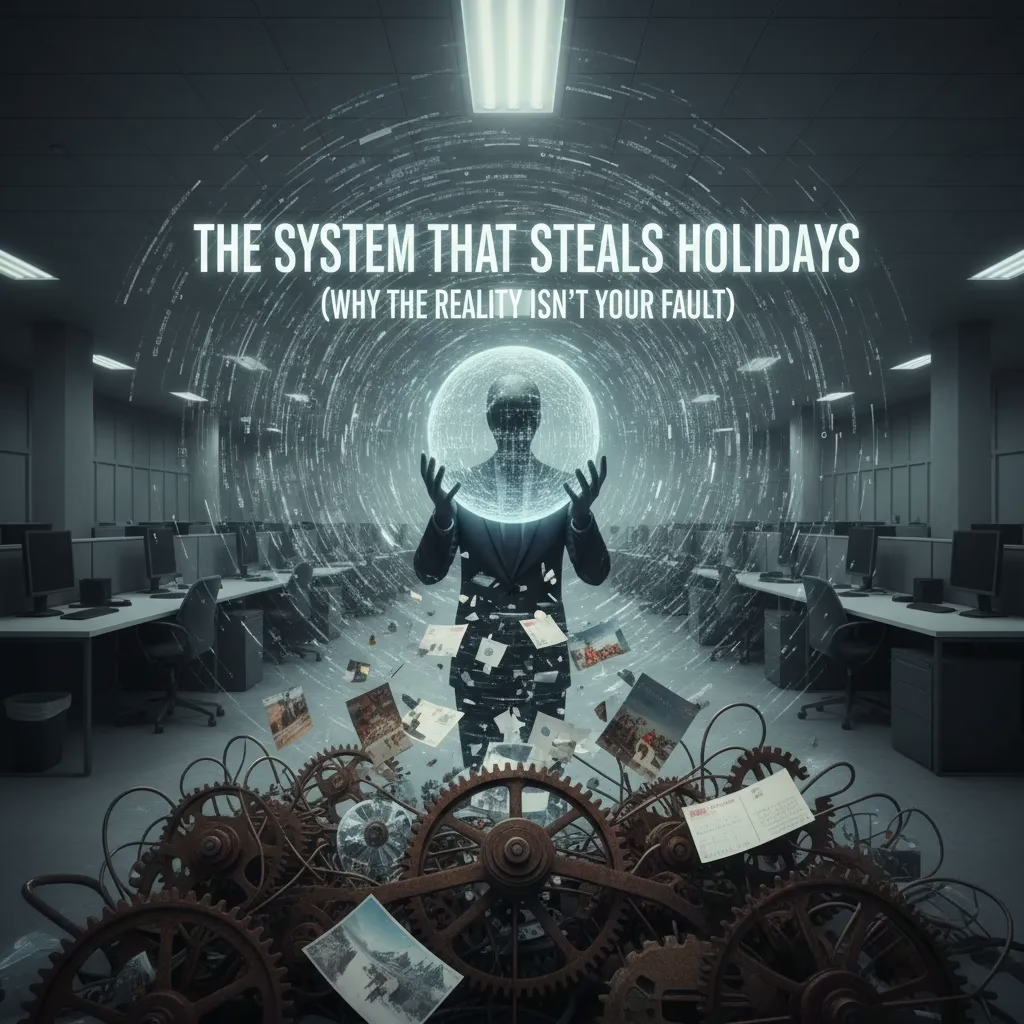
2) The System That Steals Holidays (Why the Reality Isn’t Your Fault)
For years, holidays feel borrowed. I’d enjoy the food, the laughs, the photos—then feel that quiet weight in my chest. Because I didn’t really own the day. I was renting it. There’s always a return date. Always a schedule waiting.
Why Holiday Stress Isn’t a Personal Failure
A lot of holiday stress comes from systems you didn’t invent: fixed job schedules, workplace culture that rewards “always on,” and social norms that treat weekends like a quick refill instead of real rest. Even the calendar can feel like a countdown—Christmas, then back to emails, meetings, and the same pace.
I used to blame myself. I thought I was bad at Work Life Balance. I thought I just needed more discipline. But the truth was simpler: the system was doing what it was built to do—keep me producing on a clock.
“Systems don’t fail you; they do exactly what they were built to do—learn to redesign them.” — Rob Cressy
That quote hit me because it removed the guilt. Research backs this up: when you recognize systemic causes, you reduce self-blame—and that opens the door to strategic action. Not hype. Not wishful thinking. A real Time Freedom Strategy starts with seeing the real problem.
The Hidden Rules That Steal Your Time
-
Fixed schedules that decide your value by hours, not outcomes
-
Return-date pressure that makes rest feel “unsafe”
-
Workplace norms that punish boundaries with subtle consequences
A Small Ritual That Helped Me Reduce Stress
I didn’t fix my life overnight. I started with one tiny rule that gave me permission to be present:
Close the laptop by 6 PM on Dec 24.
That was it. No big speech. No perfect plan. Just a line in the sand. And it helped me Reduce Stress because it turned “I hope work doesn’t ruin this” into “I decided what happens next.” It was my first step to Control Schedule, even if only for one evening.
Why Veterans Often Get This Faster
If you’re a veteran, you already respect structure. You know systems, routines, and standards. The shift is learning to repurpose that discipline—not just to follow a schedule, but to redesign one that serves your life.
3) Small, Concrete Moves That Build Time Freedom (Achieve Time Freedom)
Last Christmas, I caught myself watching the clock more than the tree. I wasn’t “ruining” the holiday—I was living inside a system that rewards being busy. So I stopped chasing a big escape plan and started taking Strategic Action in small, repeatable moves. That’s how you Achieve Time Freedom: build it while you’re still showing up.
Pick One Monetizable Skill (and Practice Like It’s Training)
I used to multitask my way into nowhere—ten ideas, zero progress. Then I chose one skill I could sell: writing offers and emails. You could choose editing, simple design, paid ads, bookkeeping, or basic web builds. The point is consistency.
To make it real, I used Time Blocking: one block per day, same time, no debate. Inside that block, I ran the Pomodoro Technique (25 minutes work / 5 minutes break) so I didn’t burn out or drift.
Marie Forleo: “Small, repeated actions compound into real freedom over time.”
Automate Once So You Don’t Repeat Yourself Forever
Entrepreneurs who get time freedom faster aren’t “more motivated.” They build systems. I started tiny: templates for replies, a checklist for client onboarding, and an autoresponder that handled the first questions while I was offline.
-
Templates: proposals, invoices, follow-ups
-
Autoresponders: “Here’s what happens next” emails
-
Hired help: a freelancer for one task you hate (even 2 hours/week)
Let Technology Carry the Weight (and Build a Side Income Stream)
The goal isn’t overnight success. It’s future certainty. I set up simple tools that kept working when I wasn’t:
-
Scheduling: a booking link instead of back-and-forth texts
-
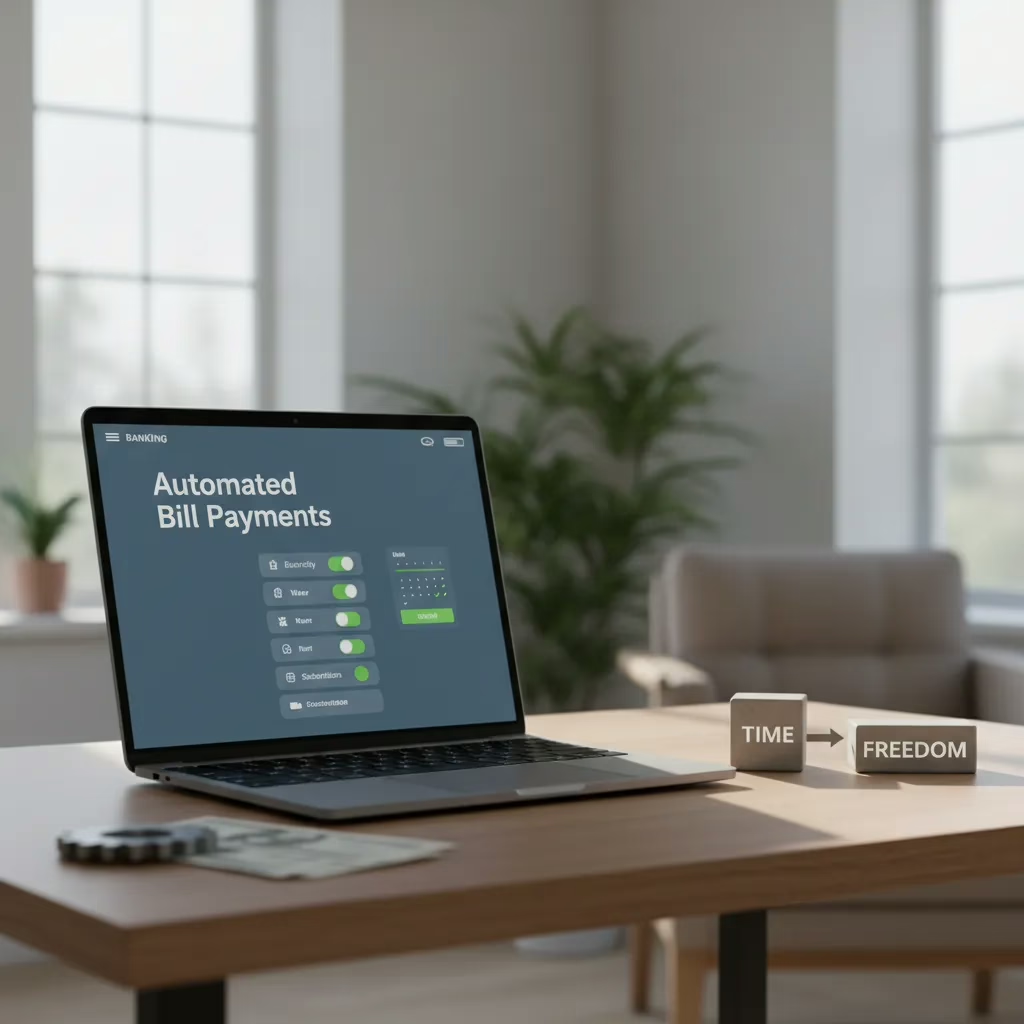
Payments: auto-invoices and subscriptions
-
Simple funnel: one page → one offer → one checkout
That’s how a Side Income Stream starts to feel “permissionless.” Examples: a small consulting package (one problem, one price) or a simple digital product like a checklist, template pack, or short guide—sold while you’re at dinner, not stuck at a desk.
4) The One-Year Experiment: A Different Christmas (Entrepreneur Freedom & Location Freedom)
Last Christmas, I caught myself checking the clock even while I was “off.” I was present, but not fully. My calendar still owned me. So I tried a simple thought experiment: I wrote a letter to my future self dated Dec 25, one year from now.
Write the letter: What does your calendar look like?
I asked myself questions that felt almost unfair:
-
Do I have free mornings, or do I wake up to urgent messages?
-
Can I say yes to a spontaneous family hike without “asking permission” from work?
-
Do I control my week, or does my week control me?
That’s when Time Freedom stopped being a dream and became a design problem. I didn’t need a perfect life. I needed calendar control—the kind that comes from Entrepreneur Freedom and Location Freedom, where income isn’t tied to one place or one boss.
Colin Scotland: “Designing for one year forces decisions that favor freedom over instant gratification.”
The checkpoint: one measurable step this month
Research backs what I felt: time freedom business models make room for unplanned days off because you’re not trading every hour for money. But to get there, you have to reduce financial pressure with passive or permissionless income—even if it starts small.
This month, I picked one measurable step to Create More Time:
-
Block 3 hours weekly for skill-building (non-negotiable).
-
Automate one task (I started with invoices and reminders).
-
Set one boundary (no work on one weekend day).
Small wins stack into an Ideal Work Balance
My “one-year formula” became simple: 1 monetizable skill + automation + consistent boundary-setting. That stack is what creates more unplanned days off.
-
90 days: launch a tiny MVP (a simple product or service offer).
-
6 months: automate recurring client payments.
-
12 months: free one weekend per month—protected on the calendar.
One year is realistic. It’s long enough to build, short enough to stay honest. And it’s how a normal Christmas becomes a different one.
5) Wild Cards: Odd Analogies, a Letter to Future Me, and A Tiny Ritual
An odd analogy that finally made Time Freedom feel real
I started treating my time like an interest-bearing bank account. Not the kind you check every hour, but the kind you build quietly. Every small skill I learn is a deposit. Every automation I set up is a deposit. Every boundary I hold is a deposit. Then, when Christmas morning shows up, I don’t have to “earn” my presence—I can withdraw it. That’s the point: not overnight success, but future certainty. No drama. No guru worship. Just execution.
“Radical time freedom starts with small rituals that protect your attention.” — Sagan Morrow
A letter to Future Me (Dec 25)
Here’s a weird thing I do when I want my goals to stop floating away: I write to my Dec 25 self like he’s a real person I don’t want to disappoint. I keep it simple and honest, and I include three things I will protect next year: family breakfast, unplugged evenings, and one creative hour that belongs to me. That’s Self Care, but it’s also strategy. Gratitude reflection helps me notice what matters, and boundary-setting keeps it from getting traded away for “urgent” stuff.
If you want a micro-experiment for December, write that letter tonight and read it out loud once. If you want one for January, pick one protected item and put it on your calendar for four weeks like it’s a meeting with your future.
A tiny ritual: the “return-date release”
On one chosen holiday, I refuse any obligation that has a return date attached to it. If it comes with “we’ll need you back online tomorrow,” I don’t touch it. I call it the return-date release, and it creates Sustainable Habits because it trains my brain to stop renting my life.
It also makes room for Spontaneous Breaks—the kind where you take a walk, play a game, or sit in silence without explaining yourself. People like Laura Vanderkam and Marie Forleo talk about designing time on purpose, and creators like Rob Cressy and Colin Scotland remind me that consistency beats intensity. This Christmas, I’m choosing the gift that keeps giving: time I actually own.
TL;DR: Time Freedom beats gadgets: shift mindset, learn one monetizable skill, automate repetitive work, use time-blocking and Pomodoro, and in a year you’ll reclaim holiday(s) and choice.