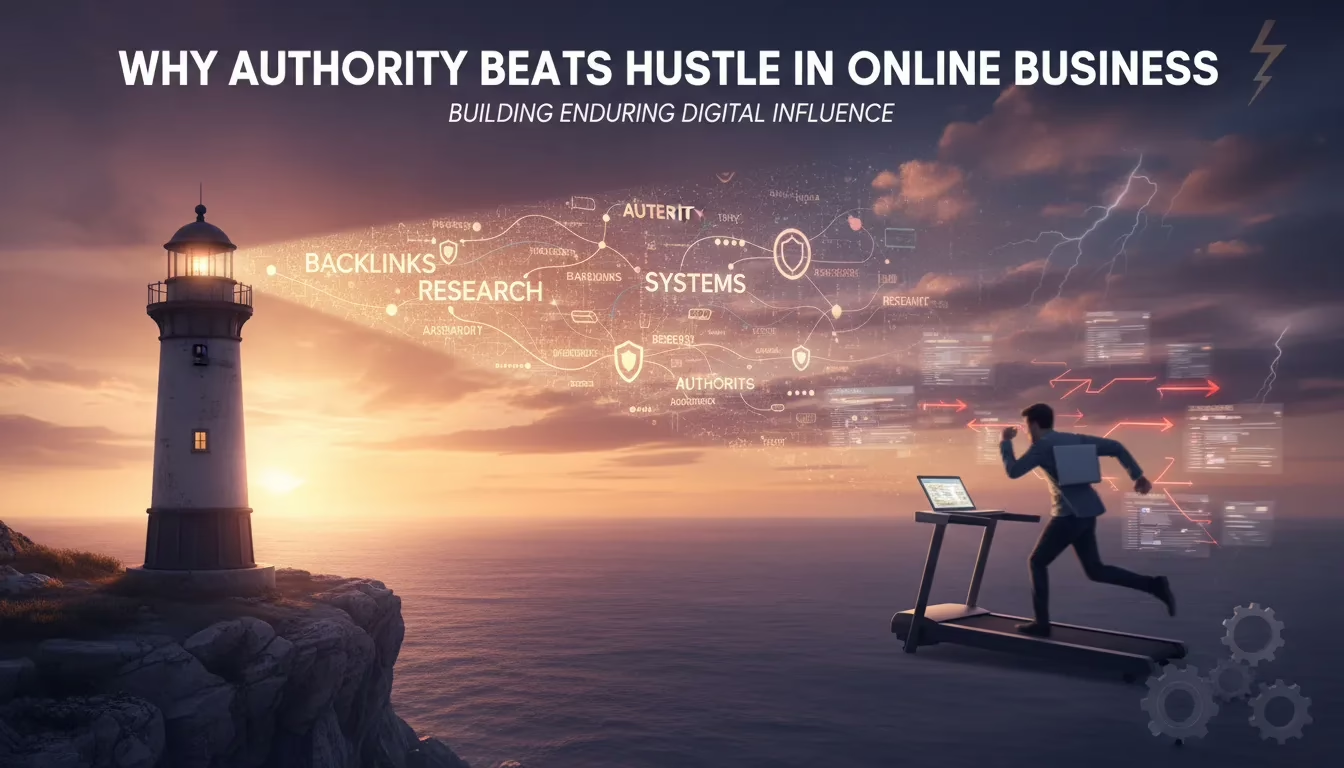
I used to wear hustle like a badge. I hustled through endless launches, late-night DMs, and frenetic content bursts. At some point a simple question stopped me cold: why, with all that motion, was my domain authority flat and conversions inconsistent? In this piece I tell the story of swapping short-term attention for long-term authority — the systems, the mindset, and the messy experiments that finally produced repeatable results.
1) The Hustle Trap (and why it feels productive)
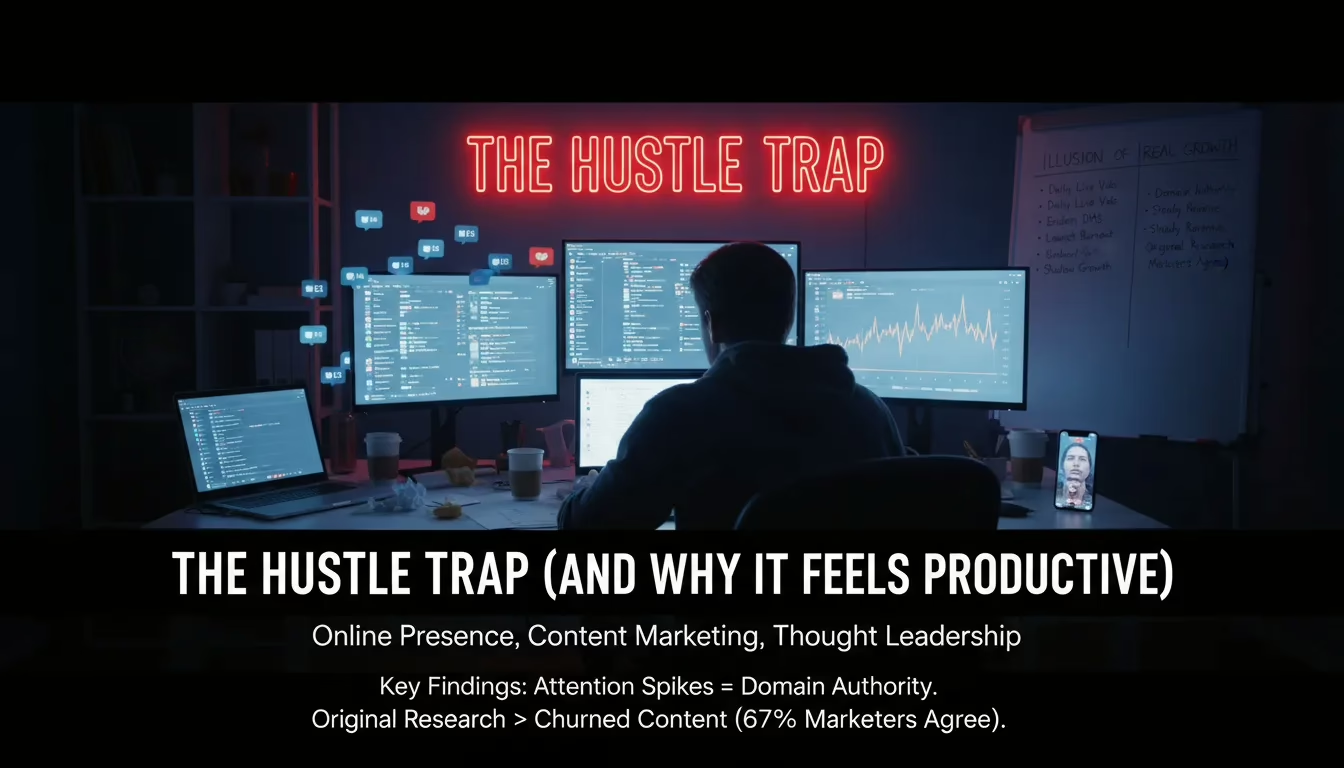
I had a season where my Online Presence looked unstoppable. I went live every day. I answered endless DMs like it was my job (because it was). I ran launch sprints back-to-back until my team started making “please sleep” jokes that weren’t really jokes.
On paper, it was productive. My calendar was full. My phone never stopped. And the numbers gave me little hits of proof: more views, more comments, more “OMG needed this” replies.
Why hustle feels like growth (but isn’t)
The problem was the growth was shallow. Every push created a spike—then a drop. Traffic looked like a heartbeat monitor. Revenue did the same. And my site? Quiet. No real lift in rankings. No steady organic leads. Attention spikes don’t equal Domain Authority gains, and I learned that the hard way.
-
Live video gave me quick reach, but it didn’t create assets people link to.
-
DMs felt personal, but they didn’t compound like good Content Marketing.
-
Launch sprints created urgency, but not lasting trust.
The weekend I chased influencers
One weekend, I decided I’d “network.” I manually pinged influencers for shares. I wrote custom messages, followed up, and refreshed my inbox like a day trader. It was weirdly fun—like I was doing something important.
I got a few shares. A tiny traffic bump. Zero meaningful backlinks. By Monday, it was gone. That’s when it clicked: attention isn’t trust. It’s just noise if it doesn’t turn into proof—links, mentions, and repeatable systems.
Rand Fishkin: “Authority is the compound interest of trust; hustle without systems is just noise.”
Later, I saw why original work wins. 67% of marketers say original research is more valuable for trust than churned content. That’s what builds Thought Leadership—not being “always on,” but being worth citing.
2) Why Belief Is the Real Bottleneck
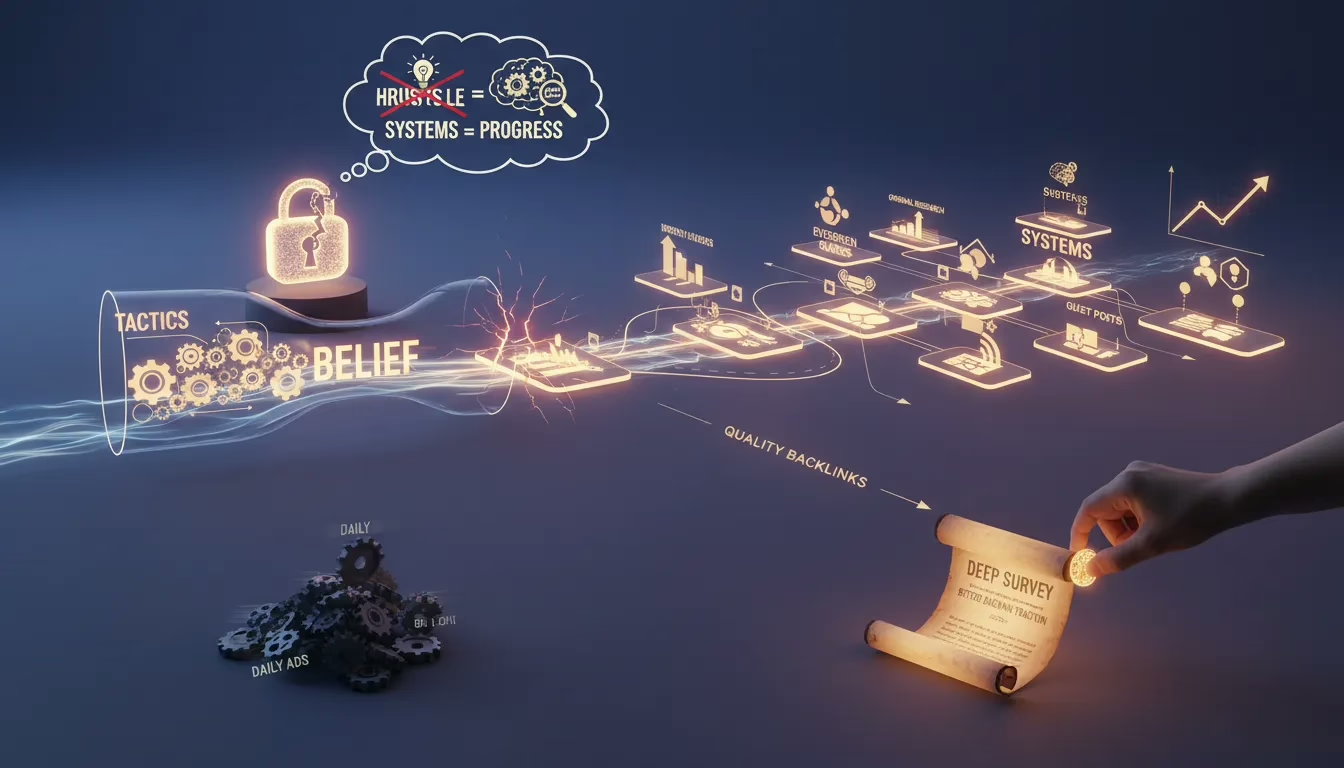
I used to think slow wins were a luxury. If I wasn’t posting daily, tweaking ads, or chasing the next tactic, I felt like I was falling behind. Looking back, that wasn’t a strategy problem. It was a belief problem. I believed hustle meant progress, so I kept buying “movement” instead of building assets.
How the Hustle Belief Blocks Original Research and Guest Posts
When you believe speed equals growth, you avoid anything that takes time to mature: Original Research, evergreen guides, and strong Guest Posts. Those don’t give you instant dopamine. They give you compounding trust. But founders (me included) often pick visible short-term wins even when long-term metrics like Authority Score and Domain Authority are what actually move the business.
-
Daily ads feel measurable today, but disappear tomorrow.
-
Evergreen Guides feel slow, but keep earning attention.
-
Original Research is a high-value, linkable asset that attracts citations.
That’s why people say, “Original research and comprehensive guides are proven linkable asset types[2].” It matches what I’ve seen: about 67% of marketers value original research because it gives them something real to reference.
A Belief-Shifting Experiment: One Survey Beat Daily Ads
I finally tested my own bias. I shifted budget from daily ads to one deep survey and a clean write-up. The result wasn’t more “activity.” It was better traction: more mentions, more replies, and more Quality Backlinks over time. That one asset made outreach easier because I had something worth quoting.
Ann Smarty: “Quality Backlinks are votes of confidence — you earn them when people believe your work matters.”
And when I paired it with automated thought leadership, the work stopped feeling heavy. One system cut my content time from 5 hours to 30 minutes[1], turning belief into repeatable action.
3) Authority vs Attention — Backlinks, Domain Authority, and Trust
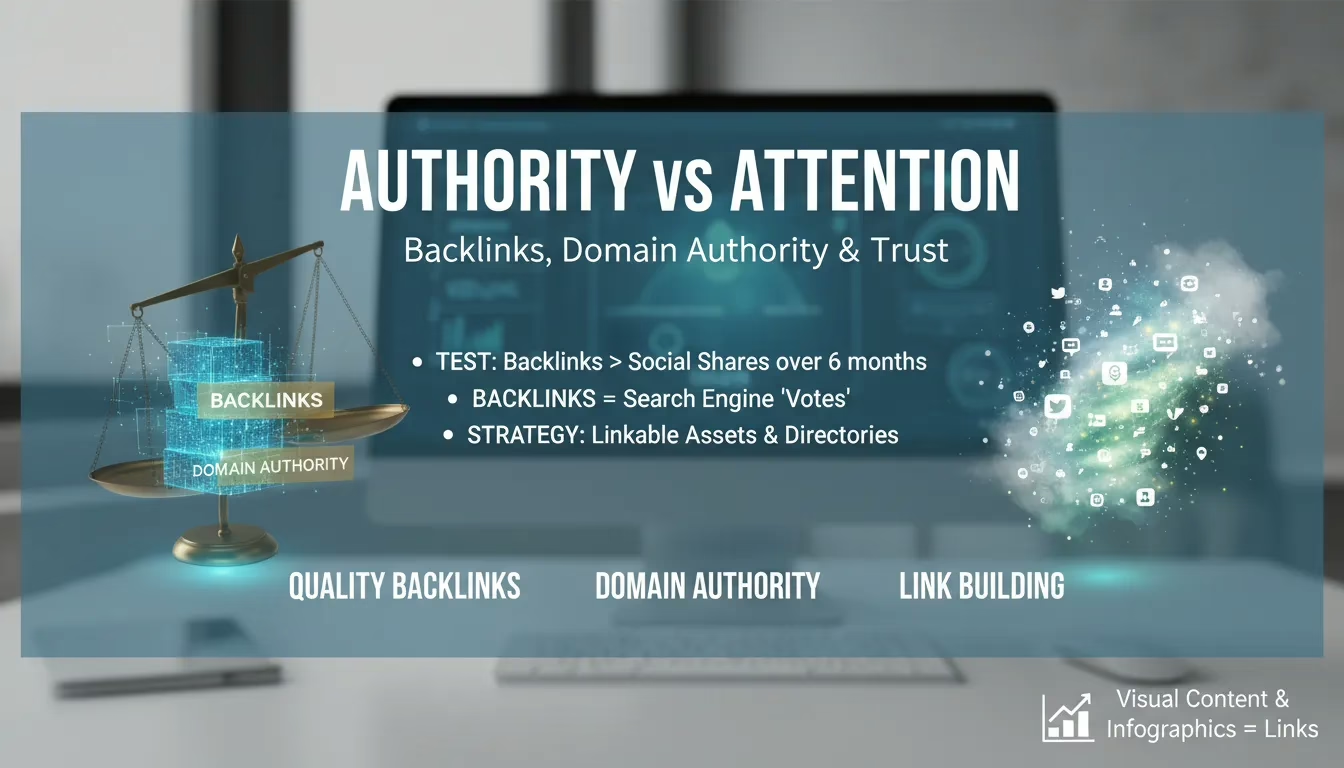
I ran a simple test because I was tired of guessing. I published two posts in the same week. One was built for attention: a bold hook, a hot take, and it got flashy social shares fast. The other was quieter, more useful, and I aimed it at Link Building—not outreach spam, but real value.
In the first month, the “attention” post looked like the winner. Then something happened. The useful post earned three Quality Backlinks from relevant sites. Over the next six months, that backlink post kept climbing and kept selling. The social post? It faded the moment the feed moved on.
Why Quality Backlinks Build Website Authority
Search engines treat backlinks like votes. Not all votes count the same, but strong ones change everything. Multiple SEO studies and tools (like semrush) point to the same idea: “Backlinks are the strongest factor influencing domain authority score[3].” And “High-quality backlinks act as votes of confidence[2][3].”
That’s why Domain Authority and Authority Score rise when the right sites link to you. It’s not hype—it’s trust, measured.
Neil Patel: “Link building is not spammy outreach if the content is genuinely useful — it’s relationship building.”
Practical Link Building: Create Linkable Assets
-
Visual content and infographics (they attract backlinks through shareability[2])
-
Original research, simple data tables, or mini case studies
-
Helpful templates and checklists people can cite
Local Trust Boost: Directory Listings
If you serve a region, I also prioritize clean directory listings (consistent name/address/phone). It’s boring, but it supports trust signals while you build Website Authority. For deeper dives, I’ve bookmarked notes from smithdigital, planetarylabour, and pgnagency.
4) How Systems Create Trust Automatically
The first time I felt real momentum online wasn’t from posting more. It was from building one simple system: a monthly evergreen guide, updated on a schedule, with an automated promotion plan behind it. Every month, the guide went live, then my emails, social posts, and outreach messages fired in a calm sequence. I stopped “launching” and started publishing. Over time, it generated consistent organic links because people could rely on it being there, being current, and being useful.
Authority Building Automation: repeatable thought leadership
I used basic AI Tools to speed up outlines, summaries, and repurposed snippets, then kept the final voice mine. The result was consistency without burnout. Companies using Authority Building Automation see 68% higher ROI versus manual approaches[1], and automated thought leadership can cut creation time from 5 hours to 30 minutes[1]. That matched my experience: less grind, more output, and the same message showing up everywhere.
-
Evergreen guide (monthly refresh)
-
Automated promotion schedule (email + social + outreach)
-
Free tools as lead magnets (simple calculators, checklists)
-
Directory listings for local SEO (steady trust signals)
Technical SEO + Site Speed: the “boring” trust signals
Then I fixed the stuff I used to ignore: Technical SEO. Site Speed, HTTPS, clean redirects, and being Mobile Optimized. It felt unglamorous, but it changed how people behaved. Pages loaded fast, forms worked, and bounce rates dropped. Those technical factors compound trust long-term[3].
Aleyda Solis: “Technical SEO is the hygiene factor of online trust — without it, even great content struggles.”
Internal Linking: making my site feel “bigger” than it was
I also tightened Internal Linking so every guide pointed to supporting posts, tools, and case studies. That structure made my site feel organized, credible, and easy to explore—like a library instead of a feed.
5) The Long Game Most People Quit Too Early
I used to think speed was the whole game. Then I quit a project at month four. Not because it failed—because it felt slow. I had posts, a few clicks, and a lot of effort… but no real Authority Building. Looking back, that was the exact moment the compounding was about to start. If I had stayed in it until month twelve with truly linkable content, the results would likely have stacked on themselves instead of resetting to zero.
Seth Godin: “The long game is the only game worth playing in building genuine authority.”
That’s the part most people miss: authority compounds over months, not days. Hustle gives you motion. Build Online Authority gives you momentum.
A 12-Month Minimal Plan (That I Actually Trust Now)
-
Month 1–3: Create one original study. Something small but real—survey results, pricing data, benchmarks. This becomes your “link magnet.”
-
Month 4–6: Publish one of your best Evergreen Guides. Not trendy. Not news. A guide that stays useful for years.
-
Month 7–9: Earn 5 quality backlinks. Not hundreds of random links—five from relevant sites that already have trust.
-
Month 10–12: Automate promotion. By 2026, 50% of SEO strategies will incorporate AI-powered authority building tools and companies using authority building automation see 68% higher ROI versus manual approaches[1]. I don’t want to “post more.” I want systems that keep sharing my best work while I sleep.
Now when I feel impatient, I remind myself: the goal isn’t to win this week. The goal is to build assets that keep paying me back.
Build once. Repeat forever. — that’s the authority play I now bet on.
Wild Cards — Quotes, Thought Experiment, and a Slight Tangent
A quick thought experiment: your site as a town square
When I’m tempted to hustle harder, I run this in my head: my website is a town square. People walk by, curious, but cautious. They don’t know me yet. Then the town elders show up—backlinks, brand mentions, and trusted Online Directories—and they vouch for me. Suddenly, I’m not “some new stall.” I’m part of the town. That’s what Brand Authority feels like: borrowed trust that becomes earned trust over time.
The slight tangent: trading a Free Tool for one listing
I once built a tiny Free Tool—nothing fancy, just a calculator that solved one annoying problem in my niche. Instead of blasting outreach, I offered it to a respected directory editor as a resource for their readers. In return, I asked for a single, high-quality directory listing. That one listing sent referral traffic for months. Not viral traffic. Not “big launch” traffic. Just steady, warm visitors who already trusted the place they came from. It reminded me that free tools can be link magnets and lead generators, and directories can be quiet authority engines people ignore because they aren’t flashy.
“Authority is the compound interest of trust; hustle without systems is just noise.” — Rand Fishkin
“Link building is not spammy outreach if the content is genuinely useful — it’s relationship building.” — Neil Patel
Two ready-to-share micro-quotes:
“Hustle gets clicks. Authority gets chosen.”
“Build once. Repeat forever. That’s authority.”
That’s my closer: I still work hard, but I aim my effort at systems that keep vouching for me when I’m offline—useful tools, credible listings, and consistent mentions. Hustle fades. Authority stacks.
TL;DR: Hustle feels productive but rarely compounds. I argue for building online authority through quality backlinks, original research, automated systems, and technical SEO — a repeatable, long-term play that beats short bursts of attention.