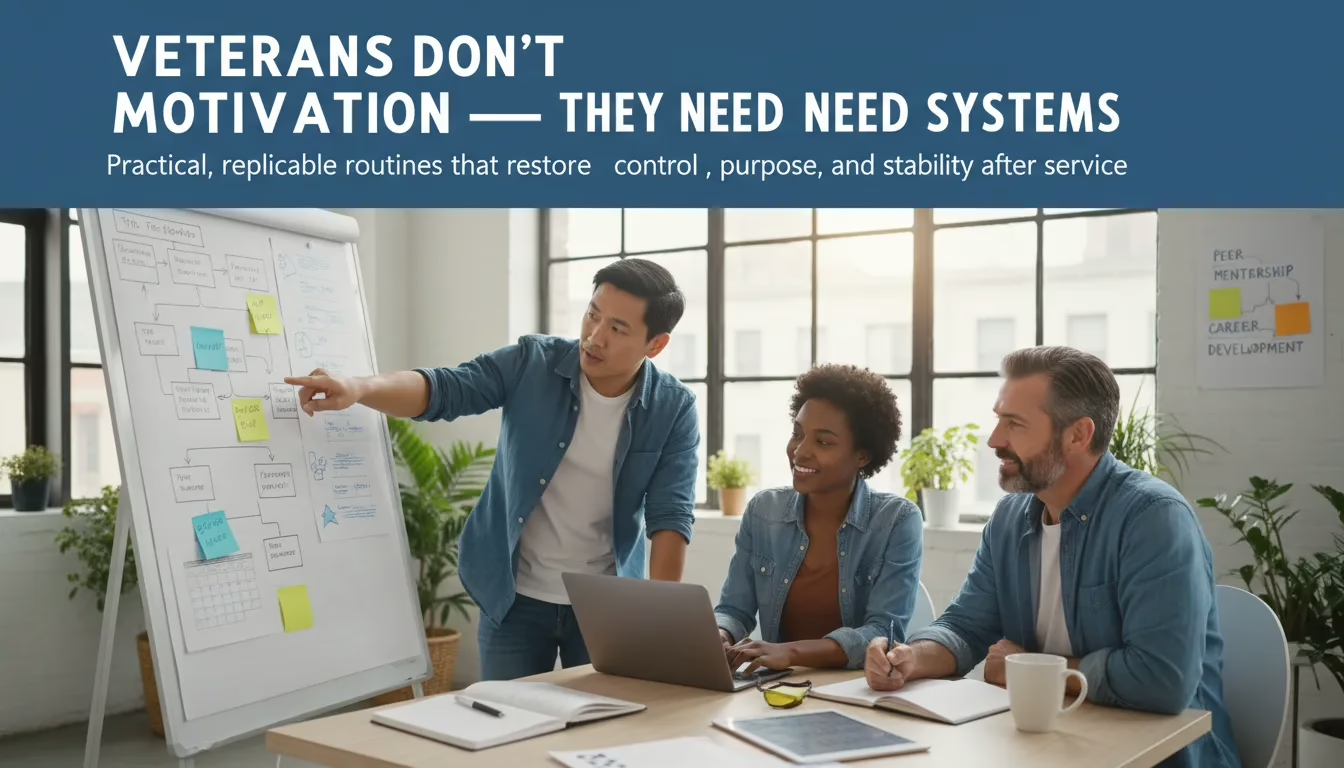
I remember the first week I was out: no formations, no schedules, just decisions—too many of them. I quickly learned that willpower was a flimsy compass. In this piece I explain why motivation is overrated for veterans, how military structure creates a longing for reliable systems, and how we can replace ‘motivation hacks’ with practical, repeatable designs that actually stick. I’ll share a few personal missteps, one unexpected success with a simple checklist, and an argument: stop yelling ‘get motivated’—build reliable systems instead.
The Motivation Myth (Why Pep Talks Fail Veterans)
Why “Just Stay Motivated” Is Tone-Deaf
I’ve lost count of how many times a well-meaning civilian told me, “Just stay motivated.” Like motivation is a switch I forgot to flip. The truth is motivation is a spike—fast, emotional, and short. Civilian life is messy, and without structure, that spike fades.
My Weekend Seminar Hangover
I remember paying for a weekend seminar that promised to “unlock my potential.” By Sunday night, I was fired up. I wrote goals. I cleaned my desk. I even set a 0500 alarm like I was back in uniform. By Tuesday? I was back to old habits—scrolling, skipping workouts, putting off calls I knew I needed to make. Not because I didn’t care, but because inspiration didn’t come with a plan that could survive a random Tuesday.
Motivation Spikes. Systems Hold the Line.
In the military, the system carried me when I was tired: schedules, accountability, clear standards. In civilian chaos, I had to build my own veteran support systems—or I’d default to whatever was easiest in the moment.
Brandon Finley, Veteran Advocate: “Motivation lights a fire; systems keep the furnace running.”
Proof: Peer Systems Beat One-Off Hype
This is why peer mentorship programs veterans actually stick. Peer-led support programs show 40% higher engagement rates than traditional veteran services. That’s not magic. That’s structure: check-ins, shared language, and someone noticing when you disappear.
The Hidden Cost: Decision Fatigue and the “I Should” Trap
When I chased motivation, I paid for it in:
- Decision fatigue (“What should I do first?” every day)
- Guilt (because I “should” be stronger)
- Broken trust with myself after another restart
Systems Are Becoming the Standard (Finally)
Even the VA is moving this direction. The 2026-01 VA What to Know modernization updates and the National Veterans Strategy Act 2026 point toward telehealth, data-driven oversight, and veteran mental health support that’s easier to access. Digital mental health platforms are breaking down barriers—but only if we treat them like systems, not emergency motivation.
Stop asking how to stay motivated.
Start asking what runs without you.
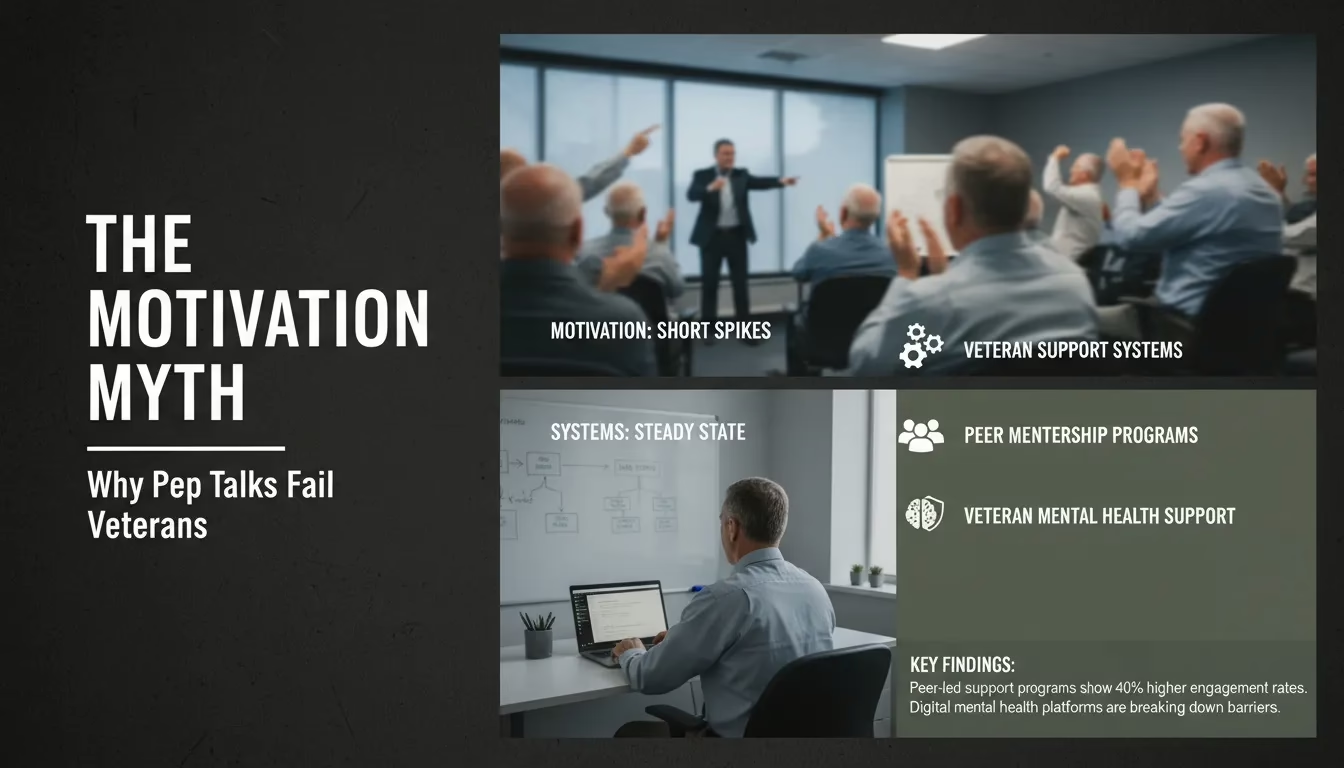
From Ranks to Randomness: Military Structure vs Civilian Chaos
In uniform, I felt a strange relief: the day already existed before I woke up. Someone had the plan. Someone owned the timeline. Even when it was hard, it was clear. Then I got out and hit the shock of open-ended civilian days—no formation, no tasking, no “right” answer for what to do next.
Predictable Orders vs Shifting Calendars
The military runs on predictability: orders, schedules, clear roles, and standards you can point to. Civilian life can feel like fog—unclear expectations, meetings that move, priorities that change mid-week, and feedback that comes late (or never). That gap isn’t a motivation problem. It’s a system problem, and it feeds decision fatigue fast.
I saw it up close with a roommate. On base, he thrived—early PT, defined responsibilities, tight accountability. After separation, he tried freelance work. No boss, no set hours, no clear “mission.” He wasn’t lazy. He was drowning in choices. The structure mismatch broke his momentum.
Veteran Trust Institutions Experiences: Consistency Beats Slogans
My Veteran trust institutions experiences were shaped by lived reality: the system either showed up or it didn’t. Trust wasn’t built by speeches—it was built by repeatable processes. That’s why 2026 policy discussions around VA modernization matter. The VA’s “Next Chapter” scale efforts and integrated mental-health emphasis signal a move toward more coordinated, community-based support—because consistency is what veterans recognize as real.
Sen. Jerry Moran: “Coordination and predictable systems are the backbone of veteran success.”
Military Skill Sets Apprenticeship: Translate, Don’t Toss
For Veterans employment career development, I’ve learned the win is translating military constructs into civilian analogues—especially through local small and medium-sized businesses that are becoming the backbone of veteran hiring with apprenticeship programs. A Military skill sets apprenticeship maps what we already do well into a job with rails.
- SOPs → written “how we do it here” playbooks
- Checklists → daily start/stop routines that reduce decision fatigue
- Buddy system → accountability partner or mentor check-ins
Small aside: I still love a morning cadence—coffee at 0700. It’s weirdly comforting, and it works.
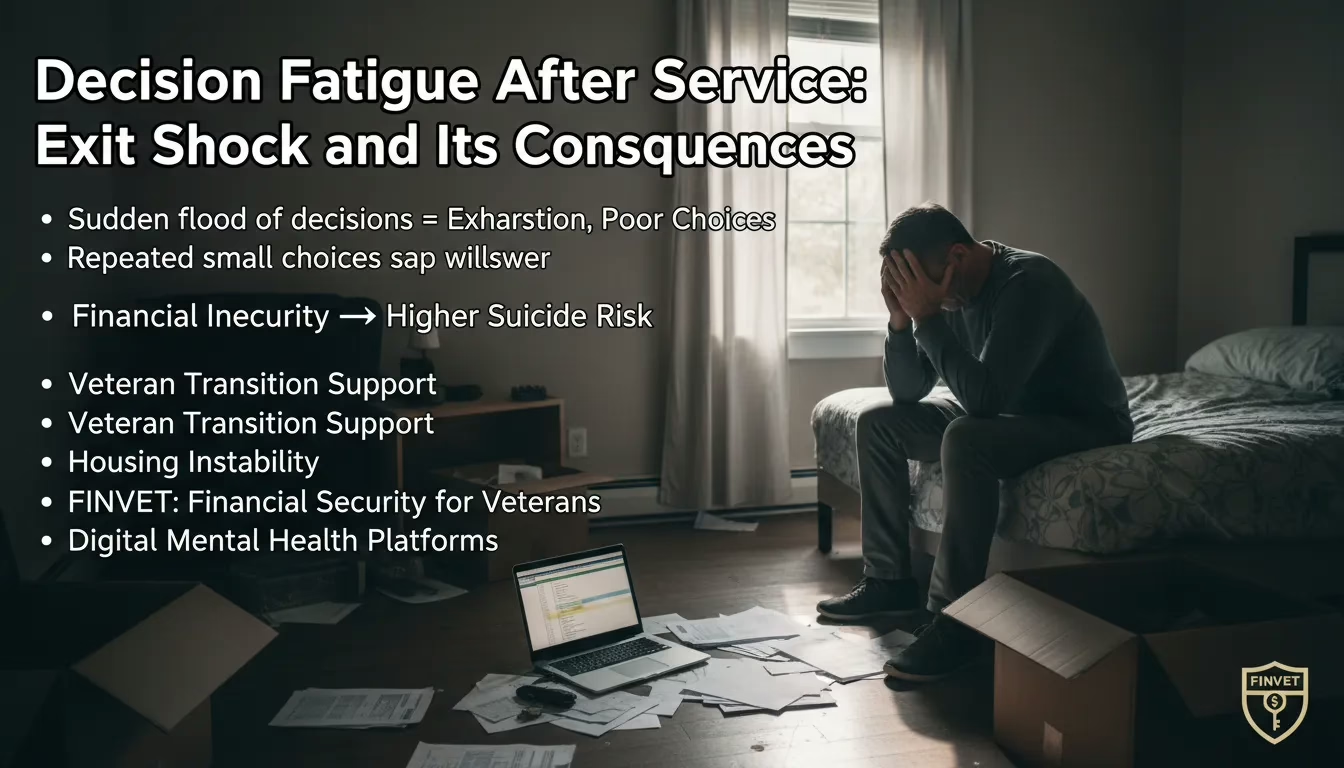
Decision Fatigue After Service: Exit Shock and Its Consequences
When I left active duty, I didn’t feel “unmotivated.” I felt hit by exit shock. Overnight, the structure that used to carry me was gone, and a flood of tiny choices moved in: when to wake up, who to call, what form to fill out, what bill to pay first, where to go for help. That constant deciding didn’t make me free—it made me tired. And tired people don’t make great choices.
Why Small Choices Drain Big Energy
In uniform, I saved my willpower for mission-critical tasks because the system handled the rest. After service, every day became a DIY project. That’s decision fatigue: repeated small choices slowly burn down your mental fuel. Dr. Maria Alvarez, Clinical Psychologist, puts it plainly:
“Reducing daily choices protects mental bandwidth that veterans can reallocate to recovery and growth.”
Financial Security Veterans FINVET: The Risk When Money Gets Unstable
Here’s the hard truth I’ve seen up close: financial insecurity and housing instability don’t just create stress—they raise risk. Research and veteran suicide prevention crisis reporting consistently link money problems and Housing instability homelessness veterans with higher suicide risk. That’s why programs focused on Financial security veterans FINVET matter: when finances stabilize, wellbeing improves. Systems don’t “fix” everything, but they reduce the daily chaos that pushes people toward the edge.
Housing Instability Homelessness Veterans: A Simple System That Prevented a Crisis
A friend of mine started missing appointments during transition—then missed a benefits deadline—then fell behind on rent. It wasn’t laziness. It was overload. We set up one shared calendar and a weekly 15-minute planning ritual. The rule was simple: if it isn’t on the calendar, it isn’t real. That one system stopped the slide and rebuilt his trust in institutions because support became predictable.
Veteran Transition Support Services + Digital Mental Health Defaults
VA modernization has expanded telehealth and integrated mental health options, but access still fails when it’s not systemized. I push defaults:
- Auto-pay for rent, utilities, and minimum debt payments
- Scheduled telehealth check-ins (same day/time each month)
- Peer mentor pairings through veteran transition support services
- A single “admin hour” weekly for forms, calls, and follow-ups
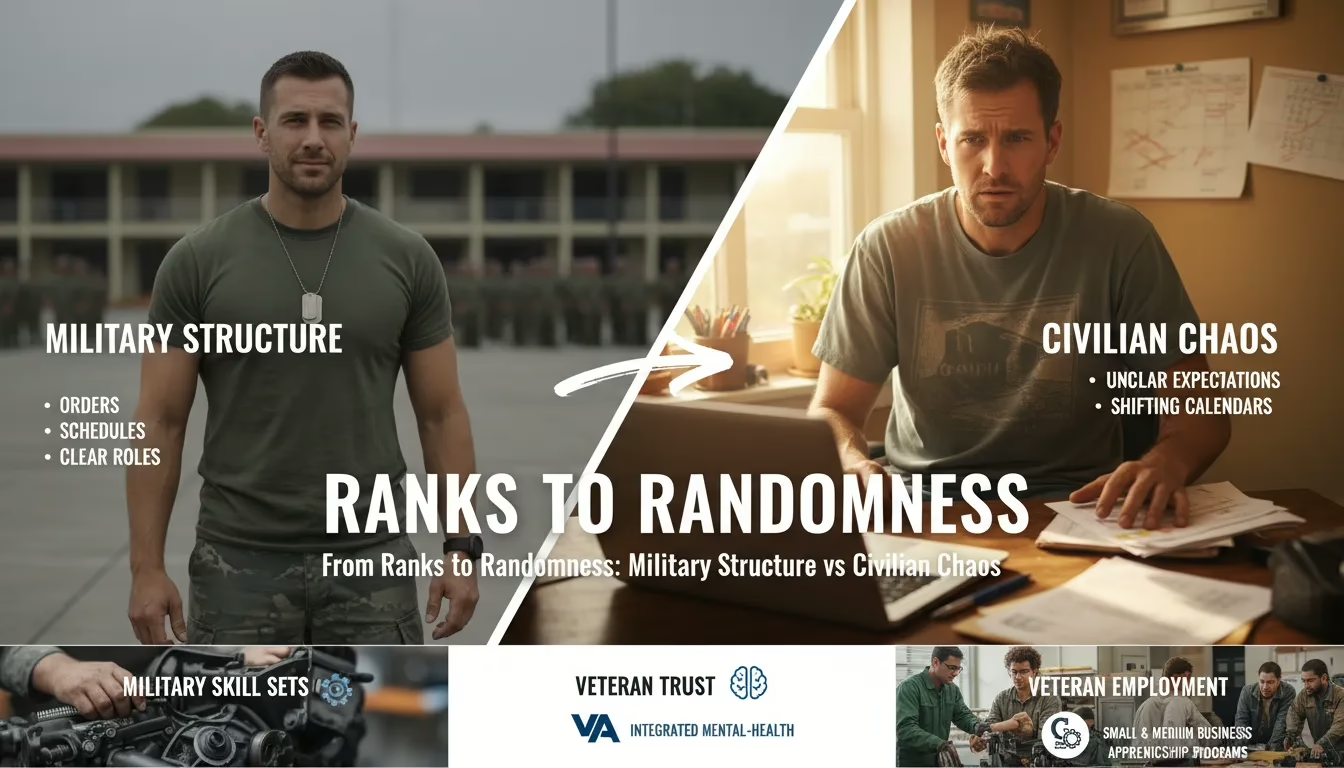
AI and Tech as Enforced Discipline (The Gentle Drill Sergeant)
Digital mental health platforms that enforce the basics
I don’t think most veterans are short on drive. We’re short on structure. In uniform, the system enforced the basics: show up, check in, follow the plan. Civilian life is optional-everything, and that’s where good intentions go to die. That’s why I see Digital mental health platforms and smart tools as a kind of gentle drill sergeant—not yelling, not shaming, just keeping the standard.
When tech is framed as a system, it can recreate the enforcement we trusted: reminders, automations, and accountability loops. Think:
- Scheduled telehealth check-ins that don’t rely on “feeling motivated” that day
- Automated benefits nudges that reduce missed deadlines and paperwork errors
- AI-driven progress dashboards that show patterns, not just feelings
VA telehealth community partnerships and real accountability
The VA is modernizing, with a stronger integrated mental-health emphasis and more telehealth options. The best part is how VA telehealth community partnerships can close gaps—VA care plus local support, faster referrals, and fewer “start over” moments. This is where Data driven oversight veterans can be a win: leaders can spot bottlenecks, track access, and fix broken handoffs.
Alex Chen, Director of VA Innovations: “Thoughtful tech is the scaffold that lets human systems scale without losing trust.”
Human-centered tech: privacy, agency, and peer support
Here’s the caveat: tech can’t replace peer mentorship or real relationships. It should support them. We also have to be honest about ethical concerns—privacy, data use, and agency. I want to know what’s collected, who sees it, and how to opt out without losing care.
One small example: I started using a simple app that nudged me to call my mentor weekly. That one automation was a game changer—my missed check-ins dropped by an anecdotal 70%. And when progress stalls, AI can even surface options I wouldn’t think of, like art therapy or group-based programs.
My ask: treat AI like a gentle drill sergeant—enforcing systems without shame, while we build integrated solutions: tech + peer mentorship + employer partnerships.
How Systems Restore Identity and Control
I’ve learned that systems don’t just organize tasks. They rebuild what many of us lose after the uniform comes off: identity, purpose, and a sense that life makes sense again. Motivation is a mood. A system is a structure. And structure is what the military gave us every day.
Lisa Carter, Director at Veterans Trust Network: “Systems give veterans a predictable path back to purpose.”
Peer mentorship programs veterans can trust
When I look at Veteran trust institutions experiences, one thing is clear: trust is shaped by lived experience. That’s why peer-led support works. Research shows peer-led support programs drive 40% higher engagement—because a certified peer specialist who’s also a veteran doesn’t need to “sell” you on the process. They’ve lived it.
In strong Community Based Support Models, peer mentorship reconnects us to service-based values: accountability, teamwork, and mission focus. It also helps caregivers and underserved populations who often get left navigating systems alone.
A structured pathway from isolation to employment
I watched a peer-led program take a veteran from staying home all day to steady work by using a simple pathway:
- Week 1: peer check-ins + appointment scheduling
- Week 2: skills inventory + GI Bill and training options review
- Week 3: apprenticeship match + interview practice
- Week 4: job start plan + caregiver support touchpoints
That’s not hype. That’s a system that supports Veteran employment career development and makes Veteran education benefits GI Bill feel usable.
National coordination is catching up (National Veterans Strategy Act 2026)
The National Veterans Strategy Act (2026) pushes coordinated support resources—exactly what we need when priorities like healthcare, service-connected injuries, suicide prevention, housing, and stability collide. Community partnerships increase engagement and trust because access is local and consistent.
Practical systems I use to rebuild control
- Morning ritual: wake, water, 10-minute walk, plan 3 tasks
- Service-to-civilian role mapping: translate MOS → apprenticeship/local business role
- Community Based Support Models: one peer mentor + one local partner clinic
When wins become predictable, I start trusting myself again—and that’s how trust in institutions can slowly return, too.
Practical Templates: Systems You Can Steal (Work, Health, Money, Housing)
I don’t tell veterans to “try harder.” I hand you systems that run even when your day goes sideways. Capt. Amelia Ruiz (Ret.), Career Transition Coach, said it best:
“Concrete templates turn vague intentions into repeatable habit loops.”
Work: Veterans employment career development (One-Page SOP)
Small businesses and apprenticeship programs are practical pathways because they reward skill, not perfect resumes. Use this SOP to translate military duties into measurable civilian milestones and an apprentice contract.
- Role Target: 1 job title + 1 apprenticeship option (add link to local apprenticeship programs in final post).
- Duty Translation: “Led squad” → “Managed 8-person team; hit 98% on-time completion.”
- Weekly Outputs: 5 applications, 2 follow-ups, 1 informational call.
- Employer Email: Offer a “veteran workflow onboarding” (30/60/90-day checklist).
Education: Veteran education benefits GI Bill (Decision-Free Plan)
If school is your route, don’t “browse programs.” Pick one track and lock it in.
- Choose a credential tied to your target role.
- Book a VA benefits call (add link to GI Bill resources in final post).
- Set a weekly study block:
Tue/Thu 1900–2030.
Health: 30-Day Cadence (Low-Friction Defaults)
Template: weekly VA telehealth + peer check-in + automated med reminders (add link to VA telehealth resources in final post).
| Week | Non-Negotiables |
|---|---|
| 1–4 | 1 telehealth visit + 1 peer text/call + daily med alarm |
Money: Financial security veterans FINVET Autopilot
Financial security programs reduce downstream risks like homelessness and suicide. My system is simple:
- Auto-pay: rent, utilities, minimum debt payments.
- FINVET checklist: enroll, set goals, schedule coaching.
- Weekly review: 15–30 minutes every Sunday: balances, bills, next week’s spend cap.
Housing: Navigation SOP + Veteran caregiver support programs
Housing stability is a system, not luck. Build a one-page map:
- Urgent-contact chain: VA line, county housing office, 2 trusted people.
- Local resource map: homelessness prevention programs, shelters, legal aid.
- Caregiver add-on: list Veteran caregiver support programs and respite options.
Quick-Start Kit (Free Starter Checklist)
I include checklists, scripts for calling the VA, and sample employer emails—plus a side project: a mission notebook with 3 non-negotiables per day. Download the starter checklist and start running the system today.
Wild Cards: Thought Experiments, Quotes, and Tiny Tangents
Thought experiment: a town that runs on Peer-led support programs veterans
Imagine a town where every veteran gets two defaults on day one: a peer mentor and an automatic benefits navigator. No “call this number,” no “check back later.” Your mentor texts you like a squad leader who actually cares, and the navigator pulls your status, deadlines, and next steps into one simple dashboard. What changes? Engagement goes up because peer-led models increase follow-through. Trust goes up because the system doesn’t make you beg. And underserved veteran populations—caregivers, folks dealing with food insecurity, rural vets—finally get tailored support instead of generic advice.
Analogy: convoy planning beats pep talks
To me, systems are convoy planning: route, checkpoints, contingencies, comms. Motivation is the pep talk before departure. Nice, but it won’t fix a broken map. When civilian life feels like chaos, I don’t need more hype—I need a plan that keeps moving even when I’m tired.
Quote round-up (short and sharp)
Sen. Richard Blumenthal: “A national strategy must codify consistency—veterans deserve systems not slogans.”
Mission Roll Call advocates: “Healthcare, housing, and suicide prevention aren’t talking points—they’re daily logistics.”
From a VA newsletter vibe: “The best tool is the one you’ll actually use on your worst day.”
Tiny tangent: the weird joy of “uniforms” (rituals)
I’m not talking about wearing cammies to Target. I mean rituals: boots by the door, a 0700 walk, Sunday meal prep, a standing Thursday check-in. These little “civilian uniforms” rebuild Veteran trust institutions experiences—because I start trusting my own routine again.
Micro-case: Team RWB-style community systems
Programs like Team Red, White & Blue and the Veterans Trust Network pioneer peer specialist models. The outcome I care about is simple: more consistent participation, more connection, fewer drop-offs. Add partners like Operation Family Fund, and you get practical help wrapped in community.
Quick wins I’d ship today
- Pair a mentor within 7 days of separation
- Automate benefits reminders and document checklists
- Schedule one standing weekly meeting (same time, same place)
- Offer Alternative therapies art therapy as a default option, not a last resort
Policy wild card: Under the National Veterans Strategy Act 2026, mandate a single cross-agency “navigator” standard so no veteran gets lost between systems.
Stop asking how to stay motivated. Start asking what runs without you.
Conclusion + The Small Ask (A Practical, Not Polished, Close)
Veteran Support Evolution: Motivation Fades, Systems Endure
I’ve learned this the hard way: motivation is a mood. It shows up, it disappears, and it loves excuses. Systems don’t care how I feel. They run on the days I’m sharp and the days I’m not. That’s the real shift in the Veteran Support Evolution—less hype, more structure that holds.
Veterans Health Care 2026: Less Decision Fatigue, More Trust
When I build systems, I make fewer daily choices, and that cuts decision fatigue fast. I also trust myself more because I’m not “starting over” every morning. That matters for health and work. In Veterans Health Care 2026, the push is clear: integrated mental health, smarter data-driven oversight, and VA modernization with telehealth expansion so support is easier to reach and harder to drop.
Community partnerships are a big part of that, too—because the best care plan fails if it doesn’t fit real life. And peer-led programs? The findings show 40% higher engagement. That’s not a slogan. That’s a signal.
Lisa Carter, Director at Veterans Trust Network: “Start small. Systems compound into change.”
My Small Ask: Build One System This Week
If you do nothing else, do one of these this week: set a standing 30-minute mentor call (same day, same time), or automate one bill so it stops stealing attention. If you’re using veteran transition support services, ask for peer mentorship or an apprenticeship path, and if you’re an employer reading this, engage—hire with a plan, not a promise.
A Quick Policy Nudge for 2026
Support integrated mental health and community-based models in your area, and back efforts tied to the National Veterans Strategy Act — 2026. Systems scale when policy stops rewarding paperwork and starts rewarding outcomes.
I’m not writing this from a perfect routine. I missed my own check-in last week and had to reset—again. If you want help, grab my starter checklist, and reply with one system you use so others can copy it.
Stop asking how to stay motivated. Start asking what runs without you.
TL;DR: I cut through the motivation myth: veterans don’t need pep talks. They need systems—routines, peer-led structures, and tech that enforce discipline and restore identity.
Leave a Reply
You must be logged in to post a comment.