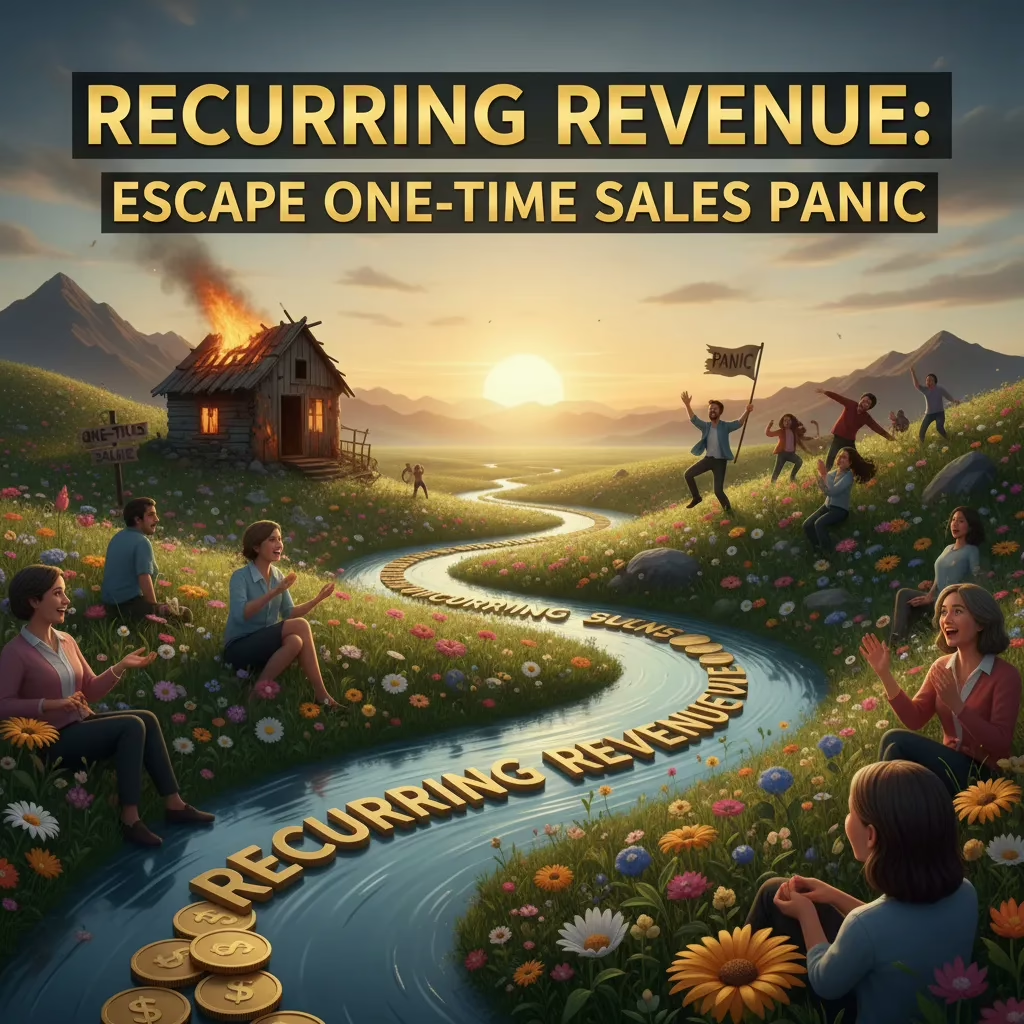
I remember closing my laptop after a “good” launch, feeling triumphant… for about eight hours. The next morning my dashboard looked like a ghost town, and I caught myself doing the same weird ritual: refresh Stripe, sip cold coffee, and convince myself this time I’d “stay consistent.” The problem wasn’t my work ethic. It was the revenue model. One-time sales give you a sugar rush. Continuity gives you breathing room.
Launch mode: the day-after hangover (and why it’s structural)
I used to think “launch mode” was just the price of ambition. Then I noticed the pattern: the week before a launch, I’d turn into a machine. My whole world became a checklist.
-
Post nonstop
-
DM everyone
-
Pray something converts
-
Celebrate
-
Wake up… back at zero
That last line is the gut punch. The day-after hangover isn’t just tiredness. It’s the emotional whiplash: high fives and Stripe notifications… then silence. No new sales. No momentum. Just me, staring at my calendar, scrambling to “create demand” again.
For a long time, I blamed myself. Maybe I wasn’t disciplined enough. Maybe I needed more hustle. But the truth was simpler: I had a cash flow problem disguised as a motivation problem. I didn’t have revenue predictability, so my nervous system never relaxed.
One-time offers can spike cash, but they don’t create a stable revenue stream. They reset you. Every month starts as a fresh fight for oxygen. That’s why the panic shows up even when you’re “doing well.”
“If you’re building on one-time sales only, you’re rebuilding your paycheck every month.” — Daniel Priestley
Predictable cash flow changes how you think
When I finally understood predictable income, it clicked: recurring revenue isn’t just a nicer business model. It’s a planning tool. With predictable cash flow, you can budget accurately, make calmer decisions, and invest in improvements without gambling on the next launch. And when the economy gets weird (because it always does), stable income streams make you more resilient. You’re not one bad week away from chaos.
Why “good marketing” can hide a broken system
Here’s the sneaky part: being great at marketing can cover up a broken revenue structure for years. If you can hype, write, and sell, you can keep pulling rabbits out of hats. But every launch steals attention from product improvement and customer relationships—the very things that create long-term trust.
That’s why the hangover keeps coming back. The issue isn’t effort. It’s structure. One-time sales chase moments. Continuity builds control—and control is what creates predictable cash.

Continuity: the boring superpower that buys freedom
I used to live in “launch mode.” Post nonstop. DM everyone. Pray something converts. Celebrate. Then wake up… back at zero. The problem wasn’t my hustle. It was the structure.
What continuity actually means (in plain language)
Continuity is any offer that doesn’t reset: recurring models like subscription models, memberships, retainers, ongoing support, or a paid community. Instead of getting paid once and starting over, you get paid again because the customer keeps moving forward with you.
“A subscription is not a billing method; it’s a relationship promise.” — Tien Tzuo
What changes when income doesn’t reset
The first thing I noticed wasn’t more money. It was revenue stability. When you have steady income, your brain stops acting like every day is a fire drill.
-
Income doesn’t reset, so I stopped panic-posting just to “make something happen.”
-
Momentum compounds, because each month stacks on the last instead of starting from scratch.
-
You stop panicking about tomorrow, which makes decisions calmer and cleaner.
That calm changed who I worked with. I could say no to bad-fit clients and yes to people I could actually help. And that’s where customer relationships got real—because I wasn’t treating people like transactions anymore.
My “before vs after” moment
I still remember the first month my recurring revenue covered rent before I sold anything new. I checked my dashboard twice because it felt fake. No launch. No adrenaline. Just… paid.
With that extra mental bandwidth, I took a day off, improved onboarding, and wrote better emails. Those small upgrades boosted retention, which boosted customer loyalty, which boosted customer lifetime value. Continuity made it easier to upsell too—because ongoing customers actually trust you enough to buy the next step.
Wild card analogy: from one-night stands to a real relationship
One-time sales are like one-night stands: exciting, unpredictable, and you’re always starting over. Continuity is a real relationship: less fireworks, more trust, and way better planning. And if your business can’t make money while you sleep, deploy, travel, or unplug… it’s not freedom yet.
<img class="content-image" src="https://www.laptoplegion.io/wp-content/uploads/2026/01/74ddd65f-1864-4bfa-a6d9-2b801d9ccabf.avif" alt="The
Value Ladder twist everyone skips (I did too)” />
The Value Ladder twist everyone skips (I did too)
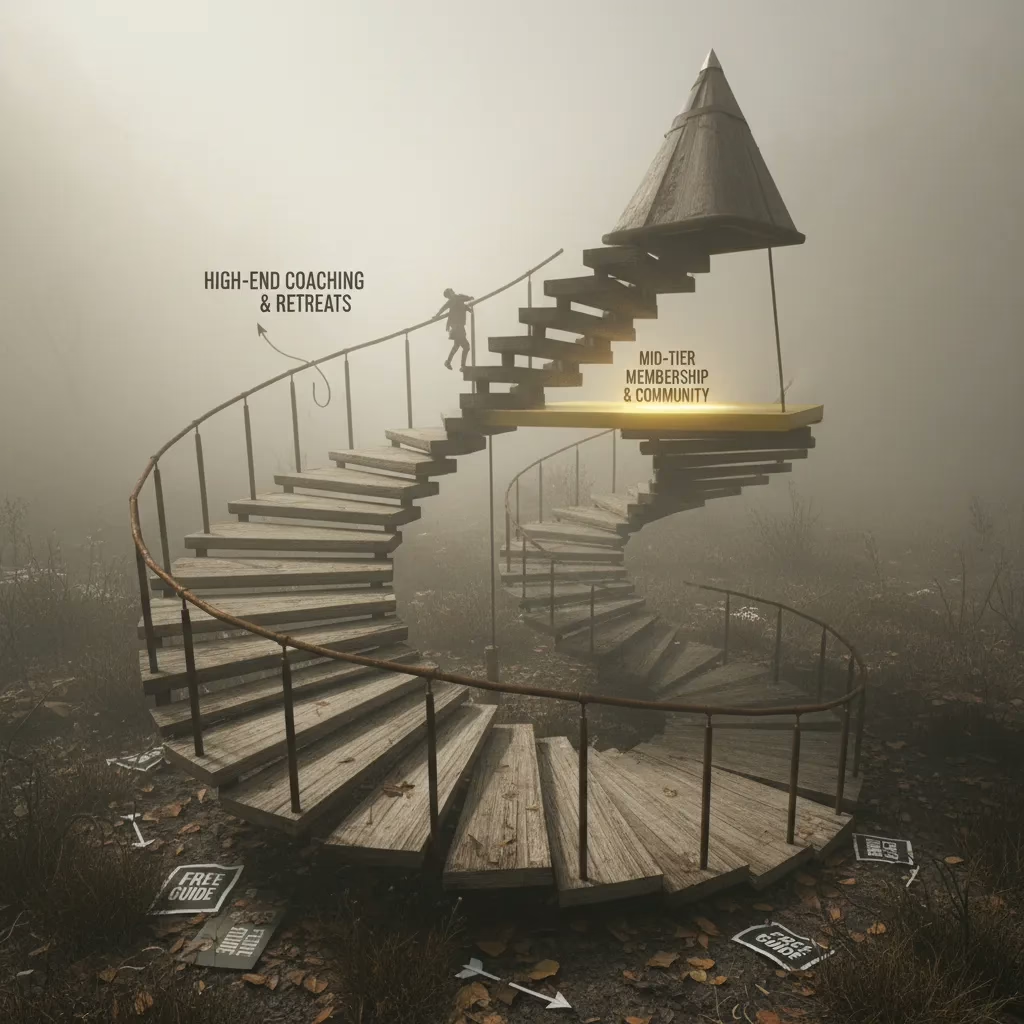
I first heard Russell Brunson talk about the Value Ladder and I did what most people do: I got obsessed with building more offers. A low-ticket thing. A mid-ticket thing. A high-ticket thing. I thought that was the ladder.
But the missing rung—the one I skipped—wasn’t another product. It was the path after the first win. The part that protects your revenue stream when the launch hype fades.
“Retention is the silent growth engine; acquisition is just the spark.” — Brian Balfour
The real mistake: chasing traffic instead of customer lifetime
I used to think business growth meant more eyeballs. More DMs. More ads. More “top of funnel.” Meanwhile, I’d sell a front-end offer, get a few happy customers… and then lose them because I had no clear next step.
That’s where customer retention changes everything. When people stay longer, you don’t have to buy attention every week. Your customer acquisition costs drop because you’re not constantly replacing churn. And your customer lifetime (and customer lifetime value) goes up because the relationship gets deeper over time.
Mini-framework: “Next step” mapping
Here’s what I do now—simple, but it fixes the whole ladder:
-
Define the first win: what result do they get from the first offer?
-
Name the next problem: what do they struggle with right after that win?
-
Offer the next step: one continuity option that helps them keep moving.
I literally write it like this:
After you get X, the next step is Y, and we do that together inside Z.
Two creators, same audience—who sleeps better?
Creator A launches quarterly. Big spikes, then silence. Creator B runs a small membership at $39/month with steady support and small wins. Same audience size. Same skill. But Creator B has predictable cash, lower panic, and better customer lifetime value. Guess who can unplug without everything crashing?
Continuity ideas that actually work
-
Monthly coaching circle
-
Paid community with office hours
-
Template club (new drop every month)
-
Done-with-you retainer
-
Software subscription services
And yes—I once built a fancy front-end and basically forgot the back-end experience. The ladder looked good on paper, but it didn’t carry people forward.
How I’d build your first recurring revenue stream (without becoming ‘subscription-y’)
I don’t start by slapping “monthly” on your offer and calling it subscription services. That’s how you create churn and resentment. I start by asking: what’s the smallest promise we can deliver every month that creates predictable income—without you living in launch mode?
1) Start small: one monthly promise you can deliver on your worst week
Pick one outcome that stays useful all year. Not “everything I know.” One clear promise. Examples: a monthly teardown, a new template pack, a live Q&A, or a simple accountability loop. If you can’t deliver it while you’re tired, traveling, or deployed, it’s too big.
This is the core of your revenue stream strategy: one repeatable win that compounds instead of resetting to zero.
2) Design for churn reduction (before you sell)
Most memberships fail in the first 14 days because people don’t get a quick win. So I build the path first:
-
Onboarding: a 10-minute “start here” checklist.
-
Quick win: one action that produces a result in 24–48 hours.
-
Clear cadence: “New lesson on Mondays, office hours Thursdays” (or whatever you can keep).
-
Next-step journey: every piece ends with “Here’s what to do next.”
That structure creates steady cash flow and reduces support chaos—so you can invest in better content, community, and help over time.
3) Pricing gut-check: charge enough to care, low enough to try
I price it so members show up, but it’s still an easy “yes.” Then I bake in upgrades later: higher tiers, add-on coaching, or implementation help. That’s how you grow business scalability without proportional sales effort increases—because retention does the heavy lifting.
“Predictable revenue is what gives you permission to build—without begging for the next sale.” — Amy Porterfield
4) The 72-hour “unplug test”
I run a simple stress test: if I disappeared for 72 hours—sleep, travel, deploy, unplug—would customers still get served? If not, I automate one piece:
-
Auto-welcome + login email
-
Scheduled content drops
-
Self-serve FAQ + support form
One-time offers spike cash. Continuity builds control. This is how you earn it.
Conclusion: stop sprinting—start stacking weeks
I still remember that “back at zero” feeling. The launch ended, the Stripe notifications stopped, and my dashboard looked like someone unplugged the business. I’d done everything “right”—posted nonstop, followed up, pushed hard—and yet Monday morning felt like starting over. Not because I was lazy. Because my revenue models were built for spikes, not for recurring revenue.
What changed wasn’t my hustle. It was my baseline. The first time I saw a calm line of income sitting there—before I posted, before I sold, before I even opened my laptop—I felt my shoulders drop. That’s predictable cash. And it does something launches can’t: it gives you room to think, plan, and build real long-term growth.
Spikes are exciting; predictable cash is empowering.
“The goal isn’t a bigger launch. The goal is a business that doesn’t flinch on Monday.” — Seth Godin
Continuity isn’t just about money. It’s about customer relationships that don’t end at checkout. When people stay with you, you get feedback, you get trust, and you get momentum that compounds. That’s how financial stability shows up in real life: fewer panic decisions, fewer desperate discounts, fewer “what if this month tanks?” thoughts.
And if you ever want to sell your business later, recurring models usually earn higher valuations because investors see lower risk. Even if you never sell, the same truth helps you now: stable income streams make you more resilient when the economy gets weird. You don’t need perfect timing—you need a structure that can take a hit and keep going.
Your tiny next step (14 days)
Pick one continuity offer you could launch in the next 14 days. Not a massive membership with 40 modules. Something simple: a monthly support call, a weekly template drop, a done-with-you check-in, a private community with one clear promise. Build the smallest version that delivers a real win, then let it stack weeks instead of sprinting for days.
That’s the shift. Freedom isn’t a vibe. It’s a revenue model. And yes—you can learn it.
TL;DR: One-time sales reset to zero; continuity doesn’t. Build a recurring revenue stream (membership, retainer, subscription) that keeps customers progressing—so your cash flow, customer relationships, and freedom compound over time.