

The weirdest part of my first month out wasn’t the paperwork or even the job hunt—it was the silence. No formation. No “where are you?” text. One Tuesday I realized I could eat cereal at 2 p.m. and nobody would notice… and for about five minutes it felt like freedom. Then it felt like floating. That’s when it clicked: I didn’t lose my identity after the military. I lost the mission—and the system that held it up.
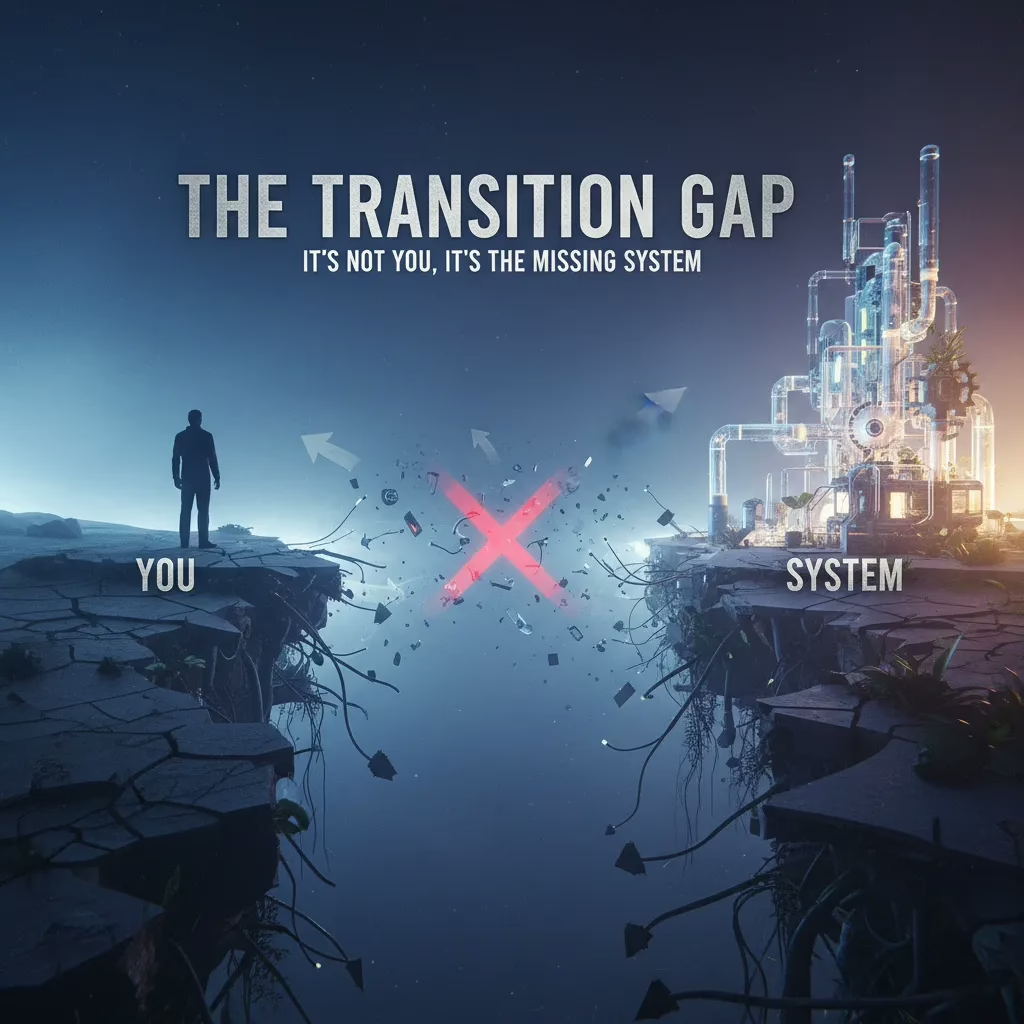
The Transition Gap: It’s Not You, It’s the Missing System
Let’s talk about the real challenge in the transition from military life to civilian life. It’s not that you suddenly lost your identity or “can’t hack it” outside the service. The problem is the transition gap—the missing system that used to hold your days together.
In the military, I had clear objectives, daily routines, accountability, and a purpose bigger than myself. Every morning, I knew exactly what was expected. There was a team, a mission, and a structure that made everything click. Then, one day, it all stopped. Civilian life doesn’t replace that structure. It removes it. And that’s where the challenges after military service really begin.
Here’s a small, honest moment: my first week out, I tried to “relax.” No alarms. No uniform. I thought I’d earned it. But by day three, I was restless. The quiet felt heavy. Even deciding what to wear was weirdly exhausting—no one was issuing standards, and suddenly, every choice was up to me. That’s the transition gap in action: the loss of daily rhythm, team cohesion, and mission clarity.
I’m not alone. Research shows that 27%–44% of veterans report the civilian life transition is difficult. It’s not about weakness—it’s about losing the system that gave life its shape. As Retired Gen. Stanley McChrystal put it:
“When people leave a tight-knit team, they don’t just lose a job—they lose a tribe and a daily sense of purpose.”
The emotional whiplash is real. One day you’re part of a team with a clear mission; the next, your calendar is blank—no commander’s intent, no accountability, just open space. That’s why so many veterans feel lost after service. You didn’t fall apart after the military. You lost the system that made you thrive.
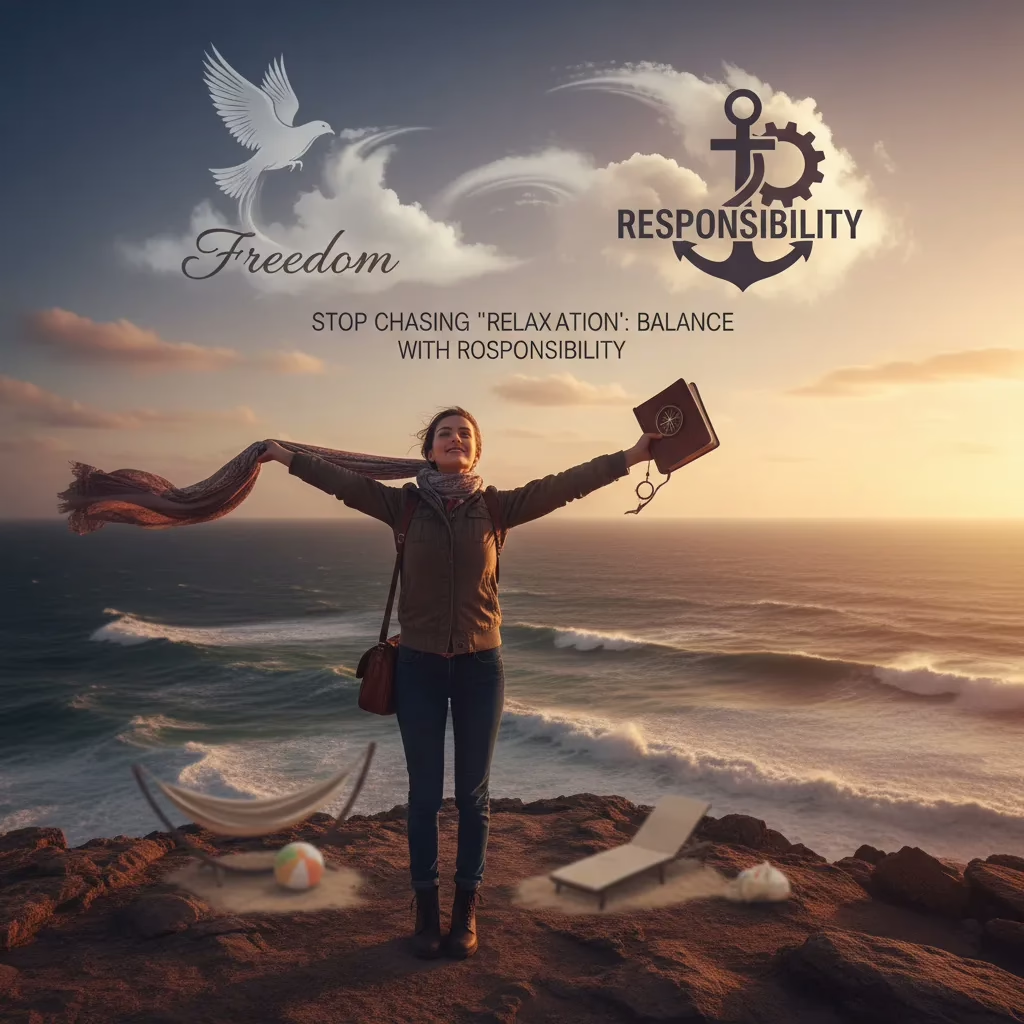
Stop Chasing ‘Relaxation’: Balance Freedom With Responsibility
When I first left the military, I told myself, “I’m finally going to relax.” After years of strict routines and constant missions, I thought I’d earned it. But here’s the truth: too much open space made me anxious. Days blurred together. I started to feel lost, not lazy—just a nervous system missing the predictable lane it was used to. This is a common mental health struggle for veterans, and the stigma around it can make us keep quiet, even as we drift.
Balancing freedom with responsibility is the real challenge after leaving the military behind. The military gave us discipline and accountability. Suddenly, all that structure disappears. Civilian life doesn’t fill the gap; it removes it. Most vets try to “relax” after getting out. That’s the fastest way to feel lost.
Here’s the simple rule I came up with: schedule your freedom. Yes, it sounds ironic, but if you don’t put boundaries around your day, your time just leaks away. I started blocking out time for things I wanted to do—workouts, learning, even downtime. That way, I still had freedom, but it was contained by a system. As James Clear says,
“You do not rise to the level of your goals. You fall to the level of your systems.”
Try this quick self-check:
- What do I do before noon?
- Who will notice if I don’t?
- What am I building this week?
If you’re not sure, imagine your old buddy from the unit moved in for a week. What would you feel embarrassed about? That’s usually where structure is missing.
Balancing freedom with responsibility isn’t about being hard on yourself. It’s about building a new system that respects who you already are. Discipline and accountability aren’t just military values—they’re tools for stability and mental health in civilian life, too.
Build a New Mission (Not a Vibe): Daily Actions + Clear Metrics
When I left the military, I didn’t lose my identity—I lost my mission. In uniform, every day had a clear objective, a routine, and accountability. Civilian life? Suddenly, all that structure was gone. Most advice said, “Just relax.” But that only made me feel more lost. What actually works: New mission. New system. Same discipline.
Let’s break down what a “mission” means after service. It’s not just a vibe or a dream. It’s a target (what you want), a timeline (when you want it), and a way to measure progress—even if it’s just one step at a time. That’s how you move from service to civilian success.
My Replacement Mission: Online Business
I needed purpose after service, so I built an online business. Not hype. Not hustle. Systems. Every day, I had actions: outreach messages, content posted, revenue tracked. I set clear metrics—like 5 sales calls a week or 10 new leads. Over time, those small numbers compounded. That’s not freedom “someday”—that’s stability now.
Mission Templates for Veterans
- Career-Track Mission: Target a new job. Metrics: 5 job applications/week, 10 networking messages/week, 5 hours/week skill-building.
- Entrepreneurship Mission: Launch a side business. Metrics: 2 product listings/week, 5 outreach emails, weekly revenue/profit tracked.
- Get Healthy + Stable Mission: Prioritize wellness. Metrics: 4 workouts/week, meal prep days, sleep tracked, therapy sessions attended.
Keep it simple. I once tracked the wrong metric for a month because it felt productive—turns out, “busy” isn’t the same as “progress.” Adjust fast. Minimalist metrics work best: applications sent, outreach made, study hours, gym sessions, revenue. As Jocko Willink says,
“Discipline equals freedom.”
Find your new mission, build your system, and let your discipline do the rest. That’s real veteran entrepreneurship support.
From Uniform to Career: Translate Skills, Then Pick a Lane
When I left the military, I kept hearing the same thing: “Your skills don’t transfer.” I call BS. The real problem isn’t your skills—it’s the language. In uniform, I was a squad leader, running logistics, training teams, and keeping everyone accountable. Out here, they call that “team lead,” “project coordinator,” or “quality assurance.” The jobs are out there. The trick is translating military experience into civilian terms employers understand.
Let’s break the ‘non transferable skills’ myth. The military gave us leadership, discipline, and the ability to solve problems under pressure. Those are gold in any industry. Here’s how I reframed my experience:
- Squad Leader → Team Lead or Operations Supervisor
- Op Tempo Planning → Project Coordination or Workflow Management
- Inspections → Quality Assurance or Compliance Specialist
But translating skills is only half the battle. The other half is picking a new career—and that’s where a lot of us get stuck. The civilian world feels wide open, and that freedom can be paralyzing. My advice? Don’t look for your “forever job.” Pick a 90-day lane. Try something, get certified if you need to (there are plenty of certifications that pay), and give yourself permission to pivot. You’re not losing your identity; you’re building a new mission.
I get it—difficulty finding employment is real, especially with discharge status issues or needing new credentials. Financial struggles after service are common. But you don’t need motivation. You need a structure that respects who you already are. Systems, daily actions, and clear metrics—just like before.
Simon Sinek said it best: “Working hard for something we don’t care about is called stress; working hard for something we love is called passion.”
Help Veterans Transition: Use Real Programs (Even If You’re Skeptical)
When I left the military, I thought I’d just “figure it out.” Civilian life doesn’t replace your mission—it removes it. I learned the hard way that you don’t need motivation; you need structure that respects who you already are. If you want to help veterans transition, start with real, practical resources—even if you’re skeptical.
Practical Veteran Transition Resources I’d Actually Use
- VA Transition Assistance Program (TAP): TAP is more than a box to check. It’s designed for the year before you separate or two years before retirement. Even if the briefings seem basic, one useful contact or checklist can change everything—especially for benefits and claims navigation.
- DAV Support: Disabled American Veterans (DAV) helps with benefits, claims, and connecting you to meaningful employment. They know the system and can help you avoid rookie mistakes.
- Compensated Work Therapy (CWT): If you need a bridge to civilian work, CWT offers paid work experience and support. It’s not glamorous, but it’s real structure and a paycheck while you adjust.
Companies Helping Veterans: Pipelines & Training
- Amazon, Microsoft, CVS Health: These companies have veteran pipelines—fellowships, free training, certifications, and direct hiring programs. Look for these opportunities. They’re not charity; they want your discipline and experience.
Build a Support Network for the Long Haul
- Find mentors who’ve walked this path.
- Join veteran groups—online or local.
- Include your spouse or partner. Families feel the transition gaps too; many resources now support them as well.
Brene Brown: “You either walk inside your story and own it, or you stand outside your story and hustle for your worthiness.”
Wild card: I picture Future Me, shaking my hand, saying, “Thanks for doing the TAP paperwork early. You made this next mission possible.”

Conclusion: The Mission Didn’t End—It Evolved (So Can You)
When I first left the military, the silence was deafening. No more morning briefings, no clear objectives, just a blank space where my mission used to be. For a while, I thought that silence meant something was wrong with me. But over time, I realized: that silence is actually space—a space to design a new mission after service. It’s not proof you’re broken. It’s proof you get to choose what comes next.
We didn’t lose our identity after the military. We lost the mission, the structure, the sense of purpose after service that made every day clear. Civilian life doesn’t hand you a new mission. You have to build it. That’s the real work of mastering the civilian transition: finding a system that gives you structure and stability, just like before, but on your terms.
Viktor E. Frankl said,
“Those who have a ‘why’ to live, can bear with almost any ‘how’.”
That’s what I found, too. My new mission became building an online business—not for hype or hustle, but for the systems and daily actions that gave me back a sense of control. Motivation comes and goes, but structure and stability stick around. That’s what protects you in the long run.
If you’re feeling lost, try this: write tomorrow’s “commander’s intent” for your life in three lines—your objective, your routine, and your accountability. It’s simple, but it works. That’s how you start building a new mission, one day at a time.
The mission didn’t end—it evolved. And so can you. Some days, I still miss the team. But now, I’m building a new one on purpose, with people who get it. If you have a routine that keeps you steady, share it below. Let’s build this new mission together.
TL;DR: If civilian life feels like you “lost yourself,” you probably lost structure. Choose a new mission, build a simple daily system, keep the same discipline, and use veteran transition resources (TAP, DAV, CWT, training/certs, employer pipelines) to create stability now.