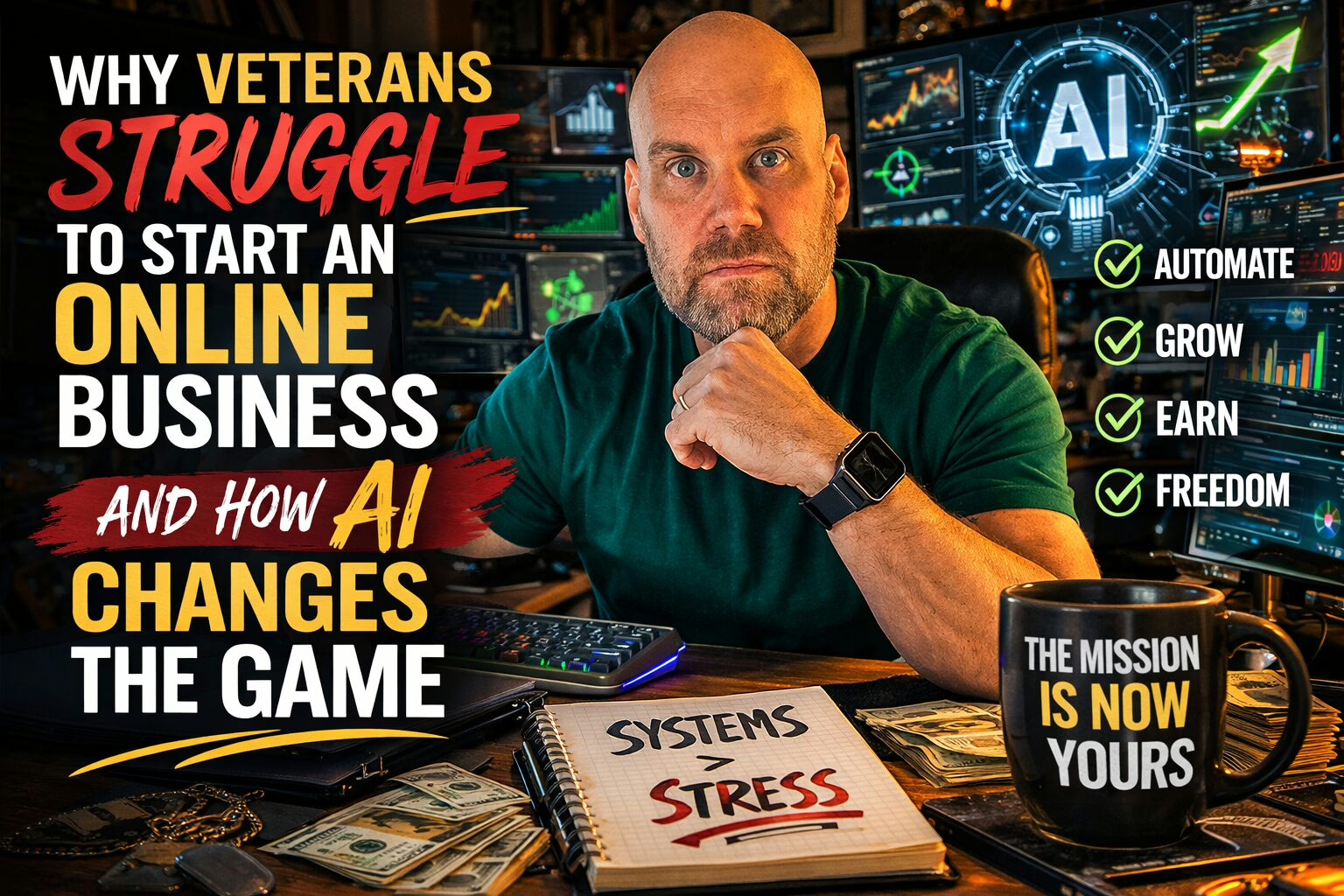
A lot of veterans do not fail because they are lazy.
They fail because the rules changed.
In the military, the mission is clear.
The chain of command is clear.
The standards are clear.
You know what success looks like, and you know what happens if you do not meet it.
Then you step into the online business world, and it feels like somebody replaced the battlefield map with a crayon drawing from a sleep-deprived raccoon.
Now everybody is shouting:
- Post more content
- Build a funnel
- Start a brand
- Pick a niche
- Launch a course
- Run ads
- Do cold outreach
- Automate it
- Be authentic
- Be everywhere
That is not strategy.
That is digital confetti.
And for a veteran used to structure, it can feel like chaos disguised as opportunity.
That is why so many service members and veterans stay stuck.
Not because they are incapable.
Because they are trying to win in a world that rarely rewards discipline alone. It rewards clarity, leverage, and systems.
That is where AI changes the game.
The Real Problem Is Not Motivation
Most veterans already have the discipline.
You know how to wake up early.
You know how to work when you are tired.
You know how to follow through.
You know how to do hard things without applause.
The problem is not work ethic.
The problem is direction.
A lot of veterans enter the online business space carrying an identity built around service, structure, and mission completion. Then they land in an environment where everybody is selling shortcuts, fake lifestyles, and random tactics with no real operating system behind them.
That creates friction.
You start asking questions like:
- What business model actually makes sense?
- What do I sell?
- What platform should I use?
- Do I need a website?
- Do I need a product?
- Do I need followers first?
- Do I need to be a tech expert?
The longer those questions sit unanswered, the more confidence leaks out.
Then comes the worst part.
You start thinking the problem is you.
It is not.
The problem is you were handed fragments when what you needed was a mission plan.
Why AI Matters for Veterans
AI does not replace skill.
It compresses time.
That is the part most people miss.
Veterans do not usually need more motivation. They need a way to move faster from idea to execution without drowning in tech, content overwhelm, or endless trial and error.
It can help you:
- Clarify your niche
- Research what your audience is searching for
- Create blog outlines
- Write emails
- Draft video scripts
- Generate content ideas
- Repurpose one idea across multiple platforms
- Build systems that keep working after the post goes live
That matters because most new entrepreneurs lose momentum in the setup phase.
They spend weeks trying to figure out what to say, how to say it, where to post it, and how to turn attention into leads.
AI helps remove that bottleneck.
It is like going from digging fighting positions with a spoon to showing up with actual equipment.
Still work.
Just less nonsense.
Why Online Business Fits the Veteran Mindset
A good online business is not built on luck.
It is built on repeatable actions.
That is why veterans have an edge when they stop trying to copy influencers and start building systems.
The best online businesses are not random.
They run on:
- Clear messaging
- Simple offers
- Consistent traffic
- Follow-up
- Conversion systems
That should sound familiar.
Mission.
Process.
Execution.
Adjustment.
Repeat.
This is why models like affiliate marketing, digital products, and AI-assisted content businesses can work so well for veterans. You do not need to invent a miracle product in a lab while lightning strikes. You need a problem you can solve, a system that reaches the right people, and a message that makes them care.
That is it.
You are not trying to become internet famous.
You are trying to become useful at scale.
The Identity Shift Veterans Must Make
This is the part nobody talks about enough.
Starting an online business is not just a money move.
It is an identity move.
A lot of veterans are still operating from an old internal script:
- I need permission
- I need more training first
- I need to be fully ready before I start
- I need somebody above me to confirm I am doing it right
That mindset makes sense in structured environments.
It will strangle you in entrepreneurship.
Because in business, you are the one issuing the orders.
You decide the mission.
You decide the pace.
You decide the standard.
That can feel uncomfortable at first.
Not because you are weak.
Because ownership is heavier when there is nobody else to blame.
But once that shift clicks, everything changes.
You stop waiting.
You stop lurking.
You stop consuming without building.
You start acting like the operator again.
Only now the mission is freedom.
What Veterans Should Focus on First
Do not start by trying to build everything.
That is how people end up with a logo, a half-finished website, 17 tabs open, and zero leads.
1. Pick One Audience
Be specific.
Not “everyone who wants to make money online.”
Think smaller.
- Veterans leaving active duty
- Military spouses wanting side income
- Burned-out federal workers with military backgrounds
Narrow wins.
Broad breaks.
2. Solve One Painful Problem
Do not try to solve every problem.
Pick one.
Examples:
- How to start affiliate marketing without tech skills
- How to use AI to create content faster
- How to build a side income system after military service
Simple sells.
Confused content does not.
3. Create One Core Offer Path
That might be:
- A free lead magnet
- A low-ticket digital product
- An affiliate offer you trust
- A consultation
- A course
You do not need twelve offers.
You need one clear next step.
4. Build Content That Answers Search-Driven Questions
This is where the long game lives.
Instead of chasing people, build content around what they are already searching for.
Questions like:
- Can veterans start an online business?
- What is the best online business for beginners?
- How can I use AI for affiliate marketing?
- How do I make money online after the military?
That is how you create an SEO spiderweb that keeps pulling people back to your site, your email list, and your offers over time.
You stop hunting one lead at a time.
You build assets.
That is a better game.
The Bigger Opportunity
The internet does not care about your rank, your MOS, or your last duty station.
It cares whether you can solve a problem and communicate that clearly.
That is good news.
Because veterans already know how to adapt, lead, and perform under pressure.
What has been missing is not capability.
It has been translation.
AI helps translate your experience into assets.
- Content
- Offers
- Systems
- Sales mechanisms
And once that starts working, something bigger happens.
You stop seeing yourself as someone trying to “figure out business.”
You start seeing yourself as someone building a machine.
That is when momentum kicks in.
That is when the mission becomes real.
Conclusion
Veterans do not struggle with online business because they lack discipline.
They struggle because the civilian online world is noisy, scattered, and full of bad guidance.
AI changes that.
It gives you leverage.
It helps you move faster.
It helps you build with more clarity and less chaos.
You do not need to become a tech genius.
You need a mission, a system, and the willingness to execute.
That part you already know how to do.
Call to Action
If you are a veteran or service member ready to build an AI-powered online business without drowning in tech chaos, subscribe to the blog and follow my journey. I break down the systems, tools, and strategies helping ordinary people build income online with less guesswork and more leverage.
Leave a Reply
You must be logged in to post a comment.