
Transition briefings often overlook the fact that stress escalates the moment paychecks cease. After my last contract ended, every day felt like a standoff with overdue bills, my own spiraling anxieties, and that feeling no military course ever prepares you for—being on your own without orders, uniform, or a backup plan. I believed that perseverance would sustain me, but it appears that even the most resilient boots require support at times. What unexpected help did I receive? My unexpected rescue came not from sheer willpower, but from the power of systems—and, surprisingly, from a digital version of myself who never needed coffee breaks. Here’s how I traded panic for process and survived unemployment with somewhat help from technology, method, and a healthy dose of military dark humor.
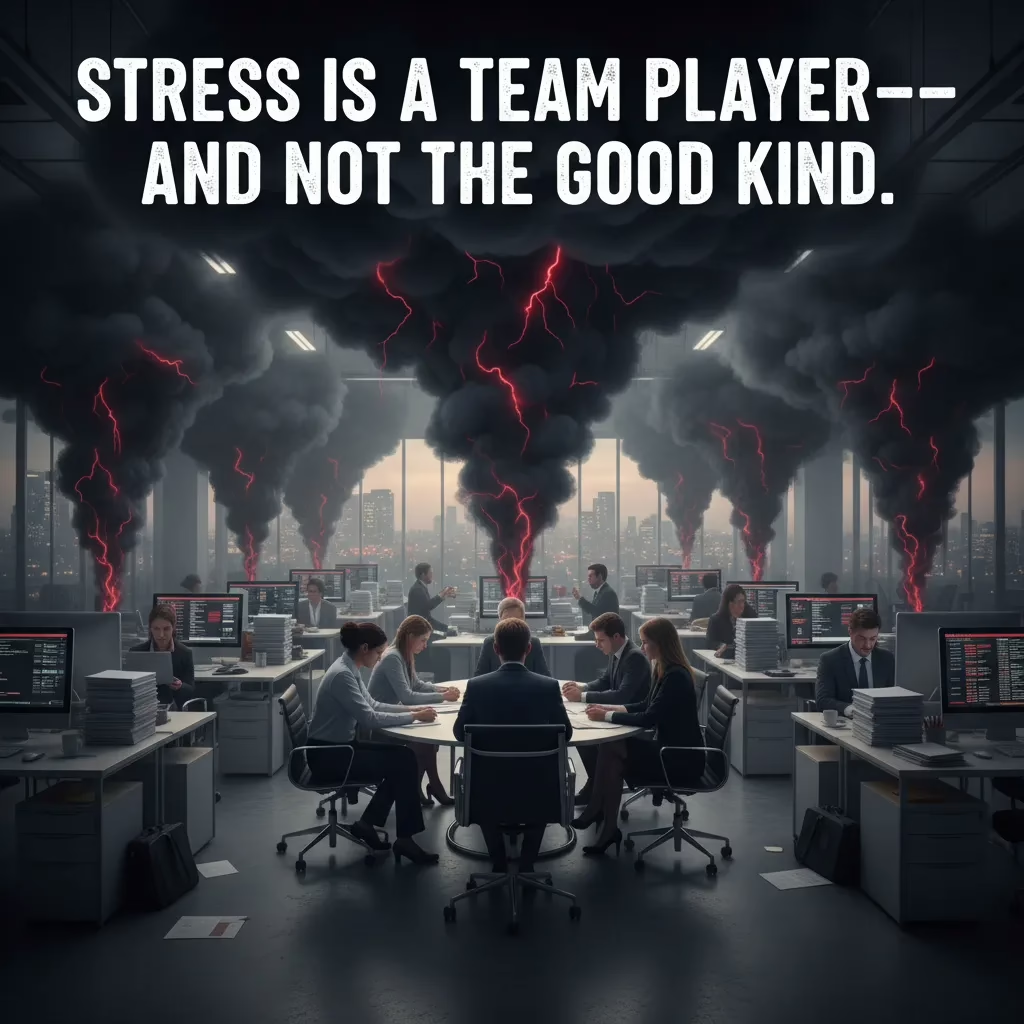
Stress Is a Team Player—And Not the Positive Kind
If there’s one thing I learned the difficult way during my stint with unemployment, it’s this: stress doesn’t travel solo—it brings its own posse. The moment my employment status changed, I didn’t just lose a paycheck—I gained a whole squad of unwelcome guests. Bills started stacking up, uncertainty moved in, and self-doubt set up camp in my head. It wasn’t just about money. It was about feeling like I was losing control, one overdue notice at a time.
Let’s be real about the veteran unemployment rate. The official numbers from the Bureau of Labor Statistics look pretty good on paper—2.8% to 4.0% nationally, and 2.9% here in Washington State. However, those statistics do not provide a complete picture. They don’t count underemployment, which hits 15–20% or higher for veterans. They don’t show the economic instability that follows you home after the uniform comes off. And if you’re a younger vet (18-24), the unemployment rate jumps to 7.8%. That’s not just a number. That’s real people, real families, and real stress.
When unemployment hit me, I defaulted to the old “push through” mindset. That’s what the military trains into you—keep moving, keep grinding, and don’t let them see you sweat. But the civilian world doesn’t play by those rules. Stress plays a crucial role in this environment, but not in a positive way. It’s like your worst squad, showing up late, eating your chow, and leaving you to clean up the mess.
-
Bills: They aren’t concerned about your service. They show up every month, louder and more demanding than a drill sergeant on day one.
-
Uncertainty: The “what now?” question loops in your head. Every job application feels like shouting into the void.
-
Self-doubt: It creeps in quietly, then shouts over everything else. “Was I ever proficient at anything? Can I really do this?”
The first time I got a utility shutoff notice, it felt more hostile than my first day at basic training. At least in the Army, you know what’s coming. Out here, the hits keep coming, and there’s no battle buddy to watch your six. This aspect of mental health unemployment is rarely discussed. It’s not just about finding a job—it’s about surviving the emotional and mental toll that comes with losing your sense of purpose and stability.
Military transition support programs try to help, but most don’t dig deep enough into stress management. They hand you a checklist, maybe a resume template, and wish you luck. However, these programs often fail to adequately prepare you for the daily challenges of uncertainty and the escalating stress that arises when you’re uncertain about how to pay your next bill. The truth is, stress is a system all its own a broken one. Most of us find ourselves enmeshed in this system, striving to endure until something breaks.
Stress doesn’t travel solo—it brings its own posse.
For veterans, the numbers don’t always reflect the reality. It’s not just about the employment status veterans report on a survey—it’s about the invisible weight we carry when the world stops making sense. And until you find a way to break the cycle, stress keeps running the show, dragging its friends along for the ride.
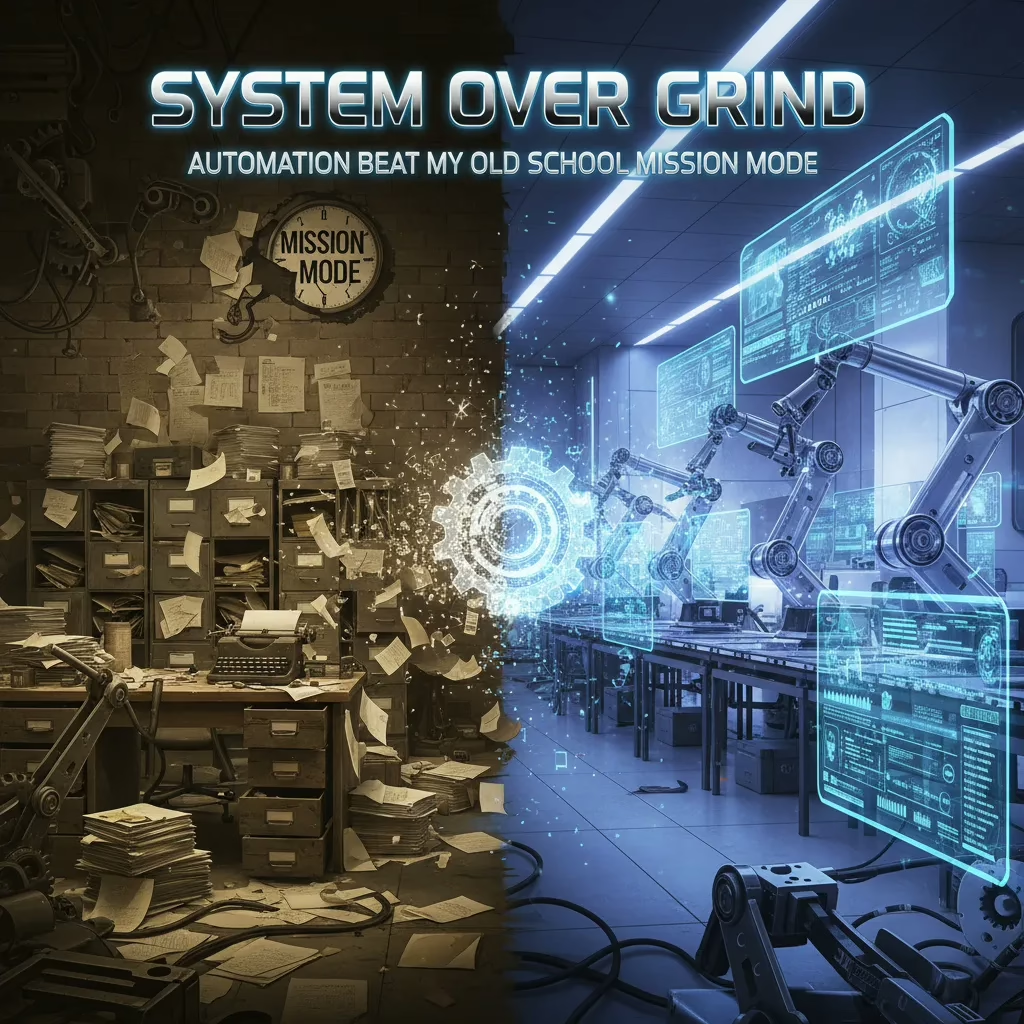
System Over Grind: Why Automation Beat My Old School Mission Mode
Let’s talk about what actually saved my sanity when unemployment hit like a freight train. Spoiler: it wasn’t grinding harder. For years, I ran on “mission mode”—that military muscle memory of pushing through, no matter what. However, as the grind turned into a daily mental struggle, I came to the realization that a change was necessary. The manual hustle could no longer manage the stress, bills, and constant uncertainty I faced. At that point, business systems for veterans, automation tools to reduce stress, and my AI twin for content creation intervened and transformed the situation.
OfferLab Certification: The Framework That Broke My Decision Fatigue
The truth is, when you’re overwhelmed with stress, your brain struggles to make sound decisions. I was stuck in a loop—trying to build an online business from scratch, second-guessing every move, and burning out fast. Then I found OfferLab Certification. Unlike the endless “hustle harder” advice, OfferLab gave me a repeatable process:
-
Build funnel → done
-
Build offer → done
-
Set the sequence → done
-
Follow the blueprint → done
No more guessing. There’s no need to reinvent the wheel. This wasn’t just a pile of templates—it was a structured framework for online business. For veterans like me, who stepped into entrepreneurship without a map, that framework was everything. It broke my decision fatigue and gave me clarity when I needed it most.
Systems and Frameworks: The Unsung Heroes for Veterans
Here is a realization I wish I had understood earlier: systems are truly the key players when operating beyond your comfort zone. Stress doesn’t scale, but systems do. I discovered this fact through personal experience. Research backs it up—veterans who implement business frameworks and automation report lower stress and avoid burnout. The grind is unpredictable, but a system is predictable. It doesn’t care if you’re worn out, overwhelmed, or unemployed. It just works.
“Systems keep you moving, even when life knocks you flat.”
My AI Twin: The Content Creator Who Never Needs Leave
Let’s get real: some days, I just couldn’t show up. The stress was too much. But content doesn’t wait, and neither do audiences. That’s where my AI twin content creation came in. This digital version of me never fumbles a speech, never asks for leave, and never needs caffeine. Honestly, it made me look lazy (I’m not, I swear). But the AI twin kept my brand alive when I couldn’t, filling the gap left by mental fatigue. Data shows that AI twin technology is helping entrepreneurs fill content gaps and stay visible, even on their worst days.
Automation Tools: The Lifeline for Stress
Automation tools for stress are more than just a convenience—they’re a lifeline. With OfferLab’s framework, my AI workflows, and automation running in the background, I finally got my mental bandwidth back. No more 16-hour days. I no longer experienced burnout. Just a system that kept my business moving, even when I couldn’t.
The manual grind became ineffective when each day felt like a mentally exhausting march. A system—courtesy of OfferLab—and my AI twin did what five cups of coffee and sheer stubbornness couldn’t: kept my business alive and me upright. Maybe tech’s not so soulless after all.
Why Veterans Need Systems, Not More Hustle (Or Inspirational Memes)
Let’s get real: when unemployment hit, I didn’t need another “Rise & Grind” meme or a LinkedIn post about how adversity builds character. I required a means to cover my expenses. For veterans, the world after service isn’t just about finding a job—it’s about surviving a new battlefield where the enemy is uncertainty, not some uniformed opponent. Veteran economic opportunity depends on more than motivation; it depends on systems that actually work when your energy is gone and your brain is fried.
Hustle Culture: The Fast Track to Burnout
Everywhere you look, someone’s shouting about hustle. “Just work harder!” they say. However, the reality is that a culture of hustle can lead to burnout, particularly among transitioning military veterans. In the military, the mission is clear, the chain of command is set, and you know exactly what’s expected. Out here? It’s chaos. Civilian life doesn’t hand you orders—it hands you bills with no sense of duty and a pile of unemployment challenges veterans never trained for.
When I tried to outwork my problems, I just ended up exhausted. The grind didn’t pay the rent. If I could build a system for magically paying rent, I’d quit blogging—until then, systems will have to do.
Systems: The Safety Net Nobody Talks About
Here’s what nobody tells you in the transition briefings: systems create safety nets. Programs like the Homeless Veteran Reintegration Program (HVRP) exist for a reason. The Department of Labor provides grants ranging from $100,000 to $500,000 to support veterans’ training, but even the most effective programs are ineffective if they rely solely on intuition and guesswork. You don’t win with motivation. You win in the process.
-
Systems lower stress: When you’re overwhelmed, a checklist beats a pep talk every time.
-
Systems create direction: You know what to do next, even when your motivation is gone.
-
Systems scale: Unlike stress, systems don’t burn out. They keep working, even when you can’t.
Unique Hurdles for Transitioning Veterans
Transitioning service members face a triple threat:
-
Loss of mission: No more clear orders or purpose.
-
Civilian chaos: No chain of command, just a lot of noise.
-
Bills with no sense of duty: They show up whether you’re ready or not.
Post-9/11 veterans know this pain. Around 53% experience temporary joblessness after leaving the service. Fortunately, there is positive news to report. Those who find structure—like education, frameworks, or systems—tend to recover and even out-earn their peers. But it doesn’t happen by accident.
You don’t win with motivation. You win with process.
Motivation Dries Up—Systems Never Call in Sick
Motivation is wonderful when it’s there, but it disappears fast when the stress piles up. Systems, on the other hand, never call in sick. They don’t care if you’re tired, overwhelmed, or doubting yourself. They just work. And when you’re facing unemployment challenges that veterans know all too well, that’s the real trick: doing the right things automatically, not just doing everything harder.
Conclusion: From Survival Mode to Systems Mode (And Gaining Ground, Not Just Groundhog Days)
If you’ve ever felt like every day in unemployment is just another rerun of the last—wake up, worry, hustle, repeat—you’re not alone. I lived that loop. It’s survival mode, and it’s exhausting. But here is what those perpetual Groundhog Days have taught me: you cannot indefinitely out-hustle stress, but you can out-system it. There’s no magic here, just method. Systems liberated me from the grip of stress, while automation provided the much-needed breathing room.
When I first hit unemployment, I tried to muscle my way through with sheer willpower. That’s what the military taught me: grind harder, push through, don’t quit. However, civilian life, particularly the unpredictability of job loss, defies these principles. Automating stress management and implementing predictable business processes became my new strategy. I stopped relying on motivation and started building frameworks that could run even when I couldn’t.
The real turning point was letting my AI twin and my systems take the wheel. My AI twin didn’t just save my sanity; it gave me agency again. On days when my mental health was at its lowest, when getting on camera felt impossible, my digital stand-in kept my business alive. That’s not just a tech trick—it’s a lifeline. Automation and frameworks aren’t just buzzwords; they’re vital tools for bridging the gap between veteran skills and civilian survival. They let me step back without losing ground, and that’s something no pep talk ever gave me.
The issue of mental health unemployment is often invisible to the outside world. The pressure to “figure it out” is relentless, and the shame of falling behind can be crushing. But here’s the truth: if you’re drowning, you’re not broken. You’re human. And you’re trying to do it all without a system. That stops now. Because once the system is built, stress loses its power. That’s not just my story—it’s a blueprint for anyone stuck in survival mode.
Resilience isn’t just about muscle or willpower; it’s about designing backup for when you can’t push any harder. Systems and automation are the backup. They’re the difference between barely treading water and actually gaining ground. Every funnel, every automated workflow, every AI-powered process I built was a step away from chaos and a step toward stability. And with each step, I got a little more of my life back.
So if you’re reading this and feeling overwhelmed, know this: you don’t need to grind harder. You need to build smarter. Let systems do the heavy lifting. Let automation give you space to breathe. Let your AI twin carry the load when you can’t. That’s how you move from survival mode to systems mode—and start gaining ground, not just reliving Groundhog Days.
TL;DR: No armor needed. When unemployment and stress collide, systems (and the occasional AI twin) are your best allies. You aren’t broken—you just need a battle plan you don’t have to fight alone.