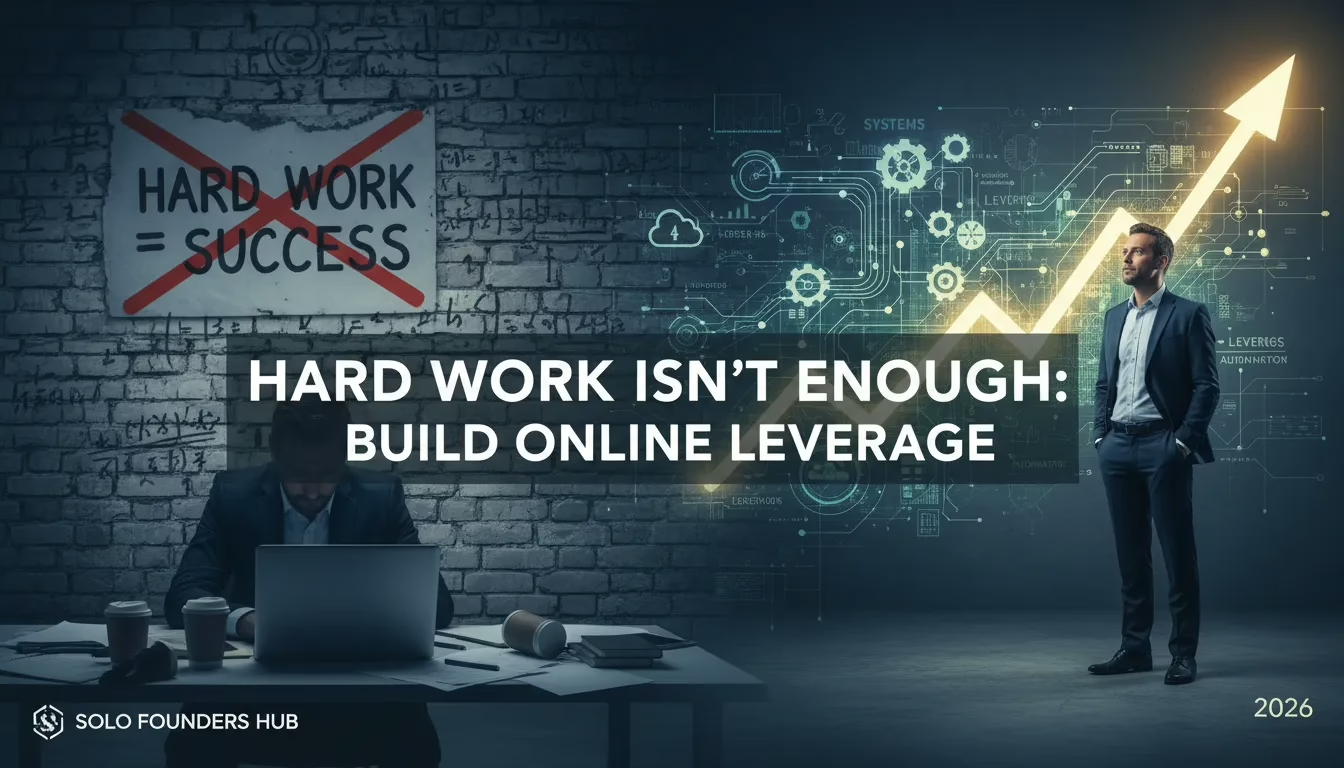
The most exhausted I’ve ever been wasn’t during a launch—it was the month after a launch.
I’d just finished one of those “hero weeks” where I treated my laptop like a rucksack: everywhere I went, it came with me. I was proud of myself in the same way you’re proud after a hard workout… until I opened my bank account and realized the numbers didn’t match the effort.
That’s when an old lesson from military culture (the part I admire and the part I side-eye) came back to me: when something isn’t working, the default answer is “work harder.” It’s comforting. It’s also a trap in online business.
In 2026, the founders I see winning aren’t grinding longer—they’re installing better systems, shaping offers that create leverage, and building continuity so their revenue doesn’t depend on their mood, their health, or their caffeine intake.
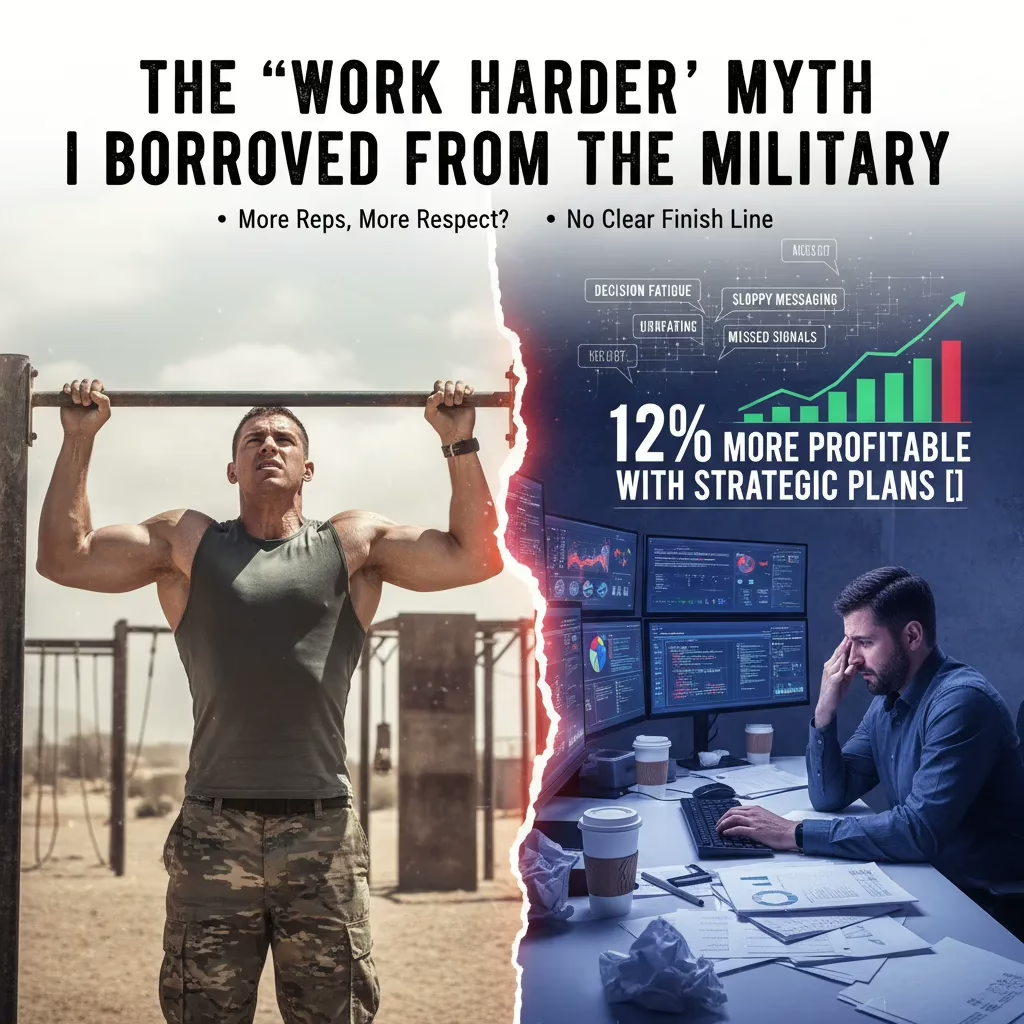
1) The “Work Harder” Myth I Borrowed From the Military
A quick confession: For years, I treated my business like a military fitness test. I believed that if I just did more—more hours, more emails, more launches—I’d earn more respect and more revenue. In the military, this “work harder” mentality makes sense. There’s a finish line, a score, and a clear reward for every extra rep. But when I tried to apply that same mindset to my online business, things didn’t add up.
Here’s why: In digital work, there’s no finish line. There’s always another task, another “urgent” notification, another metric to chase. The military myth of “just work harder” breaks down fast in this world. Instead of medals, you get decision fatigue. Instead of clarity, you get sloppy messaging and missed customer signals. I was busy, but I wasn’t building leverage. I was exhausted, but my results didn’t compound.
Let me share a quick story. A few years ago, I decided to track my hours for two weeks. I logged every minute spent on my business. I expected my longest days to be my most profitable. But when I compared my time logs to my revenue, I was shocked. My busiest days weren’t my highest-revenue days. In fact, some of my most “productive” days—where I hustled from sunrise to midnight—barely moved the needle. That was my turning point.
Here’s a small tangent, because it matters: Discipline is useful. I love Jocko Willink’s mantra, “Discipline equals freedom.” But discipline alone is not a business model. You can’t out-hustle a broken system. You can’t grind your way past a bad offer or a lack of strategic planning objectives. As Cal Newport puts it: “If you don’t produce, you won’t thrive—no matter how skilled or talented you are.”
This is where I started to reframe my approach. Instead of asking, “How can I push harder?” I began to ask, “How can I design better?” I realized that effort alone isn’t leverage. Strategic planning success isn’t about who works the most hours—it’s about who builds the best systems. In fact, businesses with strategic plans are 12 percent more profitable than those without. That’s not a coincidence; it’s a business success story in the making.
The lesson? Don’t confuse activity with progress. Trade “push harder” for “design better.” That’s where real leverage—and real business success—begins.
2) Why Effort Doesn’t Compound (But Systems Do)
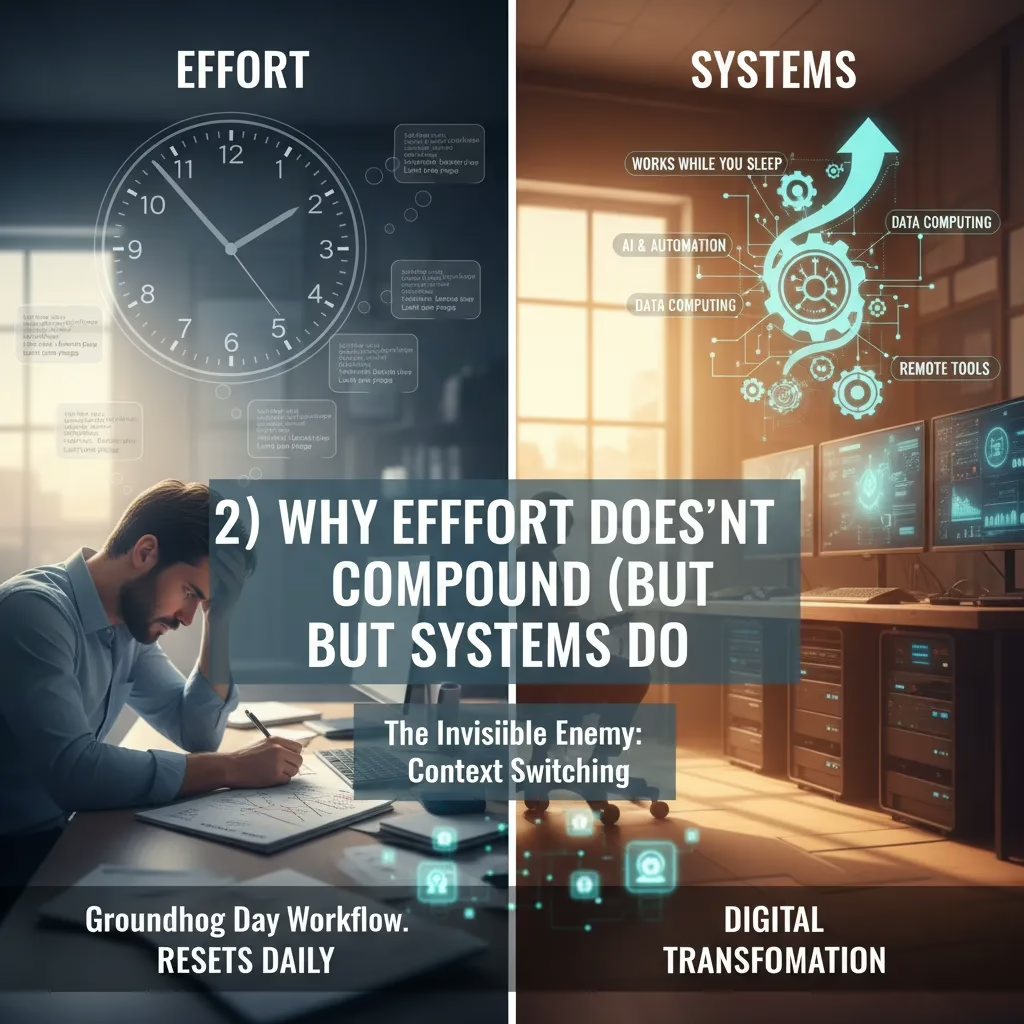
Let me be honest: for years, my online business felt like Groundhog Day. Every morning, I’d wake up and hustle—rewriting the same emails, tweaking the same landing pages, reliving the same launch stress. I believed in the military myth of “just work harder.” But here’s the truth: effort doesn’t compound. It resets every morning, like a cruel alarm clock. No matter how hard I pushed, I was always starting from zero.
Compounding, in plain language, means something gets stronger the longer it runs. Think about money in a savings account—the interest grows on itself. But with effort, there’s no compounding. If I stop working for even seven days, everything grinds to a halt. My lead flow dries up, fulfillment stalls, and cash collection? Forget it. That’s the “7-day stress test” I challenge every digital entrepreneur to try: if you walk away for a week, what breaks first?
The invisible enemy here is context switching. It feels productive—jumping from one task to another, answering emails while building a landing page—but it’s actually a silent killer of momentum. I’d spend hours switching gears, but nothing meaningful would move forward. The real problem wasn’t my motivation. It was my lack of online business systems.
James Clear nailed it:
“You do not rise to the level of your goals. You fall to the level of your systems.”
So, what does a system look like in a digital transformation business? It’s not an MBA spreadsheet. It’s the simple, repeatable flow that powers every online business:
- Traffic – How people find you
- Conversion – How you turn visitors into buyers
- Delivery – How you fulfill your promise
- Retention – How you keep customers coming back
Here’s where digital transformation technology changes the game. In 2026, the essential tools—AI & Automation, Cloud Computing, Data Analytics, and Remote Tools—let you turn repeatable tasks into repeatable results. Instead of rewriting the same email, an automation sends it for you. Instead of manually tracking leads, analytics show you what’s working. These are the business model components that actually compound: systems that keep working while you sleep.
I’ll admit, my early processes were messy. I made the same mistakes, over and over. But when I started installing proven frameworks and leveraging digital transformation technology, my business finally started compounding. That’s the difference between hustling and building something that lasts.
3) Motivation Is a Liar; Systems Don’t Care How I Feel
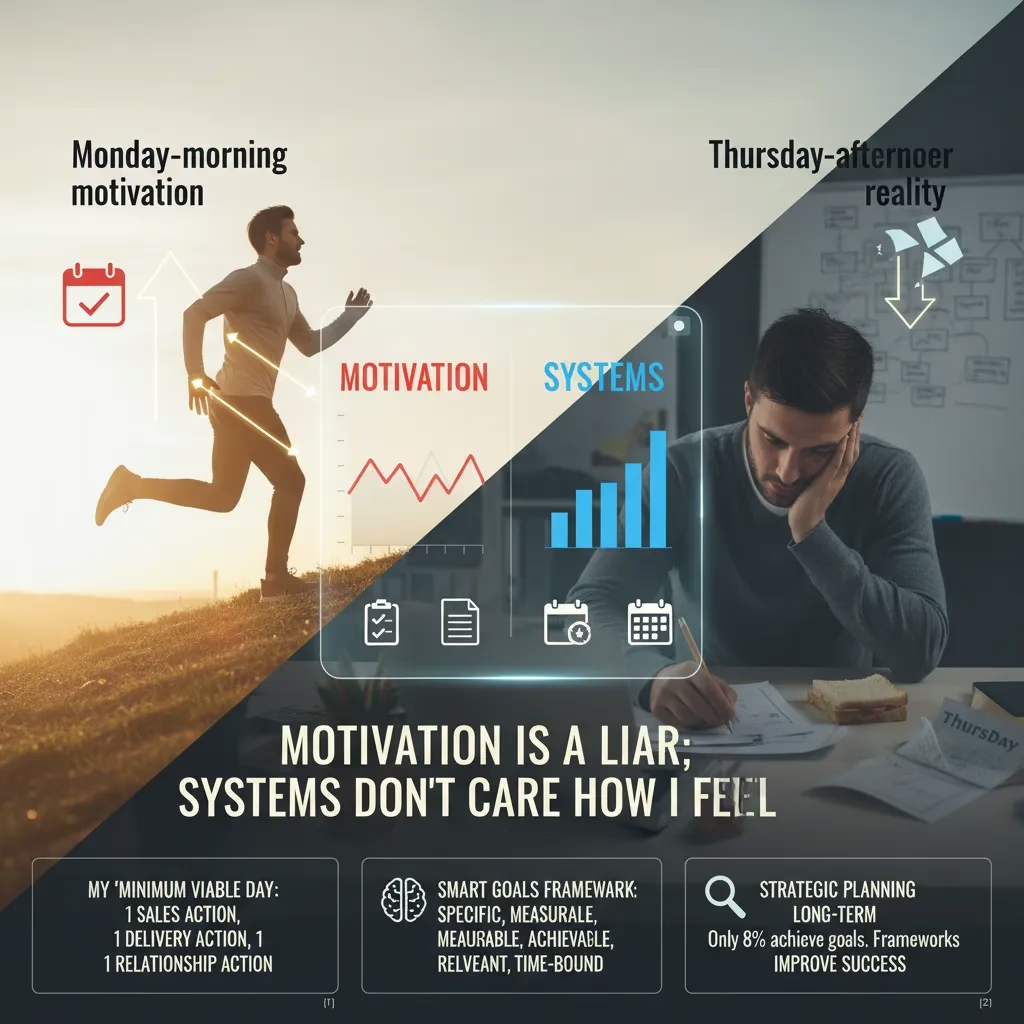
Let’s be honest: I love that Monday-morning motivation spike. I wake up, coffee in hand, ready to conquer the world. But by Thursday afternoon? That spark is long gone, replaced by a to-do list that’s somehow grown teeth. I used to think I just needed to “want it more.” Turns out, motivation is a liar—it’s there when I don’t need it, and missing when I do. What actually keeps my online business moving forward isn’t how I feel, but the systems I’ve built around me.
Why Systems Beat Motivation Every Time
Here’s what I’ve learned: checklists, templates, and default calendars beat vibes every single day. When I rely on motivation, I get inconsistent results. But when I lean on systems, I get predictable progress. The difference is like night and day. Systems don’t care if I’m tired, stressed, or distracted—they just work.
Setting SMART Goals: Systematizing Intention
Only 8% of people actually achieve their New Year’s goals. That used to be me, until I started setting SMART goals. The SMART goals framework forces me to be Specific, Measurable, Achievable, Relevant, and Time-bound. It’s not just about “working harder”—it’s about strategic planning long-term. When I use the SMART framework, I’m not guessing what to do next. I’m following a proven path, and my systems are the rails that keep me on track.
My ‘Minimum Viable Day’ Rule
To avoid overwhelm, I created my own rule: every day, I do one sales action, one delivery action, and one relationship action. That’s it. Even if I’m having the worst day, I know exactly what “done” looks like. This tiny shift—building processes that make the right action the easiest action—has changed everything. It’s like brushing my teeth: I trust my toothbrush routine more than my motivation. Same idea, just applied to business.
Install a Weekly Review Ritual
Every Friday, I spend 15 minutes on a weekly review. I look at what worked, what didn’t, and where I drifted off course. This ritual keeps my business from wandering aimlessly. It’s simple, but it’s the glue that holds my systems together. As BJ Fogg says,
“People change best by feeling good, not by feeling bad.”
That’s why I celebrate small wins and keep my systems light and doable. When I focus on installing frameworks that already work—like SMART goals and weekly reviews—I don’t have to rely on fleeting motivation. My business keeps moving, no matter how I feel.
4) Offers Are Leverage: The Part I Wish Someone Had Yelled at Me
Here’s the hard truth I wish someone had yelled at me years ago: a weak offer turns hard work into expensive cardio. You can hustle all day, but if your offer doesn’t hit the mark, you’re just burning energy with nothing to show for it. In the world of e-commerce business strategy, your offer is your leverage. Alex Hormozi said it best:
“The offer is the thing that makes the business.”
Offers as Leverage: Four Levers That Changed My Game
It took me too long to realize that offers aren’t just a product or a service—they’re a combination of four levers you can pull:
- Pricing: Are you charging for your value, or just your time?
- Packaging: Is your offer bundled in a way that makes sense for your customer?
- Positioning: Does your offer stand out in the market, or does it blend in with everyone else?
- Proof: Can you back up your promises with results, testimonials, or data?
My Turning Point: Clear Outcomes and Timeframes
Let me share a quick example from my own journey. For years, my service packages pricing was based on hours. I thought, “If I work harder, I’ll earn more.” But clients didn’t care about my hours—they wanted results. When I switched to selling a clear outcome (“Get your store to $10k/month in 90 days”) and set a specific timeframe, my sales calls got shorter and, honestly, a lot kinder. People knew exactly what they were buying, and I could finally charge for the transformation, not just my time.
Customer Research Validation: Steal Their Words
Here’s a secret I learned from studying market demand trends: stop guessing what people want. I started recording customer interviews and literally stole their words for my checkout pages. When you use customer research validation, your offer speaks directly to the pain points and desires your audience actually has—not what you think they have. This is the difference between “I’ll do whatever you need” and “I solve this specific problem for people just like you.”
Mini Hypothetical: The Offer Wins
Picture two founders. Both work 60-hour weeks. One has an irresistible offer, built on real customer feedback and clear market demand trends. The other sells “whatever I can do.” Who wins? Every time, it’s the founder with the validated, specific, and well-packaged offer. That’s leverage. That’s how you turn hard work into real results.
5) Continuity = Stability (and Sanity), Especially in 2026
Let me tell you: nothing calms the nerves of an e-commerce founder quite like waking up to recurring revenue. In 2026, with e-commerce trends shifting toward personalization, AI shopping assistants, and seamless subscription models checkout, continuity isn’t just a nice-to-have—it’s the backbone of a stable business (and a stable mind).
Why Recurring Revenue Calms the Nervous System (and the Spreadsheet)
When I first started out, every month felt like a reset button. I’d hustle for new sales, then stress about where next month’s revenue would come from. But once I installed continuity—through subscriptions, retainers, or memberships—everything changed. Suddenly, my spreadsheet had predictability. My stress levels dropped. As Patrick Campbell puts it:
“Retention is the new acquisition.”
What Continuity Can Look Like in Your E-Commerce Business Strategy
- Subscriptions: Monthly product boxes, digital content, or software access.
- Retainers: Ongoing service agreements or consulting packages.
- Memberships: Exclusive communities, VIP perks, or loyalty clubs.
- Maintenance Plans: Regular updates, support, or product care.
- Paid Communities: Access to expert forums or mastermind groups.
Subscription Models Checkout: Make Renewal Frictionless
In 2026, customer experience conversion is all about speed and clarity. Fast checkout, transparent terms, and easy upgrades are non-negotiable. AI shopping assistants can now guide customers through renewal options, making the process feel personal and effortless. The goal? Remove every barrier between your customer and their next renewal—without resorting to dark patterns or hidden fees.
E-Commerce Trends 2026: Personalization Makes Continuity Easier (When Done Ethically)
With AI-driven personalization, you can offer continuity that actually fits your customer’s needs. For example, a skincare subscription that adapts to seasonal changes, or a membership that unlocks new features based on usage. The key is to use these tools ethically—helping, not tricking, your customers into staying.
My Cautionary Tale: Continuity Without Delivery = Churn and Guilt
I learned the hard way: if you promise monthly value and don’t deliver, customers leave—and you’re left with churn, refund requests, and a guilty conscience. Continuity only works when you keep earning it, month after month.
Quick Checklist: What Do Customers Need Monthly, Even After the ‘Big Win’?
- Fresh content or products?
- Ongoing support or community?
- Regular updates or new features?
- Personalized recommendations?
Ask yourself: what keeps your customers coming back, even after their initial success?
6) Stop Reinventing the Wheel: Installing Proven Frameworks
Let me tell you a secret I wish I’d learned years ago: installing proven frameworks is the grown-up version of “steal like an artist.” I used to think I had to invent everything from scratch—my own goal system, my own marketing plan, my own way of tracking progress. But honestly? That’s just a recipe for burnout and confusion. The real leverage comes from using what already works and making it your own.
My Favorite Combo: SMART Goals, OKRs, and a Weekly Scoreboard
Here’s my go-to stack for turning vision into reality:
- SMART goals framework for clarity—so every goal is Specific, Measurable, Achievable, Relevant, and Time-bound.
- OKRs (Objectives and Key Results) for focus—so I always know what matters most this quarter.
- A simple weekly scoreboard for follow-through—so nothing slips through the cracks.
This trio isn’t just theory. Research shows businesses with strategic plans are 12% more profitable than those without. And while only 8% of people hit their New Year’s goals, using frameworks like SMART and OKRs dramatically boosts your odds. It’s not magic—it’s structure.
Vision Into Reality: The 90-Day Plan
Big dreams are great, but they’re useless if you don’t break them down. I translate my vision into a 90-day plan with just three measurable outcomes. Why three? Because focus beats chaos. I ask myself: “What would make the next 90 days a win?” Then I commit to those outcomes—nothing more, nothing less.
Strategic Planning Long-Term: Less Chaos, More Progress
Michael Porter nailed it:
“The essence of strategy is choosing what not to do.”
I pick a direction, then reduce my options on purpose. Strategic planning long-term isn’t about doing everything—it’s about doing the right things, consistently. That’s how you build leverage that compounds.
Marketing Strategy Implementation: One Channel, 30 Days
Here’s a hard-won lesson: don’t flirt with five marketing channels at once. For 30 days, I define one primary channel—maybe it’s email, maybe it’s Instagram—and go all-in. This kind of focus turns marketing strategy implementation from guesswork into results.
A Loving Rant: Templates Don’t Kill Creativity
People say templates and frameworks kill creativity. I say the opposite. Templates protect creativity. They give you a safe container, so your energy goes into what matters—solving problems, serving customers, and building something real. Stop guessing. Start installing systems that already work.
7) The Quiet Power Trio: Validation, Presence, and Tools
When I first started building online businesses, I believed the “just work harder” myth. But after years of trial and error, I learned that hard work alone doesn’t compound—systems do. The real leverage comes from what I call the Quiet Power Trio: Customer research validation, building online presence, and leveraging technology digital. Let me break down how these three quietly shape every successful online business I’ve seen (and the ones I’ve built myself).
Choose Right Products: Don’t Guess—Validate
It’s tempting to launch a new product based on gut feeling. But research shows startups that validate ideas before launch are 50% more likely to survive beyond five years. I never build anything new without asking three questions:
- Who is this for?
- What problem does it solve?
- How do I know they’ll pay for it?
Instead of guessing, I use pre-orders, waitlists, or small-batch tests. This customer research validation gives me real data—no more gambling on hope. If you want to choose right products, start by knowing your customers, not just your competitors.
Building Online Presence: The Five-Second Test
Before anyone buys, they check your online presence brand. Your website, social media, and checkout flow should answer, “What do you do?” in five seconds. I call this the clarity test. If a stranger can’t tell, you’re losing sales. Consistency beats perfection—tell the same story everywhere, from your homepage to your Instagram bio. Seth Godin said it best:
“People do not buy goods and services. They buy relations, stories and magic.”
So, make your story clear and repeat it everywhere. That’s how you build trust before a single transaction.
Leveraging Technology Digital: Automate the Boring Stuff
In 2026, the essential tech stack isn’t about fancy gadgets—it’s about AI automation tools for drafts, cloud computing solutions for seamless handoffs, and data analytics insights for smarter decisions. I automate repetitive tasks so I can focus on strategy and relationships. The right tools free up your time and multiply your impact. Remember, you don’t need every tool—just the ones that solve your bottlenecks.
Wild Card Thought: Your Digital Window Display
If your business were a tiny shop on a busy street, what would your window display say today? That’s your online presence in action. Make it inviting, clear, and consistent—because customers are always looking in.
Stop guessing. Start installing systems that already work.
8) Conclusion: My New Definition of “Hard Work”
The month after my first big online business launch was a blur. I remember sitting at my desk, exhausted, watching the numbers trickle in. I had worked harder than ever—late nights, endless tweaks, and a constant stream of “just one more thing.” But despite all that effort, growth stalled. I was left wondering: was I missing something fundamental about hard work in the world of online business systems?
Looking back, I realize that my definition of hard work was stuck in an old mindset—the military myth of “just work harder.” I thought sheer effort would compound, but it didn’t. The truth is, in 2026’s digital landscape—where online shopping, virtual education, digital content creation, and independent contracting are booming—effort alone doesn’t scale. Strategic planning success and business success in 2026 demand something different.
My new definition of hard work is about doing the uncomfortable things that actually move the needle. It’s not just grinding away; it’s about sitting down to plan, having real conversations with customers, and—most importantly—installing the right online business systems. These are the actions that feel awkward at first, but they’re the ones that create compounding results.
Here’s what I learned: systems create compounding. When you install a proven system—whether it’s for lead capture, onboarding, retention, or a weekly review—you set up a chain reaction. Offers, when built on these systems, create leverage: you can reach more people, serve them better, and do it all without burning out. And continuity—those recurring processes and relationships—creates stability, so your business isn’t constantly starting from zero.
If you’ve ever felt like you’re working hard but not getting anywhere, let me offer you a permission slip: you’re not lazy; you might just be operating without a framework. Simon Sinek said it best:
“Working hard for something we don’t care about is called stress; working hard for something we love is called passion.”
But passion needs a plan. It needs systems. So here’s my call to action, exactly as promised: Stop guessing. Start installing systems that already work. Don’t try to reinvent the wheel or out-hustle the competition. Instead, pick one system—just one—to install this week. Maybe it’s a simple lead capture form, a better onboarding sequence, a retention strategy, or a weekly review habit.
That’s how I do hard work now. Not by doing more, but by doing what matters most. And that’s the real secret to strategic planning success and business success in 2026.
TL;DR: Hard work is a starting ingredient, not the strategy. Effort doesn’t compound without systems. Build leverage through clear offers, validated demand, continuity (subscriptions/retainers), and proven frameworks (SMART/OKRs). Stop guessing—install systems that already work.
Leave a Reply
You must be logged in to post a comment.