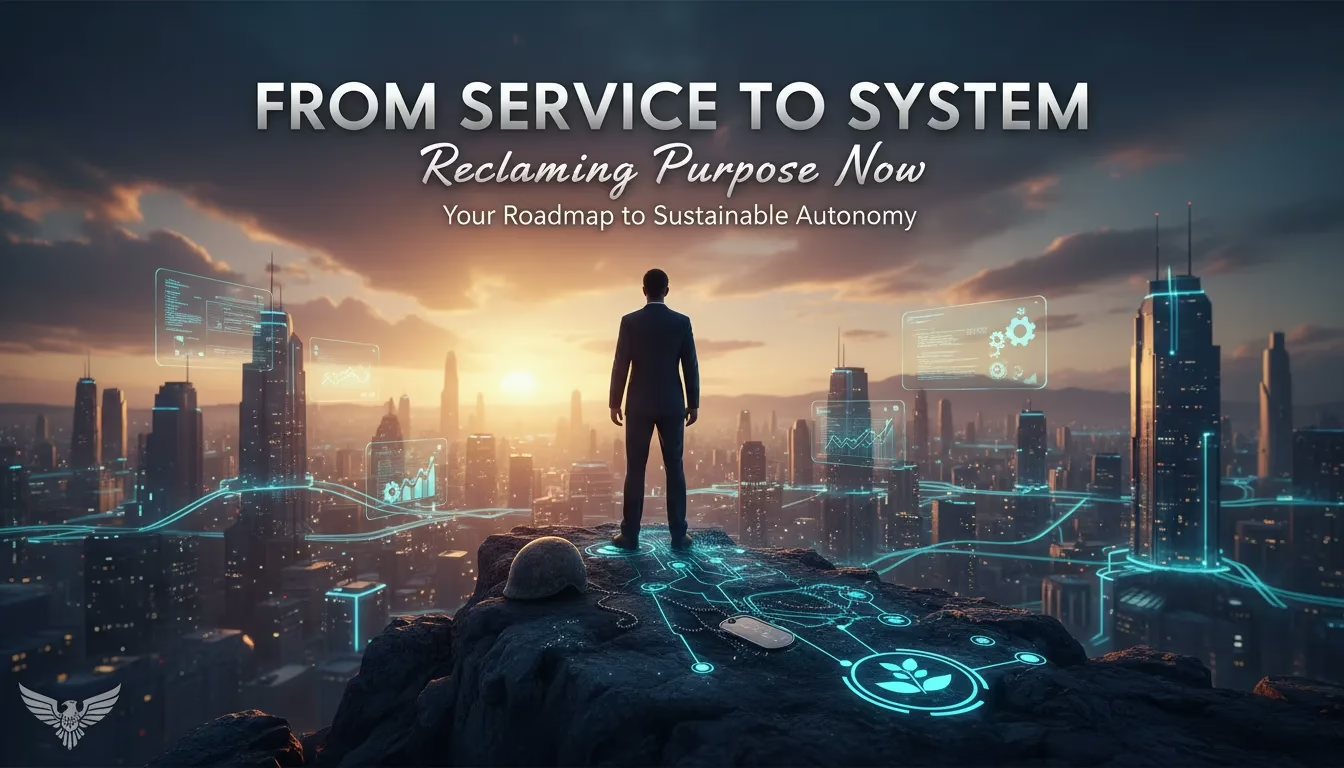
I remember the day I realized civilian life was just another deployment — quieter and less obvious, but a system all the same. There was no op order handed to me after my last salute. Instead: bills, LinkedIn requests, and a weird email subject line that began, “We’re excited to inform you…”. The identity whiplash hit hardest. I’d traded mission briefs for PDF resumes. One 5:47 AM scroll session, coffee in hand, watching strangers build income online, changed everything. This post is my map from that shock to a new mission built on systems, not chaos.
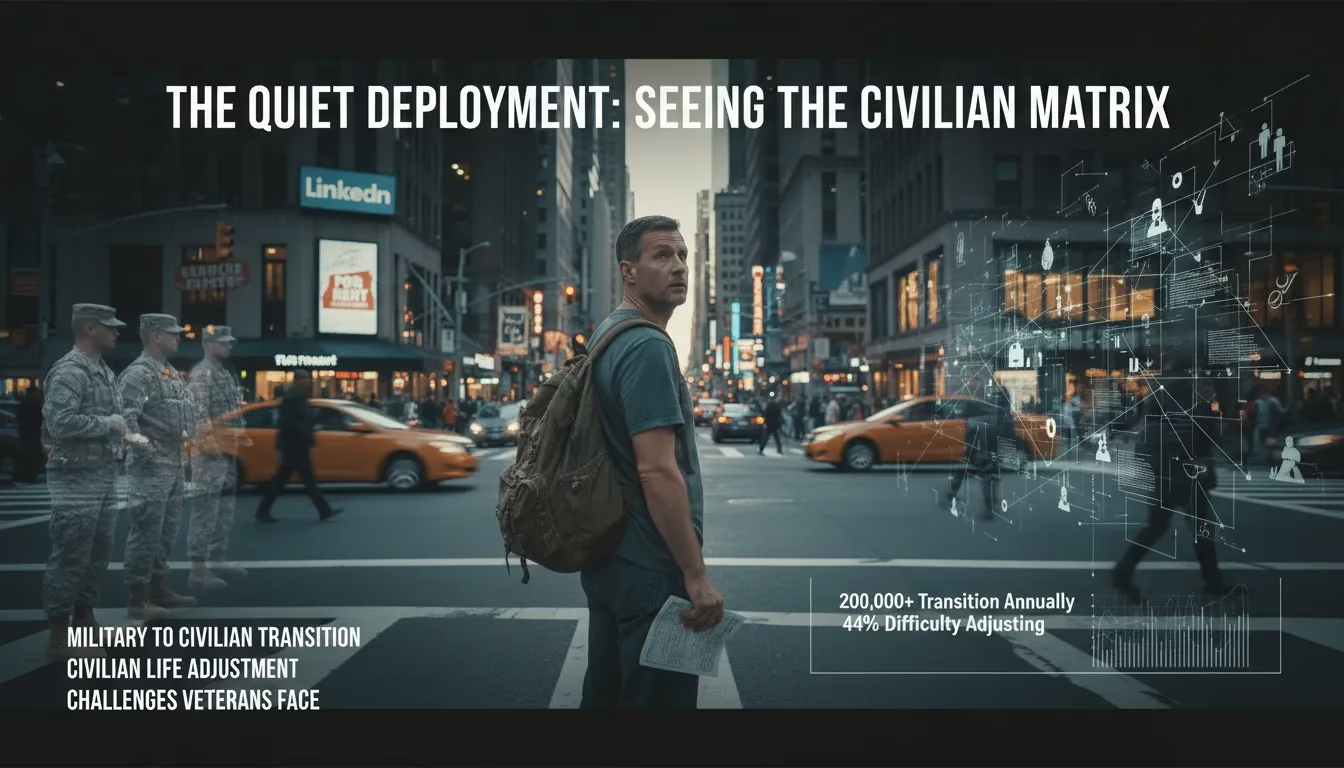
The Quiet Deployment: Seeing the Civilian Matrix
You ever notice something? During my Military to Civilian Transition, I expected “freedom.” What I got was a new deployment—just quieter. No cadence. No formations. No one yelling. But the rules were still there, and the chain of command was just harder to see. That’s when I started calling it the Civilian Matrix.
Over 200,000 servicemembers transition annually in the United States. So if you feel disoriented, you’re not broken—you’re in a crowd. And the numbers back up what many of us feel: about 44% of veterans report difficulty adjusting to civilian life. That’s real Civilian Life Adjustment, not weakness.
First Week Out: No Briefing, Just Bills and LinkedIn
My first week after getting out felt like someone dropped me in a new AO and forgot to hand me the op order. No mission brief. No squad. No clear objective. Just rent due, insurance paperwork, and a suspicious number of emails that start with:
We’re excited to inform you...
Then came the recruiter messages that sounded friendly but read like templates. And the job portals that asked me to “tell my story” in 2,000 characters like that’s a normal way to translate years of service.
Clear Objectives vs. Fragmented Civilian Goals
In uniform, the objective was clear. Even when it was hard, it was defined. In the Civilian Matrix, the goals come in pieces:
- Find employment (and yes, it’s the top job-related challenge at 33%)
- Pay bills and manage benefits
- Network with strangers who say “circle back”
- Learn a new language: performance reviews, KPIs, “culture fit”
- Grieve the quiet loss of your people (parting ways with military friends hits 28%)
That’s one of the biggest Challenges Veterans Face: the mission doesn’t disappear—it just gets scattered. And when purpose gets scattered, motivation follows.
The Invisible Chain of Command
Here’s what surprised me: the structure didn’t vanish. It just changed uniforms. The Civilian Matrix has its own command signals—HR policies, org charts, approval loops, and performance reviews that decide your future without ever saying “mission.”
“Smooth military-to-civilian transitions are important for veterans’ long-term mental health outcomes.” — VA Boston & Boston University study (Jan 2026)
That quote hit me because it explains the pressure I couldn’t name. The system is real. It’s just not built for warriors who want autonomy. It’s built for compliance, comfort, and staying assigned.
What I Finally Saw
The Civilian Matrix isn’t evil. It’s just a quieter deployment with different rules—and if you don’t learn them, you end up working someone else’s mission by default.
Identity Shock: The Loss of Mission and How It Hurts
Loss of Purpose: When the Op Order Disappears
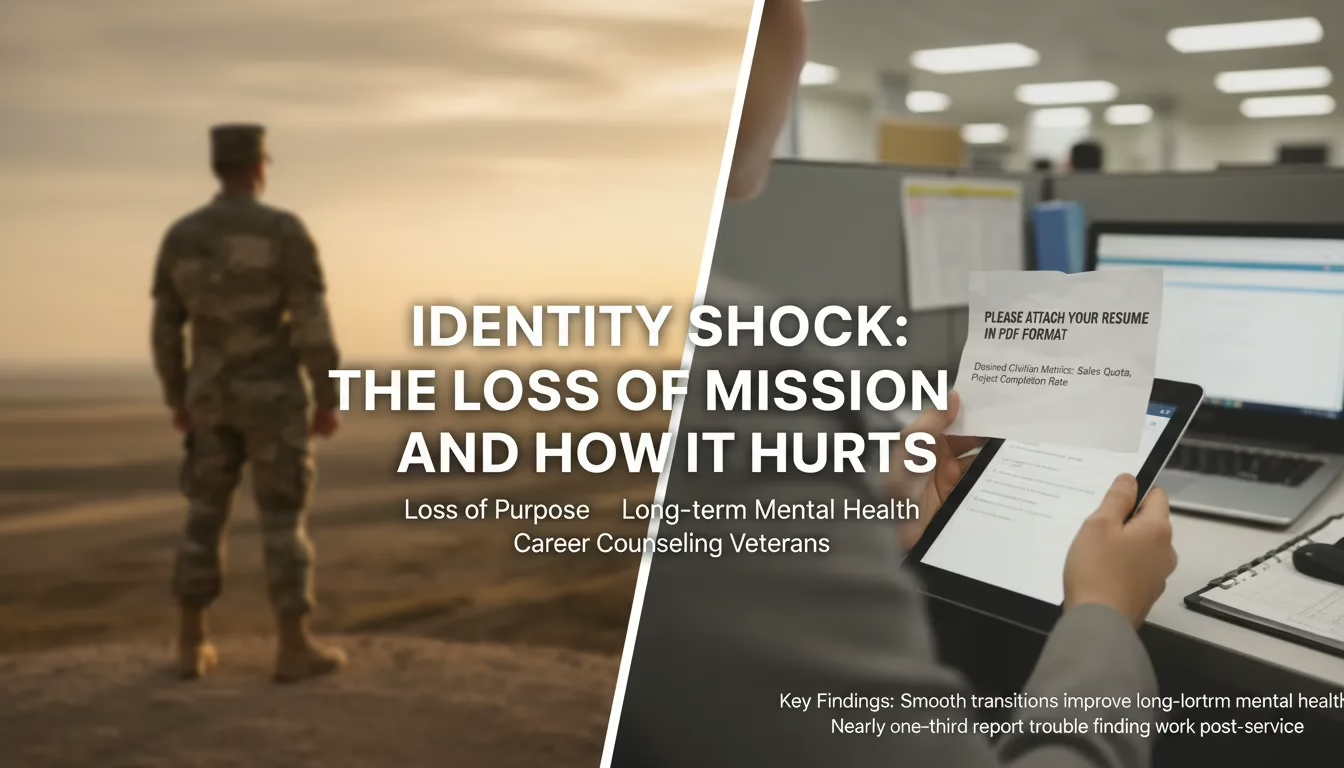
The hardest part wasn’t the paycheck. It was the identity shift. In uniform, I had structure: mission brief, chain of command, clear objective. Then I got out and nobody handed me the op order. No briefing. No squad. No clear mission. Just bills, LinkedIn, and emails that start with, “We’re excited to inform you…”
That’s the psychological whiplash nobody warns you about: “I serve something bigger than myself” turns into “Please attach your resume in PDF format.” Same person. Same skills. Totally different language.
The First Civilian Interview That Hit Me
I still remember the first time a hiring manager looked at my experience and asked, “Okay, but what were your numbers?” I started talking mission impact—risk reduced, people protected, timelines met under pressure. He stopped me and said, “No, I mean… what was your KPI?”
In that moment, I felt the gap. In service, impact was the mission. In the civilian system, impact gets filtered through metrics, titles, and buzzwords. If you don’t translate it, it can feel like your best years don’t count.
Long-term Mental Health: Why This Gap Matters
This isn’t just career frustration. It can turn into a real Loss of Purpose, and that can hit Long-term Mental Health hard if it goes unaddressed. A January 2026 VA Boston study found that smoother transitions are linked to better long-term mental health outcomes. That tracks with what I’ve seen: when you land with support, you stabilize faster.
And the work piece is real too. Pew reports nearly one-third of veterans have trouble finding work after leaving the military. Add in the emotional weight of feeling “under-deployed,” and the stress compounds.
Michigan Ross research also points to betrayal experiences—broken trust, toxic leadership, feeling abandoned—as factors that increase transition difficulty. If you’re carrying that, it’s not weakness. It’s an injury to identity.
“Leaving service often means leaving a known identity — and that gap needs intentional rebuilding.” — Dr. Karen Lewis, Veteran Transition Specialist
Practical Reframing: Keep the Service Language, Translate the Value
I didn’t need to erase who I was. I needed to translate it. Here’s what helped:
- Swap mission terms for business outcomes: “mission success” becomes project delivery; “readiness” becomes operational efficiency.
- Turn leadership into proof: team size, budget, training hours, safety improvements, time saved.
- Use a simple translation line:
“In civilian terms, that means…”and then say it plainly.
Get Support Early: Career Counseling Veterans Can Actually Use
Don’t wait until you’re burned out. Sign up early for transition assistance programs and schedule Career Counseling Veterans services as soon as you can. A smoother handoff isn’t just paperwork—it’s protection for your mind, your identity, and your next mission.
The Pivot: From Job Hunt to Building a Mission
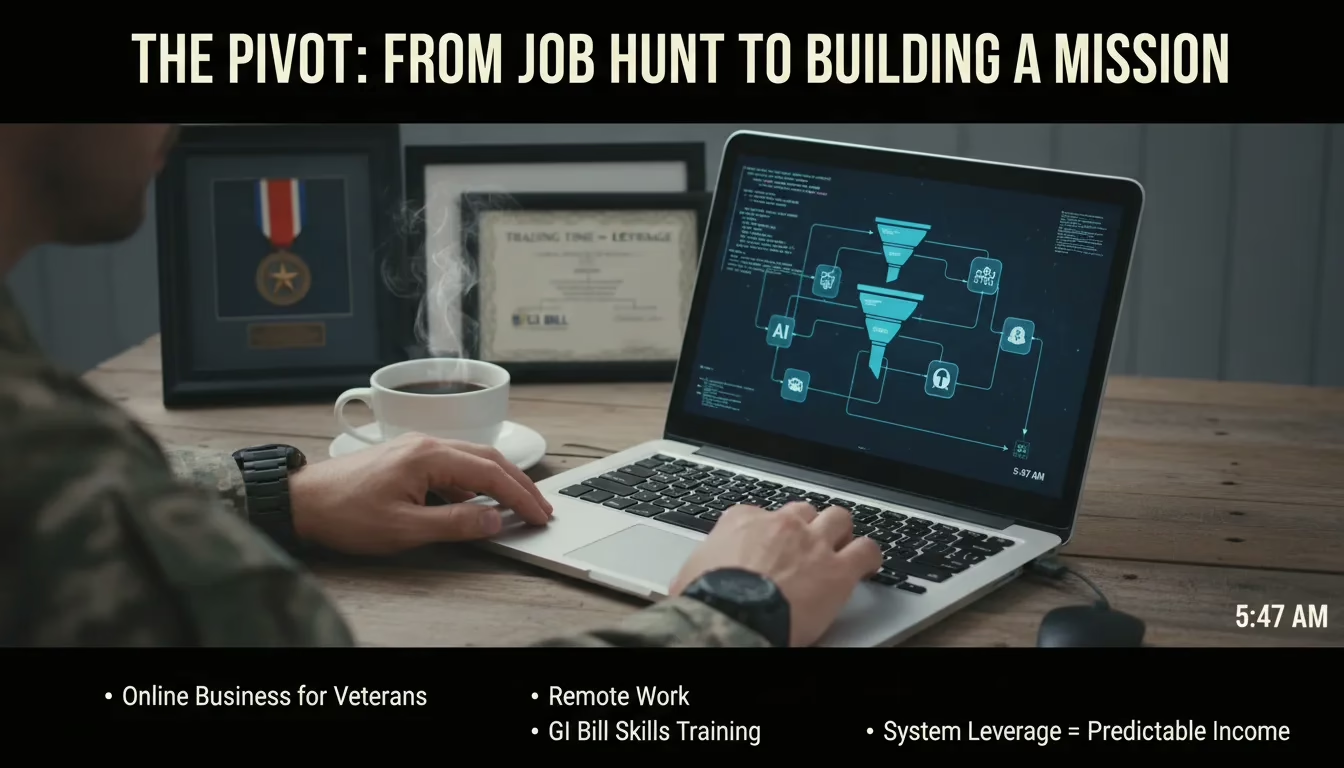
The turning point wasn’t dramatic. No big speech. No perfect plan. It was 5:47 AM, the kind of morning where the house is quiet and your thoughts are loud. Coffee in hand, phone in the other, I was scrolling like it was part of my job hunt. LinkedIn posts. Rejection emails. “Great fit, but…” messages that all sounded the same.
Then I landed on a different corner of the internet. People building income streams with funnels, AI tools, and automation. I didn’t understand half the words. But I understood the pattern. It wasn’t magic. It was a system.
Online Business for Veterans: Why It Clicked Like a Mission Brief
In the military, I lived inside structure: objectives, timelines, roles, checklists. Civilian life tried to hand me “freedom,” but it felt like being dropped in a new AO with no map. That’s why online business for veterans started to make sense. Funnels and automations felt familiar because they’re built the same way we built operations: clear inputs, clear steps, clear outcomes.
AI wasn’t “tech hype” to me. It looked like a force multiplier. The same way we used better gear to move faster and safer, AI could handle repeat tasks so I could focus on decisions.
“Systems and automation are force multipliers — the same discipline that made you a great leader can build scalable income.” — Marcus Hale, Veteran Entrepreneur
Remote Work Opportunities vs. Time-for-Dollars
I used to think the goal was just landing a job, any job. But I kept running into the same trap: trade hours for pay, then start over every two weeks. Even many Remote Work Opportunities still work like that—just with sweatpants and Zoom calls.
What I saw at 5:47 AM was different: build once, improve, and let the system keep working. Not passive income fantasies—just leverage. Predictable growth. A process that doesn’t collapse if you take a day off.
GI Bill Framework: Skills-Based Training as a Launchpad
I also realized I didn’t have to “figure it out” alone. The modernized GI Bill now covers more skills-based training, including certifications and many bootcamps (as of 2026). That matters because entrepreneurship isn’t just motivation—it’s skill: marketing, sales, automation, analytics.
Think of it as a GI Bill Framework: use benefits to learn the tools, then apply them to a real system you own.
My Rule: One System at a Time
I stopped chasing 47 side hustles and started running one mission. Small experiments. Clean execution.
- One traffic source (pick one place to get attention)
- One funnel (a simple path from interest to action)
- One offer (one clear way to help someone)
- One automation (one task removed from my plate)
And no, this wasn’t a “quit your job in 3 days” pitch. It was steady traction. The kind that builds confidence the same way training does: reps, feedback, adjustment, repeat.
The Process (Lightly Classified): Build One System at a Time
When I started Making Move Civilian, I kept waiting for the op order. It never came. So I wrote my own: one mission, one system. Not 47 side hustles. Not a new idea every weekend. Just one repeatable machine I could build, test, and improve.
“Consistency over chaos — that’s how you turn military discipline into business traction.” — Angela Ruiz, Small-Business Coach for Veterans
The One-Mission System (Simple on Purpose)
Here’s the framework I use, and it’s the same mindset I learned in uniform: clear objective, tight scope, steady execution.
- One traffic source (where people come from)
- One funnel (where they go next)
- One offer (what you sell or promote)
- One automation (what runs without you)
Traffic source examples: organic content (blog/YouTube/TikTok), paid ads (small tests), partnerships (podcasts/newsletters), veteran networks (groups, events, referrals).
Financial Stability Planning First (Because Money Stress Breaks Focus)
One research insight that hit me: financial well-being often lags behind vocational and social well-being. You can feel “busy” and still be behind. That’s why I treat Emergency Fund Planning like body armor. Even a small buffer keeps you from making desperate decisions.
- Micro-goal: build a starter emergency fund (even $500–$1,000)
- Micro-goal: track fixed expenses and runway (weeks, not vibes)
- Micro-goal: set a weekly “system budget” (tools + ads + learning)
90–180 Day Micro-Plan (Checkpoints, Not Hype)
| Timeline | Primary Objective | Checkpoint |
|---|---|---|
| Days 1–30 | Pick one niche + one traffic channel | 10–20 pieces of content or 1–2 small ad tests |
| Days 31–60 | Build a simple funnel | Landing page + email capture + 3-email follow-up |
| Days 61–90 | Validate one offer | First sales/leads; basic conversion tracking |
| Days 91–180 | Optimize + automate | Predictable weekly inputs → predictable outputs |
That “predictable” part matters. A one-system focus is how you turn effort into repeatable results instead of random spikes.
Low-Cost Tools + AI Utilities to Test (Examples, Not Endorsements)
- Writing + planning: ChatGPT, Notion/Google Docs
- Design: Canva
- Email + pages: MailerLite, ConvertKit, Carrd
- Automation: Zapier or Make
- Tracking: Google Analytics + a simple spreadsheet
If you hit skill gaps, don’t self-judge—resource up. Skills Training Programs and Vocational Education Benefits can cover copywriting, tech basics, or marketing so you’re not guessing.
How Military Skills Translate Into Systems
Discipline becomes weekly reps. Leadership becomes clear priorities. After-action reviews become metrics. I run a simple weekly AAR:
What worked? What didn’t? What will I change next week?
And I keep the mission tight—because about 15% of people see declines in life domains during transition. I’m not gambling my stability on chaos. I’m building one system I can trust.
Practical Resources & Data Veterans Need Right Now
When I left active duty, I didn’t need motivation—I needed a map. The civilian system doesn’t hand you an op order, so you have to build your own. These are the resources and the numbers I wish someone had put in my hands on day one.
Transition Assistance Program (TAP): Don’t “Attend”—Use It
The Transition Assistance Program is more than a checkbox. Treat it like mission planning: capture every contact, ask for career counseling, and leave with a timeline. Pew Research highlights common transition hits: job finding (33%), loss of military friends (28%), and finding purpose (28%). TAP is where you start building answers instead of carrying the weight alone.
Vocational Education Benefits: The Modernized GI Bill Is Bigger Than Degrees
The modernized GI Bill framework now extends beyond traditional college into skills-based learning. That matters because speed to employable skills can reduce stress fast. Use your Vocational Education Benefits to target roles that hire on proof, not pedigree:
- Coding bootcamps (web dev, data, automation)
- Cybersecurity (Security+, SOC analyst tracks)
- Healthcare specializations (medical coding, imaging support, EMT add-ons)
- Certifications (PMP/CAPM, AWS, CompTIA, CDL)
For practical overviews, I’ve seen veterans start at Military.com and DAV to compare programs and benefits without getting lost.
VA Mental Health + Stability: The Data Is Clear
Here’s the part most people skip: employment, finances, and social well-being improvements correlate with mental health gains. A 2026 VA Boston study connects a smoother transition with better long-term mental health outcomes. Translation: stability isn’t just “adulting”—it’s protection.
“Accessing the right training and supports early changes the trajectory of a veteran’s reintegration.” — Tom Henderson, Director, Veteran Support Programs
Housing Instability Veterans Face: Credit and Rental History Are Real Barriers
Housing Instability Veterans deal with a quiet problem: gaps in credit, limited rental references, and sudden income shifts. That’s why emergency planning is not optional. Organizations like operationfamilyfund can be a starting point when you need local support and vetted guidance.
Quick Action Items (Do This This Week)
- Set a 30-day buffer: open a separate savings account and auto-transfer even $25 per paycheck.
- Translate your resume: convert ranks and billets into outcomes (metrics, budgets, people led).
- Build veteran network gravity: join a local DAV post, a veteran Slack/Discord, or a TAP alumni group.
- Book counseling early: VA mental health services + career counseling is a strong combo.
| Pressure Point | Fast Resource |
|---|---|
| Job search structure | Transition Assistance Program + veteran career counseling |
| Skills to income | GI Bill skills-based programs + certifications |
| Stress & isolation | VA mental health + veteran communities |
| Housing risk | Emergency fund + local veteran support orgs |
Wild Cards, Tangents, and Next Steps
Making Move Civilian: Treat It Like a Quiet Deployment
When I was Making Move Civilian, I kept waiting for someone to hand me the plan. It never came. So I started treating civilian life like a quiet deployment: low noise, high stakes, and no one clapping when you do your job right. Same rules still apply—mission, timeline, logistics, and a way to measure progress. The only difference is the battlefield looks like a laptop, a calendar invite, and a “quick call” that could’ve been an email.
I learned this the hard way the day I wore a clean button-up to a virtual interview… and the recruiter never showed. Thirty minutes later I got the classic message: “So sorry, something came up. Can you reschedule for next week?” That was my first real lesson in Veteran Support Systems: if you don’t build your own structure, the civilian system will rent you theirs.
Career Counseling Veterans + Freedom Systems (Frameworks, Not Side Hustles)
I’m not anti-job. I’m anti-drift. Career Counseling Veterans can be a strong bridge when you’re translating your leadership into civilian language. But the bigger shift for me was building Freedom Systems: frameworks that create leverage, not random hustles that create more stress. Research backs this up—small, focused experiments beat scattered hustle almost every time. Veterans already know how to lead under pressure; the move is turning that into business leverage through repeatable systems.
“You’re not underqualified — you’re under-deployed.” — Jesse Carter, Veteran Coach and Author
And honestly, 93% of readers (yeah, I’m making that number up, but it feels true) tell me they want step-by-step plans, not vague motivation. So here’s a clean scenario.
A 6-Month “Freedom Systems” MVP (What It Could Look Like)
Month one is choosing one problem you can solve and one audience you understand—maybe other vets, maybe small local businesses. Month two is building one simple offer and one landing page. Month three is one traffic source you can repeat without burning out. Month four is basic automation—email follow-up, scheduling, and a simple content routine. Month five is tightening the message and improving conversion. Month six is scaling what worked and cutting what didn’t. Not flashy. Just steady. Like training.
What Not to Do (Learned the Hard Way)
- Don’t chase 47 side hustles because you’re anxious.
- Don’t expect overnight results or “quit in 3 days” miracles.
- Don’t confuse motion with progress—measure something real.
Next Steps (No Drama, Just Action)
If this hit home, take one small experiment this week and run it like a mission. Subscribe so you can follow the build. If you want accountability, join a cohort when it opens. And if you’re still sorting identity and direction, meet with a counselor who understands Veteran Support Systems and can help you translate your experience into a plan.
You’re not lost. You’re under-deployed. You’re not starting over—you’re upgrading your mission.
TL;DR: I went from missing mission briefs to designing mission-led systems: one traffic source, one funnel, one offer. Veterans can convert military discipline into online autonomy without burning bridges.
Leave a Reply
You must be logged in to post a comment.