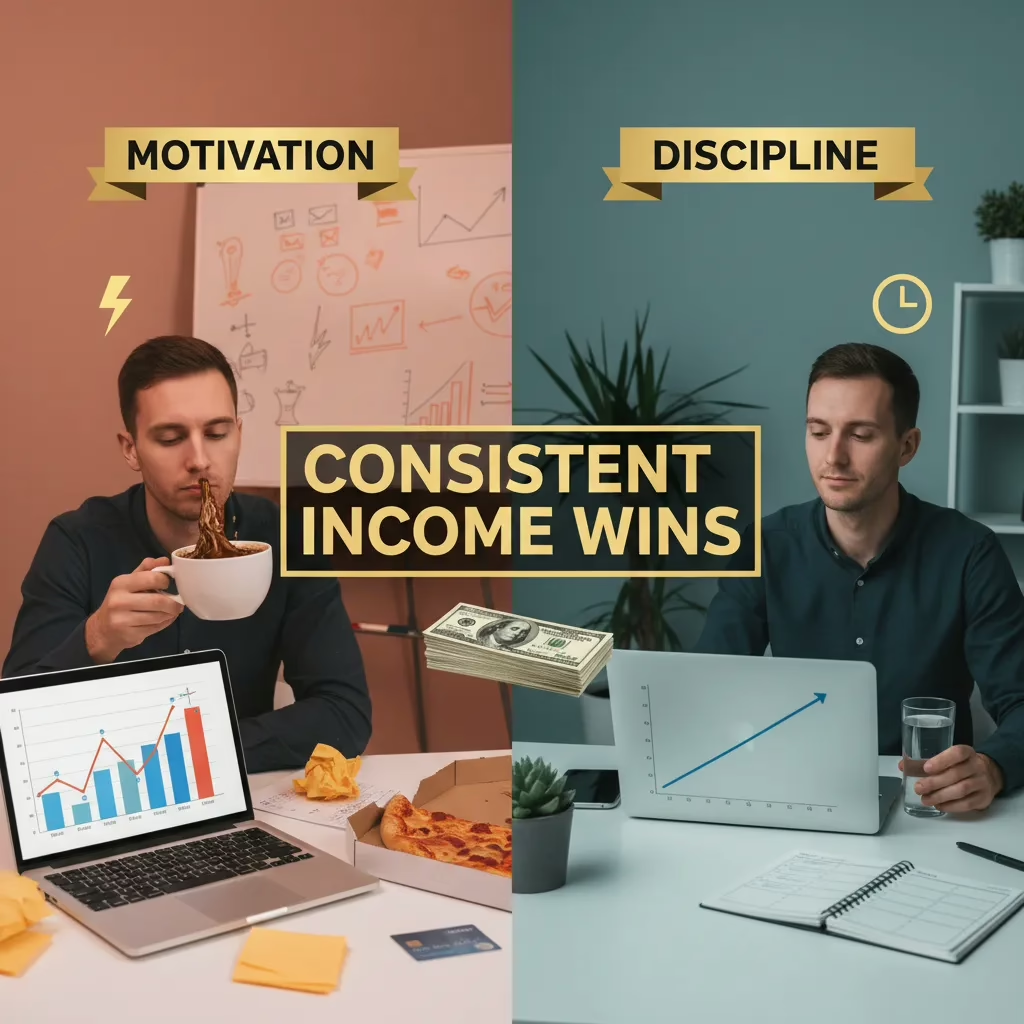
Last spring I had one of those cinematic Mondays: fresh notebook, triple-shot coffee, “new era” playlist. By Thursday I was staring at my laptop like it owed me money. That’s when it clicked—my income didn’t have a marketing problem. It had a weather problem. If my output depended on my mood, I wasn’t running a business; I was running a feelings-based pop-up shop. This is my case against motivation as a primary strategy—and my case for building tiny, almost boring systems that pay you even when your brain is foggy.
A Monday I Was ‘On Fire’ (and Why That’s a Trap)
I wrote this on a chilly Monday morning—2026-01-19, to be exact—when I was absolutely on fire. You know the feeling: the coffee hits just right, your favorite playlist is pumping, and you’re surrounded by a battlefield of sticky notes and half-finished plans. That morning, I was convinced motivation alone would finally launch my “consistent income system” into orbit. I mapped out new offers, brainstormed content, and even color-coded a to-do list. It felt like discipline vs motivation was a battle I’d already won.
Fast-forward to Thursday. The playlist was silent, the sticky notes were curling at the edges, and my “brilliant” plans were gathering digital dust. My emotional energy had vanished—and so had my progress. That’s the pattern I kept repeating: confusing a surge of motivation with real, lasting traction. Motivation fades quickly, but I kept betting my business on it anyway.
Here’s the hard truth: I was running what I now call a mood-based business. In plain language, that means my income only moved when I felt inspired. If I woke up grumpy, tired, or distracted, nothing shipped. No posts. No offers. No follow-ups. And if you’re honest, you might recognize this pattern too. Ask yourself: If you didn’t feel inspired tomorrow, would anything still get done?
That’s scarier than it sounds. Because when you build your business around your mood, you’re at the mercy of something you can’t control. Emotions are unpredictable. Life gets in the way. And as I learned (the hard way), inconsistent action creates inconsistent cashflow. There’s no mystery there—if you only work when you’re “on fire,” your income will flicker just as unpredictably.
This is why the discipline vs motivation debate matters so much. Motivation is emotional energy—it’s powerful, but it’s fleeting. Discipline is steadier, but even that can crack under stress or exhaustion. The real key to financial success isn’t more hype or another Monday pep talk. It’s fewer decisions. It’s building a system that works regardless of how you feel.
James Clear said it best: “You do not rise to the level of your goals. You fall to the level of your systems.”
So if your “consistent income system” depends on feeling inspired, you don’t have leverage—you have a mood-based business. And that’s a trap I don’t want you to fall into, because I’ve been there, and it’s exhausting.

The Motivation Trap Nobody Brags About
Let’s talk about the kind of “work” nobody brags about, but almost everyone does. I’m talking about the hours spent planning, organizing, brainstorming, and consuming content—tasks that feel productive, but rarely move the needle. I’ve lost count of how many times I’ve filled a notebook with strategies, or binged business podcasts, only to avoid sending that one follow-up email that actually matters. It’s easy to confuse all this prep with progress, but here’s the truth: motivation tricks you into thinking you’re working.
Motivation is emotional energy. It feels powerful in the moment—like a shot of espresso for your ambitions. You get a dopamine hit every time you map out a new plan or discover a fresh idea. But as Naval Ravikant put it,
“Inspiration is perishable—act on it immediately.”
The problem? Most of us don’t. We ride the high, then stall out when it’s time to execute. Planning feels like progress, but unless you track progress growth with real action, it’s just another page in the notebook graveyard.
Here’s where it gets real: emotions fluctuate; bills don’t. You can be on fire with ideas Sunday night, but if you’re tired or stressed on Monday, emotional decision making takes over. Suddenly, the “productive” tasks become a way to avoid the uncomfortable work—like actually reaching out to a client or hitting publish on that post. I’ve been there, convincing myself that one more course or one more brainstorm will finally get me moving. Spoiler: it never does.
There’s a hidden cost to this cycle. Every time motivation fades quickly and you restart, you lose more than momentum—you lose time. It’s like having a caffeinated friend who’s a blast to be around, but you’d never trust them to drive you home. Fun, but unreliable. That’s motivation: it gets you hyped, but it won’t get you paid.
Most people already know what to do to build consistent income. The basics aren’t a secret. The real struggle is in executing those basics day after day, especially when you don’t feel like it. That’s why tracking progress growth matters so much—it gives you visible proof that you’re moving forward, even when motivation is nowhere to be found.
This isn’t about shaming anyone. If you find yourself stuck in the prep-work loop, it’s not a failure—it’s feedback. The real enemy isn’t a lack of motivation; it’s relying on emotional decision making to run your business. When you see it for what it is, you can finally start building something that works, even when you don’t feel like working.
Why “Just Be Disciplined” Still Breaks Down
For years, I handed out the same advice to anyone struggling with consistency: “Just be disciplined.” I believed it myself. After all, discipline is better than motivation, right? It’s not wrong—self discipline building is a real skill, not just a personality trait. But here’s what I’ve learned the hard way: discipline leans on willpower, and willpower is a battery. And like any battery, it runs out.
Let’s be honest about what drains that battery in real life. It’s not just laziness or lack of ambition. It’s:
-
Bad sleep that leaves your brain foggy
-
Stress from work, money, or relationships
-
Family emergencies—like the week my kid got sick and I was up all night, then tried to muscle through my to-do list anyway
-
Decision overload—when you’ve made so many choices by noon, you can’t even pick what’s for dinner
I remember one “airport week” when everything hit at once: a looming deadline, travel delays, and a sick kid at home. I told myself I just needed to push harder, to be more disciplined. But by Friday, I’d ghosted my own goals. No posts. No follow-ups. Just exhaustion. That’s when it hit me—even the most disciplined people crack when everything depends on effort.
Here’s the truth: Discipline Builds Habits, but habits need scaffolding. Research shows discipline is built through repeated behavior, not some magical trait you’re born with. It’s a muscle you strengthen through practice, consistency, and learning to bounce back from setbacks. But even the strongest muscle gets tired if you never let it rest.
That’s where systems come in. Systems remove effort from the equation. Instead of waking up and deciding what to do, a system tells you what happens next—no matter how you feel. As BJ Fogg says,
“Help people do what they already want to do.”
Systems do exactly that. They make it easy to show up, even when your willpower is running on fumes. They protect you from overthinking, burnout, and emotional decision-making. In the motivation vs discipline work debate, systems are the quiet winner. They turn self discipline building into something repeatable, not heroic.
So yes, discipline is better than motivation. But it still breaks down without support. If you want habits that last, give them a system to lean on. That’s how you build consistency that survives real life.

Systems as Emotional Insurance (and a Tiny Bit of Freedom)
Here’s the truth I wish I’d learned sooner: a system is a decision you make once that pays you repeatedly. That’s it. It’s not about spreadsheets or complicated project management tools (I know, I know—my “system” is mostly checkboxes and reminders). It’s about removing friction decisions from your day, so you don’t have to wake up and negotiate with yourself every morning.
Let me paint you a picture. When I used to rely on motivation, every day started with a debate: “Should I post today? Should I follow up with leads? Should I work on that new offer?” Some days I’d win that argument, but most days, I’d lose precious time to overthinking. That’s where systems became my emotional insurance. They protect me from:
-
Overthinking
-
Burnout
-
Inconsistent action
-
Emotional decision-making
With a system, the work is already decided. I don’t have to feel inspired to execute. I just follow the plan. It’s like brushing my teeth—non-negotiable, low drama, and automatic. The real freedom is not in doing whatever I want, but in not having to decide what to do next.
Quick Friction Audit: Where Am I Losing Time?
Take a moment and ask yourself: where do you lose time deciding what to do? For me, it was always in the little things—what to write, who to contact, what task to prioritize. That’s where structured routines reminders and automation come in. Research shows that automatic savings systems and recurring investment contributions help people stick to their financial goals by removing willpower from the equation[1]. The same logic applies to business: automation reduces emotional friction and keeps you moving forward, even when motivation is nowhere to be found.
Automation: The System’s Best Friend
Think of automation as the cousin to systems. Here are a few ways I’ve made my business more automatic:
-
Calendar blocks for non-negotiable work sessions
-
Content templates for daily posts
-
Follow-up scripts for leads
-
Automatic savings transfers for business profits
Each of these removes a decision from my day. The less I have to think, the more I get done—consistently. As Cal Newport says,
“You can’t separate yourself from the daily reality of your life. Your daily actions are the structure of your destiny.”
When you treat your business like brushing your teeth—automatic, low drama, and non-negotiable—you build emotional insurance. And, surprisingly, a tiny bit of freedom too.
The Minimum Effective System I’d Bet On
Let’s get real: I’ve tried the 37-step morning routines, the color-coded planners, the “miracle” productivity hacks. None of them stuck. What actually moved the needle for my income was something far less glamorous—a minimum effective system. Not exciting. Not flashy. But repeatable. And repeatable beats intense every time.
Here’s the system I’d bet on, and still use when life gets chaotic:
-
One daily value post
-
One short-form video
-
One follow-up conversation
-
One small improvement
This isn’t about perfection. It’s about consistency over perfection. Ugly-but-done beats perfect-and-late, every single time. Let me break down why each piece matters:
-
Value post: This attracts the right people. It’s your digital handshake. Even on my busiest days, I can share a quick tip, story, or lesson in 20 minutes. It’s about showing up, not showing off.
-
Short-form video: Video is how ideas travel now. It distributes your message further and faster. I keep it simple—15 minutes, one clear point, filmed in one take. No fancy edits needed.
-
Follow-up conversation: This is where relationships (and revenue) happen. Ten minutes to check in, answer a question, or nudge a lead forward. Small touchpoints compound into trust.
-
Small improvement: Five minutes to tweak a headline, update a link, or clean up a process. These micro-upgrades stack up. Over time, they transform your workflow and results.
Consistency Over Perfection
I track these actions with a simple checkbox or streak counter. No fancy apps—just a visible record of progress. This is where small wins momentum kicks in. Each checkmark is proof: I’m building discipline, not just chasing motivation. Research shows that these small, consistent acts create powerful financial habits and build momentum over time. When I see that streak grow, I want to keep it alive. That’s the psychological engine that keeps me moving, even when motivation is nowhere to be found.
Seth Godin said it best: “The only way to get better is to ship.”
This minimum effective system isn’t about being perfect. It’s about being present, every day. The magic isn’t in the intensity—it’s in the repetition. And that’s how consistent income is built: one small, boring, repeatable win at a time.

Why Boring Wins (and Why the Internet Hates That)
Let’s be honest: the internet loves a good hustle story. Viral wins, all-nighters, “rise and grind” montages—these get the likes and the retweets. But here’s the truth I’ve learned the hard way: boring businesses survive. Exciting ones burn people out. The world celebrates adrenaline, but adrenaline is not a business model. When it comes to long term financial success, it’s the quiet, consistent actions that actually move the needle.
I used to fall for the hype myself. Every time I saw a new strategy or a viral trend, I’d feel tempted to scrap my routine and start fresh. The rush was real. But every time I rebuilt, I lost momentum. I finally realized that habits build wealth, not heroic sprints. The people who win aren’t the ones who get the most excited—they’re the ones who show up, even when it’s boring.
Cultural Pressure: Why Consistency Gets Ignored
Let’s call it out: hustle content is more entertaining than consistency. Watching someone “crush it” in a day is fun. Watching someone quietly post every day for 90 days? Not so much. But here’s the catch—those daily posts, those repeated actions, are where the magic happens. As Morgan Housel says,
“The most powerful force in the universe is compounding.”
Compounding: Boring Actions, Surprising Results
Compounding isn’t just for money. It’s for habits, too. When you repeat a small, boring action—like posting daily, saving a set amount, or following up with one client—those actions stack up. After 90 days, the person who posted daily has a body of work, real data, and momentum. The person who went viral once? They’re usually gone by day 30, chasing the next high.
Consistent Financial Habits Beat Motivational Sprints
It’s easy to get fired up and make a big move. But consistent financial habits—the kind that feel dull in the moment—are what lead to long term financial success. This is where self-discipline comes in. It’s not about being a robot; it’s about practicing delayed gratification and building mental resilience when things get tough. No one claps for that, but it’s the grown-up superpower that actually pays off.
Mini-Case: 90 Days vs. 1 Viral Spike
-
Daily Poster: Shows up every day, builds trust, learns from feedback, and compounds results.
-
Viral Spiker: Gets a rush, disappears, and has to start over—again and again.
The lesson? Structure wins when adrenaline fades. Habits build wealth, not hype.
The Identity Shift: From ‘Motivated Creator’ to Operator
For years, I wore the badge of the “motivated creator.” Every Monday, I’d wake up buzzing with new ideas, convinced this was the week I’d finally break through. I called myself a hustler, a grinder—someone who thrived on adrenaline and late-night inspiration. But here’s the truth: those identities kept me chasing highs, not mastering consistent success. I was always reacting to my mood, not planning for real, repeatable results.
This isn’t just a productivity hack. It’s an identity swap. The real transformation happens when you stop seeing yourself as:
-
A hustler (always chasing the next rush)
-
A grinder (burning out on effort alone)
-
A motivated creator (waiting for inspiration to strike)
And start adopting the mindset of:
-
An operator (runs the system, rain or shine)
-
A builder (installs processes that outlast moods)
-
A system manager (maintains, tweaks, and trusts the checklist)
Here’s what changed for me: Operators don’t debate the checklist on low-energy days. They don’t negotiate with themselves or wait to “feel ready.” They just follow the plan. If I’m tired, stressed, or even uninspired, my system still runs. That’s the power of what I call the Motivation Reacts Discipline Plans philosophy. Motivation is emotional and reactive; discipline is proactive and structured. When you build systems, you stop relying on willpower and start relying on process.
Let’s get real: if a snowstorm knocked out my internet for a day, what parts of my business would still run? The answer: anything I’ve systematized. My content queue, my scheduled emails, my automated follow-ups—they don’t care about the weather or my mood. That’s the difference between being a motivated creator and a true operator.
This shift is about intrinsic motivation driven action. I do the work because it’s who I am now, not because I’m hyped up by a new strategy or a viral post. Sure, I still relapse into “new strategy” mode sometimes—old habits die hard. But now, I know that sustainable, consistent income isn’t about chasing excitement. It’s about less drama and more maintenance. As Simon Sinek puts it:
Consistency is more important than intensity.
Once that clicks, everything slows down—in a good way. The highs and lows fade. What’s left is a business that works, even when I don’t feel like working. That’s the real secret to mastering consistent success.
When Motivation Disappears Tomorrow: A Practical Test
Let’s run a simple experiment: imagine you wake up tomorrow and motivation is gone. No hype, no inspiration, no surge of energy. What still gets done in your business? This “motivation blackout” is the real test of whether you have a consistent income system—or just a mood-driven hustle. I’ve faced this myself, and the truth is, if my progress stops when motivation vanishes, my system is too fragile to support real financial freedom achievement.
There are three warning signs I’ve learned to spot. First, I find myself restarting every Monday, promising this week will be different. Second, I negotiate daily with myself about what actually needs to get done. Third, I avoid follow-ups, telling myself I’ll do it when I feel more “on.” If any of this sounds familiar, it’s not a discipline problem—it’s a system problem.
So, how do you rebuild? I started by shrinking my tasks until they were so small I could do them even on my worst days. One value post. One short video. One follow-up. I set up structured routines reminders—alarms, calendar events, templates—so the process was automatic, not emotional. Annie Duke said,
“You can’t control the outcomes, but you can control the process.”
That’s the heart of a consistent income system: it keeps moving, even when I don’t feel like it.
Tracking progress growth became my anchor. Instead of asking, “Did I feel amazing today?” I started asking, “Did I keep the promise today?” This shift was subtle but powerful. Research shows that seeing visible evidence of progress reinforces both motivation and discipline, making it easier to show up again tomorrow. Automatic systems, like scheduled reminders or pre-written templates, remove friction and reduce my reliance on willpower. The result? Boring, predictable progress—and that’s exactly the point.
When I stopped chasing adrenaline and started protecting my processes like rent money, my income stabilized. No more Monday restarts. No more daily negotiations. Just quiet, steady work that compounds over time. That’s when I finally saw the path to financial freedom achievement: not in big bursts of effort, but in the quiet, boring routines that work anyway.
So here’s my gentle challenge to you: pick one process this week—just one—and install it like your income depends on it. Protect it fiercely. Track your progress, not your feelings. Because when motivation disappears tomorrow, the system you build today is what will keep you moving forward. That’s how you build something that lasts.
TL;DR: Motivation fades quickly, so treating it like fuel for your income is a setup. Discipline helps but still depends on a limited resource (willpower). The fix is a consistent income system: pre-decided routines, automation where possible, and a minimum daily set of actions (post, video, follow-up, improvement). Over time, boring consistency builds wealth, stabilizes revenue, and turns you into an operator instead of a hype-chaser.