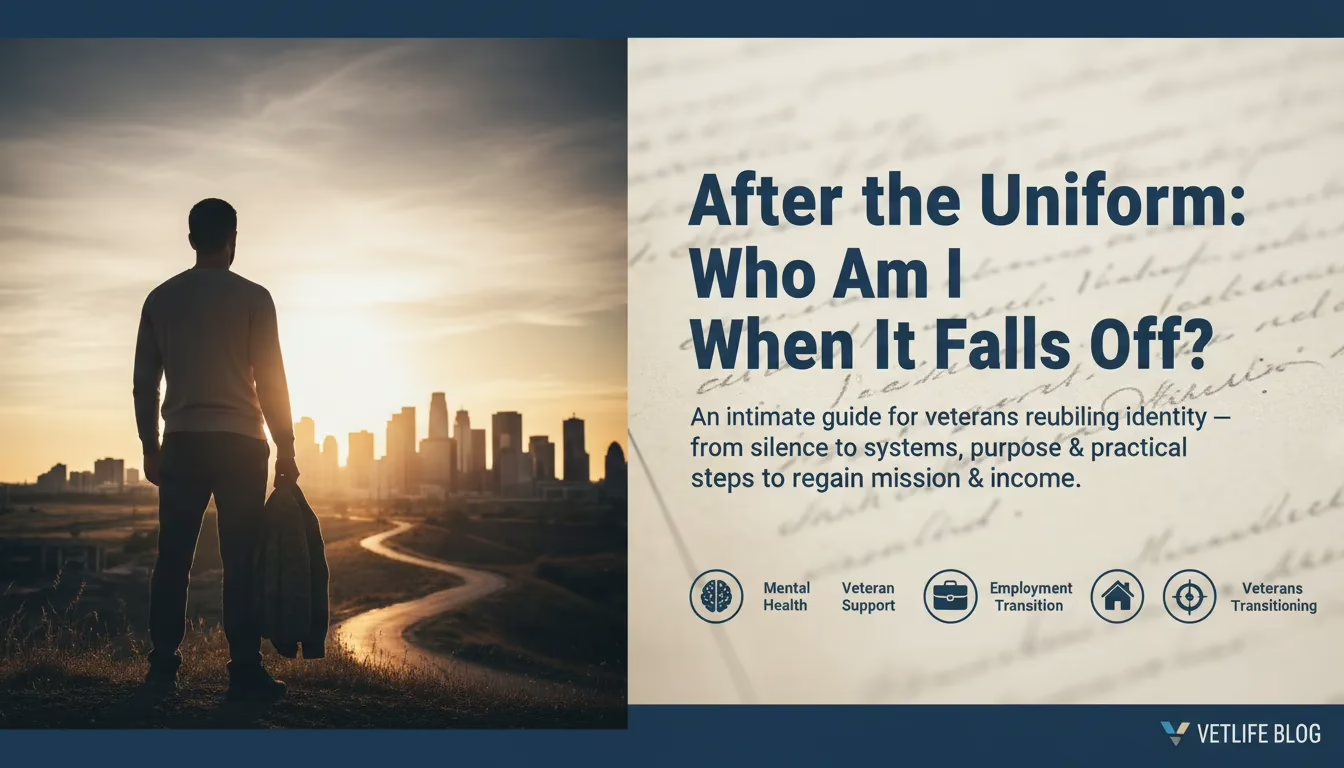
The hardest part of leaving the military wasn’t the pay cut for me — it was the silence. No formation. No clear mission. I woke up one morning after my final roll call and thought, “I did everything right… so why does this feel wrong?” That gap between orders and open time is where most of us fumble. I’ll tell you what I learned when I stopped asking what job I should get and started asking what system lets me operate like who I already am.
1) Waking Up Without Formation (The Quiet Shock)
Civilian Life Starts With Silence
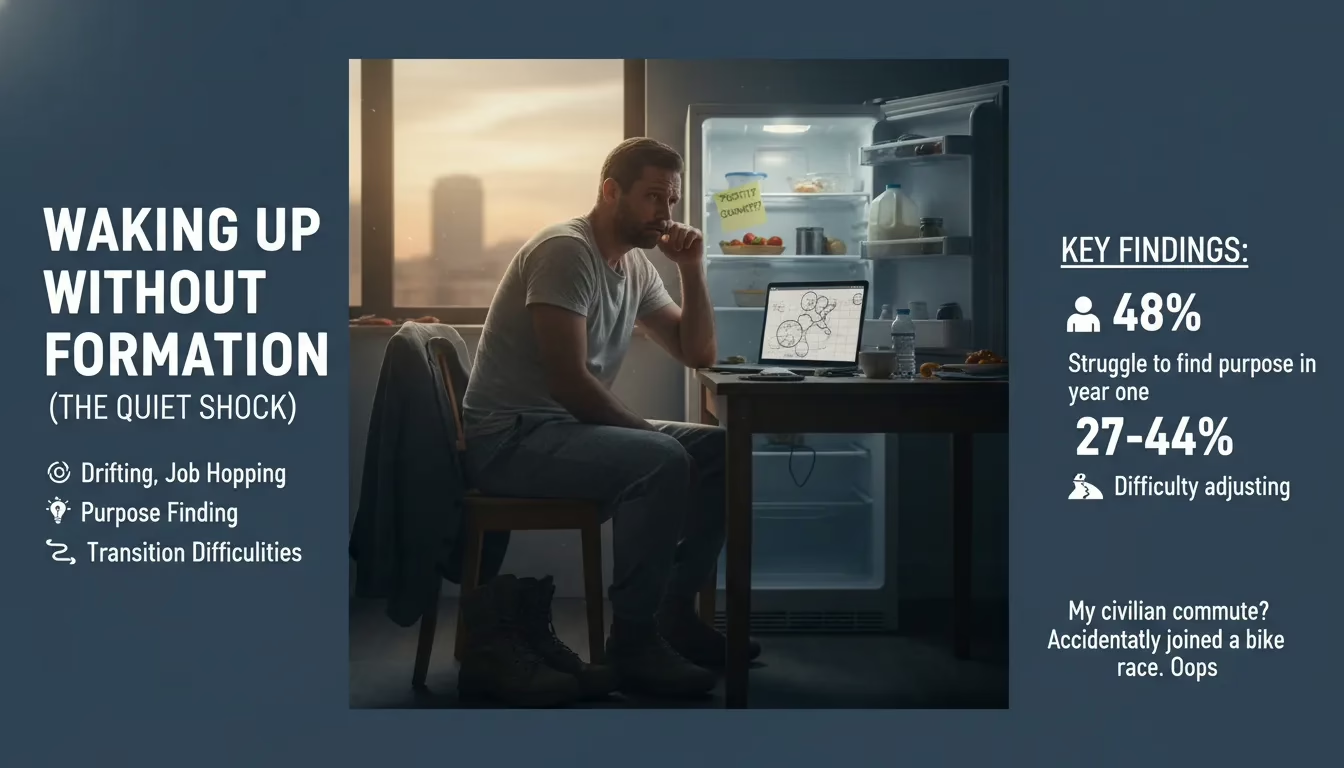
The hardest part of leaving the military isn’t the pay cut. It’s the silence. My first week out, I woke up before dawn like always—body on autopilot—then realized there was no morning formation. No brief. No “be here at 0600.” Just me, a quiet house, and a fridge full of questions.
I stood there staring at the shelves like they were going to issue me a plan. Instead, all I felt was this strange gap between “I did everything right” and “so why does this feel wrong?”
Dr. Emily Carter, Veteran Transition Specialist: “The silence after discharge is not absence — it’s a recalibration period that many mistake for failure.”
Veterans Transitioning: When Structure Disappears
In uniform, identity is built into the day. Rank. Role. Unit. Purpose. In Civilian Life, nobody hands you that structure, and that’s where Transition Difficulties hit hard. The VDA/2025 findings say 48% of veterans struggle with Purpose Finding in the first year after service. And between 27%–44% report the transition itself feels difficult. That number didn’t surprise me. It felt like someone finally said the quiet part out loud.
What surprised me was the anxiety. Not because I lacked skill—but because I lost the system that held my skill in place. Research shows about 35% experience anxiety tied to uncertainty and loss of structure. That was me, pacing with a resume open, feeling “behind” even though I knew I could outperform most rooms.
- Drifting because no one is setting the objective
- Job hopping, hoping the next role “clicks”
- Side hustles that start strong, then fade
- A constant sense of being late to a race you can’t see
Ret. Sergeant Alex Morales: “I had ranks and rosters; at home I only had choices — too many, and none felt right.”
Wild Card: My “Civilian Commute” Fail
I even tried to recreate a commute schedule to feel normal. I set an alarm, packed a bag, and drove to a coffee shop like it was my new duty station. Day one: motivated. Day two: I arrived 20 minutes early and sat in the parking lot like I was waiting for a convoy brief. Day three: I forgot my laptop, bought a muffin out of pure stress, and went home defeated. So much for “blending in.”
2) Identity Was Issued — Now It’s Missing (Why Structure Matters)
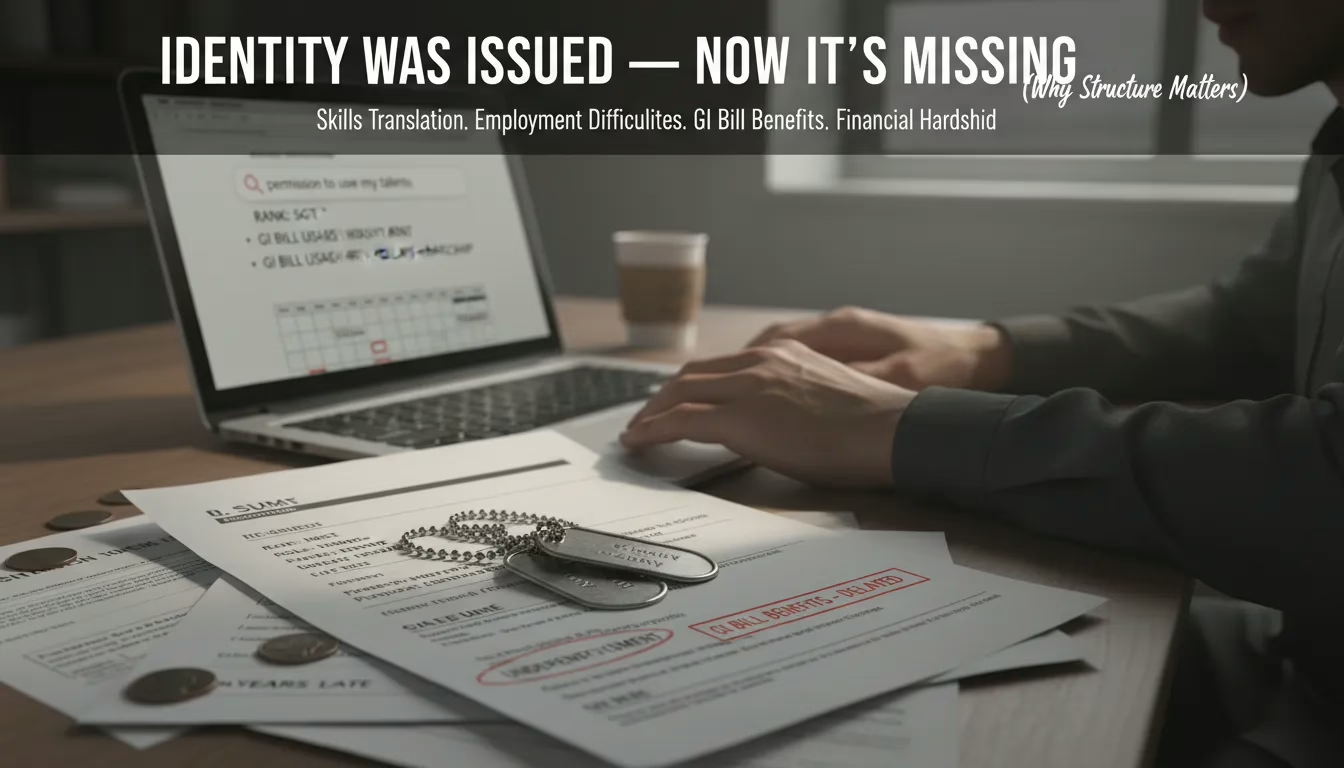
In the military, my identity was issued like gear. It came with a label and a place to stand. When the uniform came off, that structure didn’t follow me home. And without it, even strong people start to drift.
What the Military “Issues” (and Why It Anchors You)
- Rank: a clear measure of progress and trust.
- Role: what you do today, and what “good” looks like.
- Unit: your people, your standards, your belonging.
- Purpose: the mission that makes the hard days make sense.
Civilian life often offers freedom, but not structure. Nobody assigns you a mission. Nobody checks your work and says, “You’re tracking.” So a lot of us keep waiting for permission that never comes.
Skills Translation + Employment Difficulties: When Competence Doesn’t Convert
This is where Skills Translation gets real. Skills mismatches can lead to underemployment even when we’re fully capable. I’ve watched leaders, planners, and problem-solvers get offered entry-level work because their MOS didn’t “match” a job title.
Dr. Emily Carter: “Translating a military MOS into a resume isn’t about jargon; it’s about showing outcome and repeatable systems.”
That gap fuels Employment Difficulties, especially for women and junior enlisted vets. Post-9/11 female veterans ages 25–34 face the highest unemployment risk among vets, and it’s not because they lack talent.
GI Bill Benefits, Delays, and Financial Hardship
Over 40% of eligible veterans use GI Bill Benefits within two years. That’s a smart move. But benefit friction is real—housing payments and other support can lag. Add relocation costs and job gaps, and one in three vets face moderate or severe Financial Hardship in the first year.
If you’re rural, it can hit harder. Access to services—like PTSD treatment, career offices, or even reliable internet for school—can be limited by geography, not effort.
The “Permission” Trap (A Friend’s Lesson)
A buddy of mine had a talent for building systems. He kept waiting for a boss to “let him” lead. He job-hopped for years, always overqualified, always frustrated. Later he admitted, “I had the idea the whole time—I just didn’t think I was allowed to run with it.” That delay cost him years, not because he was lazy, but because the structure was gone.
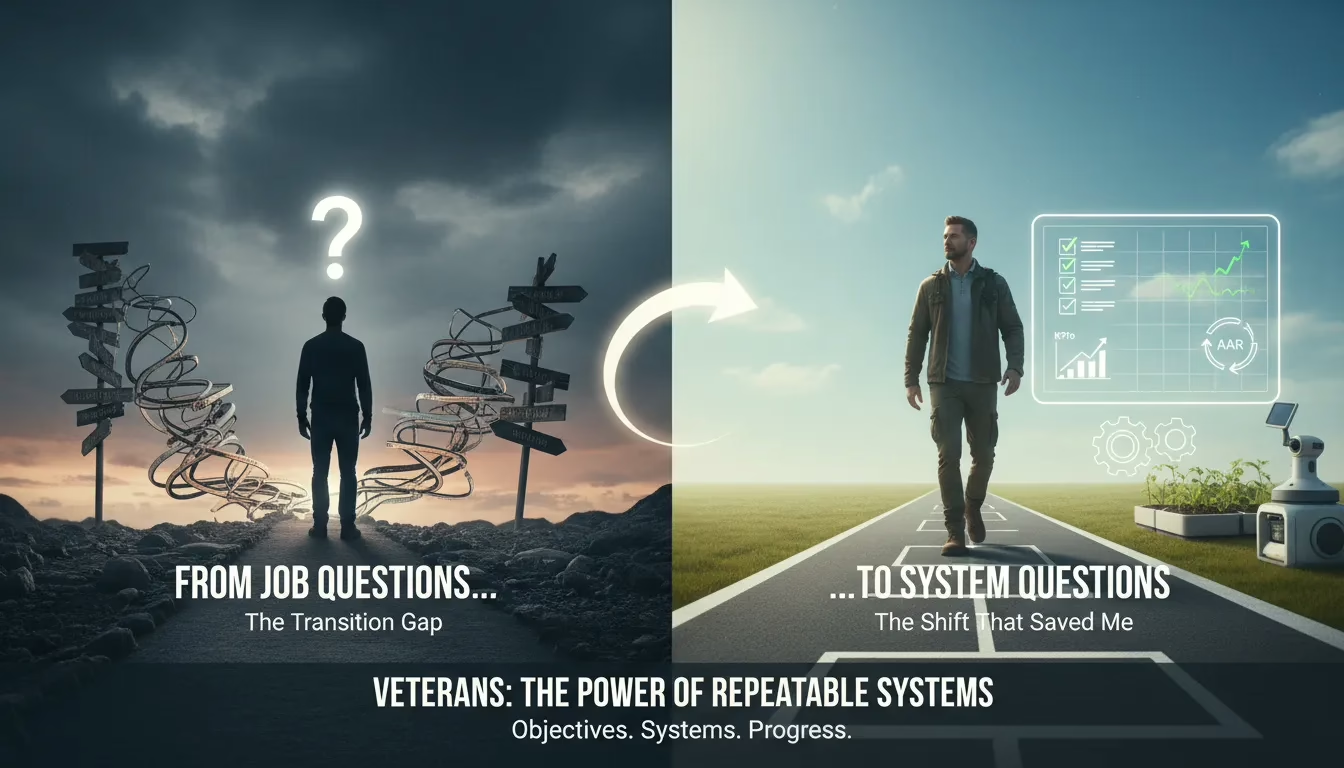
3) From Job Questions to System Questions (The Shift That Saved Me)
Employment Transition: Why “What Job?” Kept Me Stuck
In my Employment Transition, I kept asking the same question: “What job should I get?” It sounded responsible, but it trapped me in Career Uncertainty. I wasn’t failing because I lacked skills. I was stuck in the Transition Gap—that space where the uniform is gone, but the structure hasn’t been replaced.
About 35% of veterans report anxiety tied to career uncertainty or loss of structure. I get it. When the mission disappears, your mind starts searching for orders.
Purpose Finding Starts With a Better Question
Everything changed when I stopped asking, “What job should I get?” and started asking: “What system lets me operate like who I already am?”
Veterans do well in systemized environments because we’re trained for:
- Clear objectives (what “good” looks like)
- Repeatable systems (the same steps, done right)
- Measurable progress (numbers don’t lie)
That’s why random gigs and unstructured side hustles often fail us. They don’t have a cadence, a scoreboard, or a feedback loop. They feel like chaos dressed up as freedom.
Ret. Captain Lisa Nguyen: “When I turned my morning formation into a morning routine for my startup, I stopped waiting for orders.”
Mini Case Study: My Small Automated Service Business
I built a simple service business that ran like a unit: checklists, KPIs, and after-action reviews. It wasn’t flashy. It was stable.
- Daily routine (my new formation): 30 minutes planning, 60 minutes outreach, 30 minutes follow-up.
- KPIs (my scoreboard): leads contacted, calls booked, jobs completed, customer reviews.
- Automation tools (my force multipliers): a booking link, templated emails, and a basic CRM.
- After-action review: every Friday I asked: What worked? What broke? What gets adjusted?
And here’s the psychological pivot: structured businesses can decouple income from permission or rank. I wasn’t waiting to be picked. I was building a system that could run without me begging for a slot.
No surprise that 40%+ GI Bill use points to veterans seeking training to bridge skill gaps—often toward roles where systems matter. That’s not drifting. That’s rebuilding on purpose.
4) Rebuild: Mission, Systems, and Ownership (A Practical Blueprint)
I learned this the hard way: I didn’t need more motivation. I needed a new mission—one built on discipline, simple systems, and autonomy. Early after discharge, housing instability and money stress hit fast. About 35% of post-9/11 veterans are housing cost-burdened (spending over 30% of income on rent), and one in three faces moderate to severe financial stress in the first year. That’s how Financial Hardship turns into Veteran Homelessness if you don’t build backstops.
Dr. Emily Carter: “Rebuilding identity is less heroic and more methodical — mission design, systems, measured wins.”
Step 1: Audit your skills (no fluff)
I write down what I can do on command: planning, logistics, training, security, maintenance, admin, leadership. Then I translate it into civilian outcomes: “reduce errors,” “speed up delivery,” “train new hires,” “manage schedules.” This is identity alignment, not a resume trick.
Step 2: Design one repeatable system (small business or process)
Pick something boring and repeatable. A service. A product. A workflow at your job. The goal is a system you can run even on low-energy days—because Mental Health dips are real during transition.
- One offer
- One customer type
- One weekly schedule
Step 3: Measure progress like a mission
Use simple metrics you can’t argue with:
| Metric | Target |
|---|---|
| Income | $X/week |
| Outreach | 10 calls/messages |
| Health | 7 hours sleep, 3 workouts |
Step 4: Secure backstops (benefits, mentorship, housing plan)
Suicide rates for young veterans (18–34) doubled from 2006 to 2021, with the highest risk in the first year. That’s why support isn’t optional. If you need immediate help, look at Operation Family Fund and the VA FY-2026 plan for housing, mental health, and transition resources.
Wild card: Treat transition like building a platoon
What if you built your life like a unit?
- Roles: you (commander), mentor (XO), spouse/friend (comms)
- SOPs: morning routine, budget check, weekly job/business actions
- Cadence: one weekly “sync” call and one monthly review
Small wins beat perfect plans. This is how ownership grows—income, stability, and eventually better Homeownership Rates—one system at a time.
5) Closing, Call to Action, and Two Wild Cards
Veteran Support in Civilian Life: You’re Between Missions
When the uniform comes off, it can feel like your identity came off with it. I’ve been there. The quiet hits hard, and the Reintegration Challenges show up fast: sleep gets weird, your patience gets thin, and you start wondering why you can’t “just move on.” But I want to say this clearly, in plain language: you’re not lost. You’re between missions. And the next one gets to be built on your terms.
Early transition is when mental health and Employment Transition support matter most. The numbers back it up: purpose trouble hits around 48%, transition difficulty ranges 27%–44%, and veteran suicide rates doubled from 2006–2021. That’s not to scare you—it’s to remind you that what you’re feeling is real, and you deserve real support.
Your 30-Day Mission (Small, Doable, System-Based)
Don’t wait for permission. Action beats rumination. For the next 30 days, run a simple system: do a personal audit of your energy, skills, and triggers; set three KPIs you can track weekly (one for health, one for income, one for connection); then choose one repeatable process and run it every week. It could be five job applications every Monday, two networking calls every Friday, or one business workflow you refine each weekend. This won’t be linear, and that’s okay. The point is progress you can measure.
Wild Card #1: A Policy Reminder
“Supporting veterans during transition is an investment in the national fabric.”
— Sen. Mark Thompson
Wild Card #2: Refitting the Uniform
Think of transition like taking your old uniform to a tailor. You don’t throw the fabric away—you refit it into a jacket you choose to wear. Same discipline, same standards, but now it fits your life, not the other way around.
Resources & Citations
Operation Family Fund (2026 outlook); VA FY-2026 Annual Evaluation Plan (June 2025); U.S. Census (2025 veterans employment outcomes); VDA findings (transition and reintegration indicators).
TL;DR: Veterans lose an issued identity at discharge. Rebuild through mission-focused systems (clear goals, repeatable processes, measurable progress), ownership, and practical supports — not motivation alone.
Leave a Reply
You must be logged in to post a comment.